This startup claims it can stop lightning and prevent catastrophic wildfires
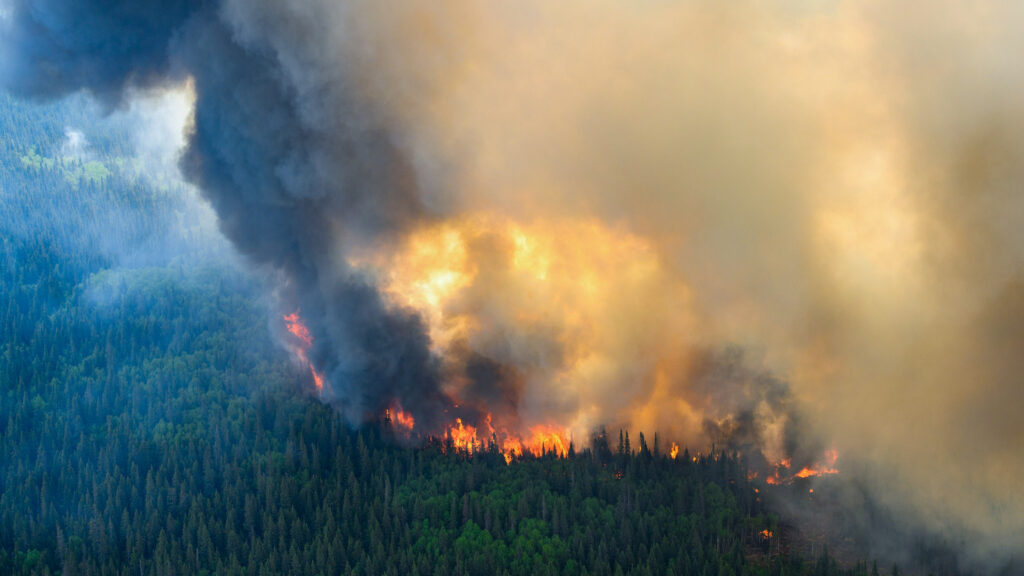
On June 1, 2023, as a sweltering heat wave baked Quebec, thousands of lightning strikes flashed across the province, setting off more than 120 wildfires. The blazes ripped through parched forests and withered grasslands, burned for weeks, and compounded what was rapidly turning into Canada’s worst fire year on record. In the end, nearly 7,000 fires scorched tens of millions of acres across the country, generated nearly 500 millions tons of carbon emissions, and forced hundreds of thousands of people to flee their homes. Lightning sparked almost 60% of the wildfires—and those blazes accounted for 93% of the total area burned. Now a Vancouver-based weather modification startup, Skyward Wildfire, says it can prevent such catastrophic fires in the future—by stopping the lightning strikes that ignite them. It just raised millions of dollars in a funding round that it plans to use to accelerate its product development and expand its operations. Until last week the company, which highlights the role lightning played in the 2023 infernos, stated on its website that it has demonstrated technology capable of preventing “up to 100% of lightning strikes.” It was an eye-catching claim that went well beyond the confidence level of researchers who have studied the potential for humans to suppress lightning—and the company took it down following inquiries from MIT Technology Review. “While the statement reflected an observed result under specific conditions, it was not intended to suggest uniform outcomes and has been removed,” Nicholas Harterre, who oversees government partnerships at Skyward, said in an email. “In complex atmospheric systems, consistent 100% outcomes are not realistic, as the experts you spoke to rightly pointed out.” The company now states it demonstrated that it “can prevent the majority of cloud-to-ground lightning strikes in targeted storm cells.” So far, Skyward hasn’t publicly revealed how it does so, and in response to our questions Harterre said only that the materials are “inert and selected in accordance with regulatory standards.” But online documents suggest the company is relying on an approach that US government agencies began evaluating in the early 1960s: seeding clouds with metallic chaff, or narrow fiberglass strands coated with aluminum. The military uses the material to disrupt radar signals; fighter jets, for example, deploy it during dogfights to throw off guided missile systems. Field trials conducted decades ago by US agencies suggest it could help reduce lightning strikes, at least to some degree and under certain conditions. If Skyward could employ it reliably on significant scales, it might offer a powerful tool for countering rising fire risks as climate change drives up temperatures, dries out forests, and likely increases the frequency of lightning strikes. “Preventing lightning on high-risk days saves lives, billions in wildfire costs, and is one of the highest-leverage and most immediate climate solutions available,” Sam Goldman, Skyward’s founder and chief executive, said in a statement posted on LinkedIn last year. But researchers and environmental observers say there are plenty of remaining uncertainties, including how well the seeding may work under varying weather and climate conditions, how much material would need to be released, how frequently it would have to be done, and what sorts of secondary environmental impacts might result from lighting suppression on commercial scales. Some observers are also concerned that the company appears to have moved ahead with weather modification field trials in parts of Canada without providing wide public notice or openly discussing what materials it’s putting into the clouds. Given the escalating fire dangers, it’s “reasonable” to evaluate the potential for new technologies to mitigate them, says Keith Brooks, programs director at Environmental Defence, a Canadian advocacy organization. “But we should be doing so cautiously and really transparently, with a robust scientific methodology that’s open to scrutiny,” he says. Seeding the clouds Skyward’s website offers few technical details, but the company says it worked with Canadian wildfire agencies in 2024 and 2025 to demonstrate its technology. The company also says it has developed AI tools to predict lightning strikes that could set off fires. Skyward announced last month that it raised $7.9 million in Canadian dollars ($5.7 million), in an extension of a seed round initially closed early last year. Investors included Climate Innovation Capital, Active Impact Investments, and Diagram Ventures. “Our first season demonstrated that prevention is possible at scale,” Goldman said in a statement. “This funding allows us to expand into new regions and support partners who need reliable, operational tools to reduce wildfire risk before emergencies begin.” The company doesn’t use the term “cloud seeding” on its site or in its recent announcements. But a press release highlighting its selection as a finalist last year in a conservation group’s Fire Grand Challenge states that it suppresses lightning “by cloud seeding with safe, non-toxic materials to neutralize storm charges,” as The Narwhal previously reported. In addition, Unorthodox Philanthropy, a foundation that provided a grant to support Skyward’s efforts “to test and deploy” the technology, offered more detail in an awardee write-up about Goldman. It states: “The Skyward team … settled on an inert substance consisting of aluminum covered glass fibers, which is regularly used in military operations to intercept and confuse enemy radar and can also dis-charge clouds.” Additional details were disclosed in a document marked “Proprietary and Confidential,” which the World Bank nonetheless released within a package of materials from companies developing means of addressing fire risks. Skyward’s diagrams show planes dropping particles into clouds to prevent cloud-to-ground lightning strikes in “high risk areas.” The company also notes in the document that it uses artificial intelligence for a number of purposes, including forecasting lightning storms, prioritizing treatments, targeting storm cells, and optimizing flight paths. Harterre stressed that the company would deploy the technology judiciously and reserve it for storm events with elevated wildfire risk, adding that such storms account for less than 0.1% of lightning activity in a given area. “Our objective is to reduce the probability of ignition on the limited number of extreme-risk days when fires threaten lives, critical infrastructure, and ecosystems,
This startup claims it can stop lightning and prevent catastrophic wildfires 投稿を読む »