YouZum

Committee

AI, Committee, ニュース, Uncategorized

GenDB: The Next Generation of Query Processing — Synthesized, Not Engineered

arXiv:2603.02081v1 Announce Type: cross Abstract: Traditional query processing relies on engines that are carefully optimized and engineered by many experts. However, new techniques and user requirements evolve rapidly, and existing systems often cannot keep pace. At the same time, these systems are difficult to extend due to their internal complexity, and developing new systems requires substantial engineering effort and cost. In this paper, we argue that recent advances in Large Language Models (LLMs) are starting to shape the next generation of query processing systems. We propose using LLMs to synthesize execution code for each incoming query, instead of continuously building, extending, and maintaining complex query processing engines. As a proof of concept, we present GenDB, an LLM-powered agentic system that generates instance-optimized and customized query execution code tailored to specific data, workloads, and hardware resources. We implemented an early prototype of GenDB that uses Claude Code Agent as the underlying component in the multi-agent system, and we evaluate it on OLAP workloads. We use queries from the well-known TPC-H benchmark and also construct a new benchmark designed to reduce potential data leakage from LLM training data. We compare GenDB with state-of-the-art query engines, including DuckDB, Umbra, MonetDB, ClickHouse, and PostgreSQL. GenDB achieves significantly better performance than these systems. Finally, we discuss the current limitations of GenDB and outline future extensions and related research challenges.

GenDB: The Next Generation of Query Processing — Synthesized, Not Engineered 投稿を読む »

AI, Committee, ニュース, Uncategorized

Alibaba Releases OpenSandbox to Provide Software Developers with a Unified, Secure, and Scalable API for Autonomous AI Agent Execution

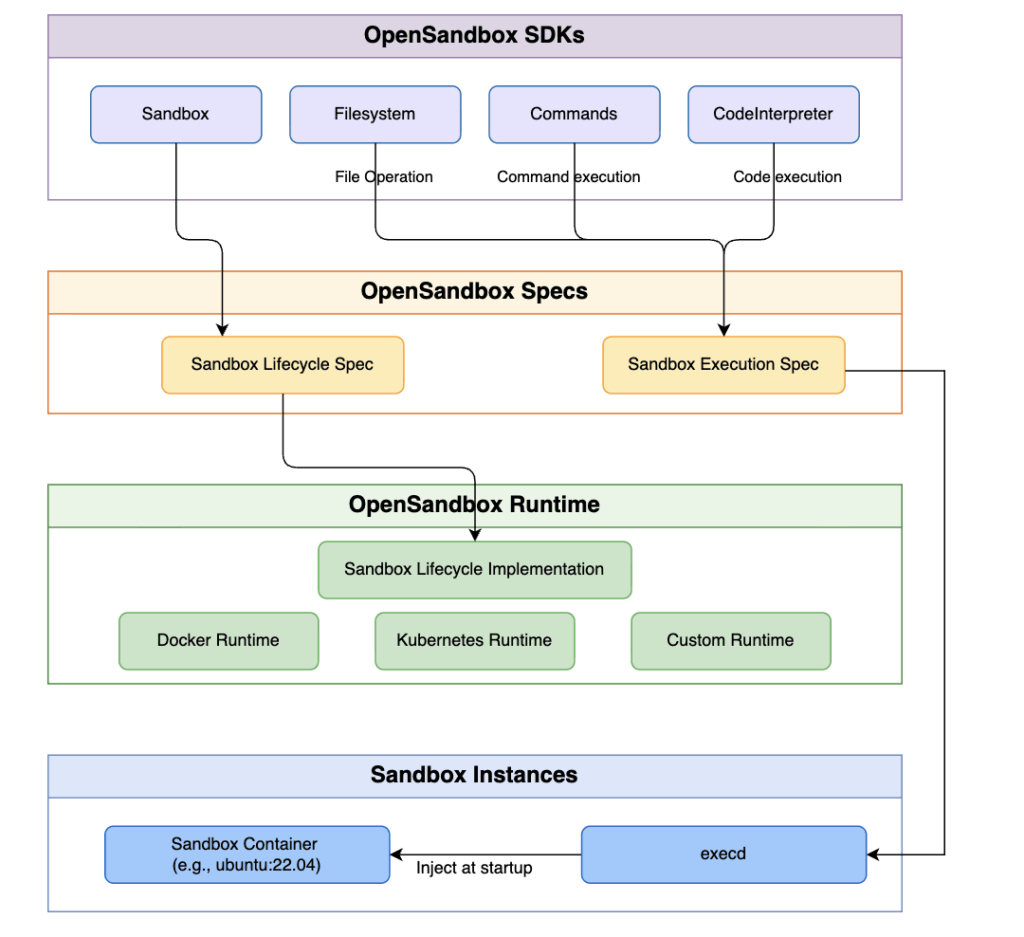
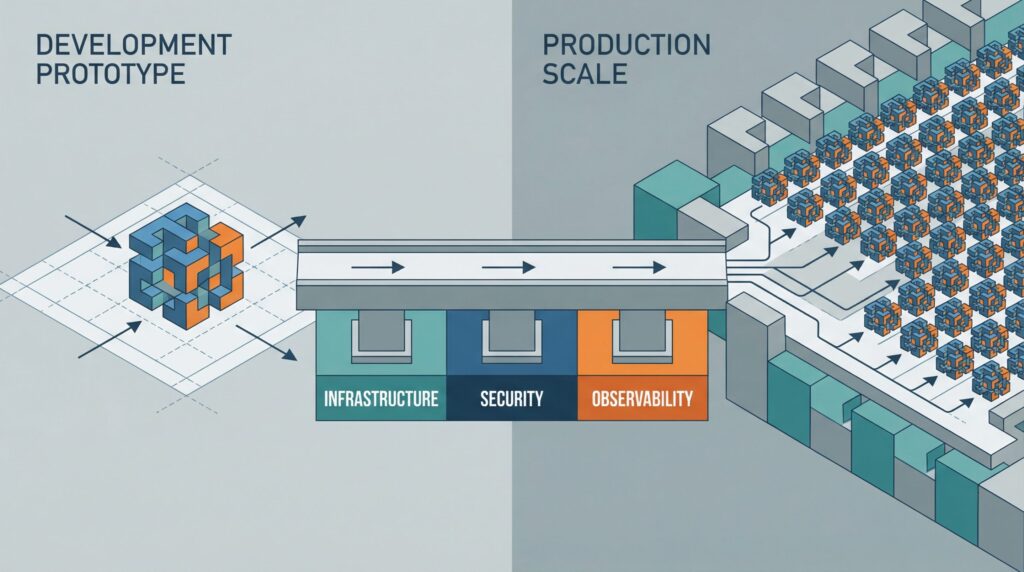
Alibaba has released OpenSandbox, an open-source tool designed to provide AI agents with secure, isolated environments for code execution, web browsing, and model training. Released under the Apache 2.0 license, the proposed system targets to standardize the ‘execution layer’ of the AI agent stack, offering a unified API that functions across various programming languages and infrastructure providers. The tool is built on the same internal infrastructure Alibaba utilizes for large-scale AI workloads. The Technical Gap in Agentic Workflows Building an autonomous agent typically involves two components: the ‘brain’ (usually a Large Language Model) and the ‘tools’ (code execution, web access, or file manipulation). Providing a safe environment for these tools has required developers to manually configure Docker containers, manage complex network isolation, or rely on third-party APIs. OpenSandbox addresses this by providing a standardized, secure environment where agents can execute arbitrary code or interact with interfaces without risking the host system’s integrity. It abstracts the underlying infrastructure, allowing developers to move from local development to production-scale deployments using a single API. Architecture The architecture of OpenSandbox is built on a modular four-layer stack—comprising the SDKs Layer, Specs Layer, Runtime Layer, and Sandbox Instances Layer—designed to decouple client logic from execution environments. At its core, the system utilizes a FastAPI-based server to manage the lifecycle of sandboxes via the Docker or Kubernetes runtimes, while communication is standardized through OpenAPI specifications (the Sandbox Lifecycle and Execution Specs). Within each isolated container, OpenSandbox injects a high-performance Go-based execution daemon (execd) that interfaces with internal Jupyter kernels to provide stateful code execution, real-time output streaming via Server-Sent Events (SSE), and comprehensive filesystem management, ensuring a ‘protocol-first’ approach that remains consistent across any base container image. https://open-sandbox.ai/overview/architecture Core Technical Capabilities OpenSandbox is designed to be environment-agnostic. It supports Docker for local development and Kubernetes for distributed, production-grade runs. The platform provides four primary types of sandboxes: Coding Agents: Environments optimized for software development tasks, where agents can write, test, and debug code. GUI Agents: Supports full VNC desktops, enabling agents to interact with graphical user interfaces. Code Execution: High-performance runtimes for executing specific scripts or computational tasks. RL Training: Isolated environments tailored for Reinforcement Learning (RL) workloads, allowing for safe iterative training. The system utilizes a Unified API, which ensures that the interaction patterns remain consistent regardless of the underlying language or runtime. Currently, OpenSandbox provides SDKs for Python, TypeScript, and Java/Kotlin, with C# and Go listed on the development roadmap. Integration and Ecosystem Support A significant feature of OpenSandbox is its native compatibility with existing AI frameworks and developer tools. By providing a secure execution layer, it allows agents built on various platforms to perform ‘real-world’ actions. The integrations currently supported include: Model Interfaces: Claude Code, Gemini CLI, and OpenAI Codex. Orchestration Frameworks: LangGraph and Google ADK (Agent Development Kit). Automation Tools: Chrome and Playwright for browser-based tasks. Visualization: Full VNC support for visual monitoring and interaction. This means that an agent can be tasked with ‘scraping a website and training a linear regression model’ within a single, isolated session. The agent uses Playwright to navigate the web, downloads data to the sandbox’s local file system, and executes Python code to process that data—all without leaving the secured OpenSandbox environment. Deployment and Configuration The project prioritizes a streamlined developer experience (DX). Setting up a local execution server requires three primary commands through the command-line interface: pip install opensandbox-server — Installs the server components. opensandbox-server init-config — Generates the necessary configuration files for the environment. opensandbox-server — Launches the server and exposes the API for agent interaction. Once the server is running, developers can use the provided SDKs to create, manage, and terminate sandboxes programmatically. This reduces the operational overhead of ‘stitching together’ multiple tools for file management, process isolation, and network proxying. Key Takeaways Unified, Language-Agnostic Execution: OpenSandbox provides a consistent API for AI agents to execute code, browse the web, and interact with GUIs. While it currently supports Python, TypeScript, and Java/Kotlin, SDKs for C# and Go are on the roadmap. Infrastructure Flexibility (Docker & Kubernetes): The tool is designed to scale seamlessly from a developer’s local machine to enterprise-grade production. It utilizes Docker for local isolation and Kubernetes for distributed, large-scale deployments, eliminating the ‘environment drift’ often found when moving agents from dev to cloud. Broad Ecosystem Integration: It is engineered to plug directly into leading AI frameworks and tools, including LangGraph, Claude Code, Gemini CLI, OpenAI Codex, and Google ADK, as well as automation libraries like Playwright and Chrome. Elimination of ‘Sandbox Dependency’: By providing a free, open-source alternative under the Apache 2.0 license, Alibaba removes the dependency on expensive, managed sandbox services that charge per-minute fees or impose vendor lock-in. High-Fidelity Interaction (VNC & Web): Beyond simple script execution, OpenSandbox supports full VNC desktops and browser automation. This allows agents to perform complex, multi-modal tasks—such as navigating web interfaces or using desktop applications—within a secure, ‘blast-resistant’ environment. Check out the Repo, Docs and Examples. Also, feel free to follow us on Twitter and don’t forget to join our 120k+ ML SubReddit and Subscribe to our Newsletter. Wait! are you on telegram? now you can join us on telegram as well. The post Alibaba Releases OpenSandbox to Provide Software Developers with a Unified, Secure, and Scalable API for Autonomous AI Agent Execution appeared first on MarkTechPost.

Alibaba Releases OpenSandbox to Provide Software Developers with a Unified, Secure, and Scalable API for Autonomous AI Agent Execution 投稿を読む »

AI, Committee, ニュース, Uncategorized

This startup claims it can stop lightning and prevent catastrophic wildfires

On June 1, 2023, as a sweltering heat wave baked Quebec, thousands of lightning strikes flashed across the province, setting off more than 120 wildfires. The blazes ripped through parched forests and withered grasslands, burned for weeks, and compounded what was rapidly turning into Canada’s worst fire year on record. In the end, nearly 7,000 fires scorched tens of millions of acres across the country, generated nearly 500 millions tons of carbon emissions, and forced hundreds of thousands of people to flee their homes. Lightning sparked almost 60% of the wildfires—and those blazes accounted for 93% of the total area burned. Now a Vancouver-based weather modification startup, Skyward Wildfire, says it can prevent such catastrophic fires in the future—by stopping the lightning strikes that ignite them. It just raised millions of dollars in a funding round that it plans to use to accelerate its product development and expand its operations. Until last week the company, which highlights the role lightning played in the 2023 infernos, stated on its website that it has demonstrated technology capable of preventing “up to 100% of lightning strikes.” It was an eye-catching claim that went well beyond the confidence level of researchers who have studied the potential for humans to suppress lightning—and the company took it down following inquiries from MIT Technology Review. “While the statement reflected an observed result under specific conditions, it was not intended to suggest uniform outcomes and has been removed,” Nicholas Harterre, who oversees government partnerships at Skyward, said in an email. “In complex atmospheric systems, consistent 100% outcomes are not realistic, as the experts you spoke to rightly pointed out.”  The company now states it demonstrated that it “can prevent the majority of cloud-to-ground lightning strikes in targeted storm cells.” So far, Skyward hasn’t publicly revealed how it does so, and in response to our questions Harterre said only that the materials are “inert and selected in accordance with regulatory standards.”  But online documents suggest the company is relying on an approach that US government agencies began evaluating in the early 1960s: seeding clouds with metallic chaff, or narrow fiberglass strands coated with aluminum.  The military uses the material to disrupt radar signals; fighter jets, for example, deploy it during dogfights to throw off guided missile systems. Field trials conducted decades ago by US agencies suggest it could help reduce lightning strikes, at least to some degree and under certain conditions. If Skyward could employ it reliably on significant scales, it might offer a powerful tool for countering rising fire risks as climate change drives up temperatures, dries out forests, and likely increases the frequency of lightning strikes. “Preventing lightning on high-risk days saves lives, billions in wildfire costs, and is one of the highest-leverage and most immediate climate solutions available,” Sam Goldman, Skyward’s founder and chief executive, said in a statement posted on LinkedIn last year. But researchers and environmental observers say there are plenty of remaining uncertainties, including how well the seeding may work under varying weather and climate conditions, how much material would need to be released, how frequently it would have to be done, and what sorts of secondary environmental impacts might result from lighting suppression on commercial scales. Some observers are also concerned that the company appears to have moved ahead with weather modification field trials in parts of Canada without providing wide public notice or openly discussing what materials it’s putting into the clouds. Given the escalating fire dangers, it’s “reasonable” to evaluate the potential for new technologies to mitigate them, says Keith Brooks, programs director at Environmental Defence, a Canadian advocacy organization. “But we should be doing so cautiously and really transparently, with a robust scientific methodology that’s open to scrutiny,” he says. Seeding the clouds Skyward’s website offers few technical details, but the company says it worked with Canadian wildfire agencies in 2024 and 2025 to demonstrate its technology. The company also says it has developed AI tools to predict lightning strikes that could set off fires. Skyward announced last month that it raised $7.9 million in Canadian dollars ($5.7 million), in an extension of a seed round initially closed early last year. Investors included Climate Innovation Capital, Active Impact Investments, and Diagram Ventures. “Our first season demonstrated that prevention is possible at scale,” Goldman said in a statement. “This funding allows us to expand into new regions and support partners who need reliable, operational tools to reduce wildfire risk before emergencies begin.” The company doesn’t use the term “cloud seeding” on its site or in its recent announcements. But a press release highlighting its selection as a finalist last year in a conservation group’s Fire Grand Challenge states that it suppresses lightning “by cloud seeding with safe, non-toxic materials to neutralize storm charges,” as The Narwhal previously reported. In addition, Unorthodox Philanthropy, a foundation that provided a grant to support Skyward’s efforts “to test and deploy” the technology, offered more detail in an awardee write-up about Goldman. It states: “The Skyward team … settled on an inert substance consisting of aluminum covered glass fibers, which is regularly used in military operations to intercept and confuse enemy radar and can also dis-charge clouds.” Additional details were disclosed in a document marked “Proprietary and Confidential,” which the World Bank nonetheless released within a package of materials from companies developing means of addressing fire risks. Skyward’s diagrams show planes dropping particles into clouds to prevent cloud-to-ground lightning strikes in “high risk areas.” The company also notes in the document that it uses artificial intelligence for a number of purposes, including forecasting lightning storms, prioritizing treatments, targeting storm cells, and optimizing flight paths.   Harterre stressed that the company would deploy the technology judiciously and reserve it for storm events with elevated wildfire risk, adding that such storms account for less than 0.1% of lightning activity in a given area. “Our objective is to reduce the probability of ignition on the limited number of extreme-risk days when fires threaten lives, critical infrastructure, and ecosystems,

This startup claims it can stop lightning and prevent catastrophic wildfires 投稿を読む »

AI, Committee, ニュース, Uncategorized

Task-Lens: Cross-Task Utility Based Speech Dataset Profiling for Low-Resource Indian Languages

arXiv:2602.23388v1 Announce Type: new Abstract: The rising demand for inclusive speech technologies amplifies the need for multilingual datasets for Natural Language Processing (NLP) research. However, limited awareness of existing task-specific resources in low-resource languages hinders research. This challenge is especially acute in linguistically diverse countries, such as India. Cross-task profiling of existing Indian speech datasets can alleviate the data scarcity challenge. This involves investigating the utility of datasets across multiple downstream tasks rather than focusing on a single task. Prior surveys typically catalogue datasets for a single task, leaving comprehensive cross-task profiling as an open opportunity. Therefore, we propose Task-Lens, a cross-task survey that assesses the readiness of 50 Indian speech datasets spanning 26 languages for nine downstream speech tasks. First, we analyze which datasets contain metadata and properties suitable for specific tasks. Next, we propose task-aligned enhancements to unlock datasets to their full downstream potential. Finally, we identify tasks and Indian languages that are critically underserved by current resources. Our findings reveal that many Indian speech datasets contain untapped metadata that can support multiple downstream tasks. By uncovering cross-task linkages and gaps, Task-Lens enables researchers to explore the broader applicability of existing datasets and to prioritize dataset creation for underserved tasks and languages.

Task-Lens: Cross-Task Utility Based Speech Dataset Profiling for Low-Resource Indian Languages 投稿を読む »

AI, Committee, ニュース, Uncategorized

FireRedTeam Releases FireRed-OCR-2B Utilizing GRPO to Solve Structural Hallucinations in Tables and LaTeX for Software Developers

Document digitization has long been a multi-stage problem: first detect the layout, then extract the text, and finally try to reconstruct the structure. For Large Vision-Language Models (LVLMs), this often leads to ‘structural hallucinations’—disordered rows, invented formulas, or unclosed syntax. The FireRedTeam has released FireRed-OCR-2B, a flagship model designed to treat document parsing as a structural engineering task rather than ‘impressionist’ text generation. Built on the Qwen3-VL-2B-Instruct architecture, this model establishes a new State-of-the-Art (SOTA) for end-to-end solutions, achieving an overall score of 92.94% on the OmniDocBench v1.5 benchmark. Shifting the Paradigm: Structural Engineering vs. Text Generation Devs often find that even the most powerful general VLMs struggle with the dense spatial logic of a technical PDF. When a model ‘sees’ a complex table or a multi-line LaTeX equation, it frequently fails to maintain the hierarchical relationship between elements. FireRed-OCR-2B addresses this through a specialized Progressive Training Pipeline consisting of three distinct stages: Multi-task Pre-alignment: This stage establishes spatial grounding by training the model on detection, region recognition, and layout-to-markdown tasks. Specialized SFT (Supervised Fine-Tuning): The model is fine-tuned on a high-quality, standardized Markdown dataset to ensure logical consistency and hierarchical expression. Format-Constrained GRPO: The final stage uses reinforcement learning to enforce syntactic validity. The Core Innovation: Format-Constrained GRPO The most significant technical differentiator for FireRed-OCR is its use of Format-Constrained Group Relative Policy Optimization (GRPO). While traditional fine-tuning focuses on character accuracy, GRPO introduces a reinforcement learning loop that rewards the model for specific structural traits: Formula Syntax: Ensuring LaTeX equations are mathematically valid. Table Integrity: Maintaining consistent row/column counts and proper HTML/Markdown tagging. Hierarchical Closure: Verifying that all opened structural tags (like lists or headers) are correctly closed. Text Accuracy: Reducing character-level errors in dense text blocks. By eliminating the need for a separate ‘critic’ model—a key benefit of the GRPO algorithm—FireRedTeam has optimized the training process to focus specifically on the high-friction areas of document parsing. Solving the Long-Tail Layout Problem The ‘long-tail’ of document layouts (e.g., non-standard legal forms, academic papers with overlapping figures, or handwritten annotations) is where most OCR pipelines break. FireRed-OCR utilizes a ‘Geometry + Semantics’ Data Factory. This novel approach uses geometric feature clustering and multi-dimensional tagging to synthesize balanced datasets. By combining geometric awareness with semantic understanding, the model maintains ‘In-the-Wild Robustness,’ outperforming traditional pipeline systems like PaddleOCR on complex, non-standard layouts (benchmarked on the FireRedBench dataset). Performance Benchmarks In head-to-head comparisons on OmniDocBench v1.5, FireRed-OCR-2B (92.94%) significantly outperforms other end-to-end models, including: DeepSeek-OCR 2: 91.09% Gemini-3.0 Pro: 90.33% Qwen3-VL-235B: 89.15% While some ‘pipeline’ solutions (which use separate models for detection and recognition) achieve slightly higher scores, FireRed-OCR-2B represents the leading performance for a single-model, end-to-end approach. This is particularly relevant for devs looking to reduce system complexity and inference latency in production RAG (Retrieval-Augmented Generation) environments. Key Takeaways I have summarized the technical significance and performance metrics of the FireRed-OCR-2B release into five key takeaways for AI engineers and data scientists. 5 Key Takeaways: FireRed-OCR-2B New End-to-End SOTA Performance: FireRed-OCR-2B has achieved a state-of-the-art (SOTA) score of 92.94% on the OmniDocBench v1.5 benchmark. This makes it the leading single-model solution for document parsing, outperforming significantly larger models like Qwen2-VL-72B and Gemini-1.5-Pro in structural accuracy. Architectural Foundation: Built on the Qwen2-VL-2B-Instruct (or the updated 2026 iteration) base, the model utilizes a Vision-Language-Model (VLM) approach. It replaces traditional multi-stage pipelines (separate detection, cropping, and OCR steps) with a unified, end-to-end transformer architecture that outputs structured Markdown directly. Structural Integrity via GRPO: A major technical differentiator is the use of Format-Constrained GRPO (Group Relative Policy Optimization). This reinforcement learning technique rewards the model for maintaining syntactic validity—specifically ensuring that LaTeX formulas, table tags, and Markdown hierarchies are logically closed and mathematically consistent. ‘Geometry + Semantics’ Data Factory: To solve the problem of complex ‘in-the-wild’ layouts, the FireRedTeam developed a specialized data engine. This ‘factory’ synthesizes datasets by balancing geometric layout features with semantic content, enabling the model to handle overlapping figures, multi-column academic papers, and non-standard forms more reliably than previous iterations. Check out the Model Weight and Repo. Also, feel free to follow us on Twitter and don’t forget to join our 120k+ ML SubReddit and Subscribe to our Newsletter. Wait! are you on telegram? now you can join us on telegram as well. The post FireRedTeam Releases FireRed-OCR-2B Utilizing GRPO to Solve Structural Hallucinations in Tables and LaTeX for Software Developers appeared first on MarkTechPost.

FireRedTeam Releases FireRed-OCR-2B Utilizing GRPO to Solve Structural Hallucinations in Tables and LaTeX for Software Developers 投稿を読む »

AI, Committee, ニュース, Uncategorized

How to Build an Explainable AI Analysis Pipeline Using SHAP-IQ to Understand Feature Importance, Interaction Effects, and Model Decision Breakdown

In this tutorial, we build an advanced explainable AI analysis pipeline using SHAP-IQ to understand both feature importance and interaction effects directly inside our Python environment. We load a real-world dataset, train a high-performance Random Forest model, and then apply the SHAP-IQ interaction index to compute precise, theoretically grounded explanations of model predictions. We extract main effects, pairwise interaction effects, and decision breakdown contributions, and we present them through structured terminal outputs and interactive Plotly visualizations. Also, we move beyond basic explainability and gain deep insight into how individual features and their interactions influence model decisions at both the local and global levels. Copy CodeCopiedUse a different Browser import sys, subprocess, textwrap, numpy as np, pandas as pd def _pip(*pkgs): subprocess.run([sys.executable, “-m”, “pip”, “install”, “-q”, *pkgs], check=False) _pip(“shapiq”, “plotly”, “pandas”, “numpy”, “scikit-learn”) import plotly.express as px import plotly.graph_objects as go import plotly.io as pio import shapiq from sklearn.ensemble import RandomForestRegressor from sklearn.model_selection import train_test_split try: pio.renderers.default = “colab” except Exception: pass RANDOM_STATE = 42 INDEX = “SII” MAX_ORDER = 2 BUDGET_LOCAL = 512 TOP_K = 10 INSTANCE_I = 24 GLOBAL_ON = True GLOBAL_N = 40 BUDGET_GLOBAL = 256 We install and import all the required libraries, including shapiq, Plotly, pandas, NumPy, and scikit-learn, ensuring our environment is fully prepared for explainable AI analysis. We configure Plotly to render visualizations directly in the notebook or terminal so we can view results without needing any external dashboard. We also define global configuration parameters, such as the interaction index, explanation budget, and global analysis settings, to control the depth, accuracy, and performance of our explainability pipeline. Copy CodeCopiedUse a different Browser def extract_main_effects(iv, feature_names): d = iv.dict_values vals = [float(d.get((i,), 0.0)) for i in range(len(feature_names))] return pd.Series(vals, index=list(feature_names), name=”main_effect”) def extract_pair_matrix(iv, feature_names): d = iv.dict_values n = len(feature_names) M = np.zeros((n, n), dtype=float) for k, v in d.items(): if isinstance(k, tuple) and len(k) == 2: i, j = k M[i, j] = float(v) M[j, i] = float(v) return pd.DataFrame(M, index=list(feature_names), columns=list(feature_names)) def ascii_bar(series, width=28, top_k=10): s = series.abs().sort_values(ascending=False).head(top_k) m = float(s.max()) if len(s) else 1.0 lines = [] for name, val in s.items(): n = int((abs(val) / m) * width) if m > 0 else 0 lines.append(f”{name:>18} | {‘█’*n}{‘ ‘*(width-n)} | {val:+.6f}”) return “n”.join(lines) We implement utility functions that extract the main effects and pairwise interaction effects from the SHAP-IQ InteractionValues object. We convert the raw explanation output into structured Pandas objects, allowing us to analyze feature contributions in a clear, organized manner. We also create an ASCII visualization function that lets us interpret feature importance directly in the terminal without relying on graphical interfaces. Copy CodeCopiedUse a different Browser def plot_local_feature_bar(main_effects, top_k): df = main_effects.abs().sort_values(ascending=False).head(top_k).reset_index() df.columns = [“feature”, “abs_main_effect”] fig = px.bar(df, x=”abs_main_effect”, y=”feature”, orientation=”h”, title=”Local Feature Importance (|Main Effects|)”) fig.update_layout(yaxis={“categoryorder”: “total ascending”}) return fig def plot_local_interaction_heatmap(pair_df, top_features): sub = pair_df.loc[top_features, top_features] fig = px.imshow(sub.values, x=sub.columns, y=sub.index, aspect=”auto”, title=”Local Pairwise Interaction Importance (values)”) return fig def plot_waterfall(baseline, main_effects, top_k): contrib = main_effects.copy() top = contrib.reindex(contrib.abs().sort_values(ascending=False).head(top_k).index) remainder = float(contrib.sum() – top.sum()) labels = [“baseline”] + list(top.index) + ([“others”] if abs(remainder) > 1e-12 else []) + [“prediction”] measures = [“absolute”] + [“relative”] * len(top) + ([“relative”] if abs(remainder) > 1e-12 else []) + [“total”] y = [0.0] + [float(v) for v in top.values] + ([float(remainder)] if abs(remainder) > 1e-12 else []) + [0.0] fig = go.Figure(go.Waterfall(x=labels, y=y, measure=measures, orientation=”v”, connector={“line”: {“width”: 1}})) fig.update_layout(title=”Decision Breakdown (Baseline → Prediction via Main Effects)”, showlegend=False) return fig We use Plotly to visualize feature importance, interaction strength, and decision breakdown. We create a bar chart to visualize feature importance, a heatmap to show pairwise interaction effects, and a waterfall plot to illustrate how individual features contribute to the final prediction. These visualizations allow us to transform raw explainability data into intuitive graphical insights that make model behavior easier to understand. Copy CodeCopiedUse a different Browser def global_summaries(explainer, X_samples, feature_names, budget, seed=123): main_abs = np.zeros(len(feature_names), dtype=float) pair_abs = np.zeros((len(feature_names), len(feature_names)), dtype=float) for t, x in enumerate(X_samples): iv = explainer.explain(x, budget=int(budget), random_state=int(seed + t)) main = extract_main_effects(iv, feature_names).values pair = extract_pair_matrix(iv, feature_names).values main_abs += np.abs(main) pair_abs += np.abs(pair) main_abs /= max(1, len(X_samples)) pair_abs /= max(1, len(X_samples)) main_df = pd.DataFrame({“feature”: feature_names, “mean_abs_main_effect”: main_abs}).sort_values(“mean_abs_main_effect”, ascending=False) pair_df = pd.DataFrame(pair_abs, index=feature_names, columns=feature_names) return main_df, pair_df X, y = shapiq.load_california_housing() feature_names = list(X_train.columns) n_features = len(feature_names) model = RandomForestRegressor( n_estimators=400, max_depth=max(3, n_features), max_features=2/3, max_samples=2/3, random_state=RANDOM_STATE, n_jobs=-1 ) model.fit(X_train.values, y_train.values) explainer = shapiq.TabularExplainer( model=model.predict, data=X_train.values, index=INDEX, max_order=int(MAX_ORDER), ) We define a global explainability function that aggregates feature importance and interaction strength across multiple samples to identify overall model behavior. We load the dataset, split it into training and testing sets, and train a Random Forest model to serve as the predictive system we want to explain. We then initialize the SHAP-IQ explainer, which enables us to compute precise, theoretically grounded explanations for the model’s predictions. Copy CodeCopiedUse a different Browser INSTANCE_I = int(np.clip(INSTANCE_I, 0, len(X_test)-1)) x = X_test.iloc[INSTANCE_I].values y_true = float(y_test.iloc[INSTANCE_I]) pred = float(model.predict([x])[0]) iv = explainer.explain(x, budget=int(BUDGET_LOCAL), random_state=0) baseline = float(getattr(iv, “baseline_value”, 0.0)) main_effects = extract_main_effects(iv, feature_names) pair_df = extract_pair_matrix(iv, feature_names) print(“n” + “=”*90) print(“LOCAL EXPLANATION (single test instance)”) print(“=”*90) print(f”Index={INDEX} | max_order={MAX_ORDER} | budget={BUDGET_LOCAL} | instance={INSTANCE_I}”) print(f”Prediction: {pred:.6f} | True: {y_true:.6f} | Baseline (if available): {baseline:.6f}”) print(“nTop main effects (signed):”) display(main_effects.reindex(main_effects.abs().sort_values(ascending=False).head(TOP_K).index).to_frame()) print(“nASCII view (signed main effects, top-k):”) print(ascii_bar(main_effects, top_k=TOP_K)) print(“nTop pairwise interactions by |value| (local):”) pairs = [] for i in range(n_features): for j in range(i+1, n_features): v = float(pair_df.iat[i, j]) pairs.append((feature_names[i], feature_names[j], v, abs(v))) pairs_df = pd.DataFrame(pairs, columns=[“feature_i”, “feature_j”, “interaction”, “abs_interaction”]).sort_values(“abs_interaction”, ascending=False).head(min(25, len(pairs))) display(pairs_df) fig1 = plot_local_feature_bar(main_effects, TOP_K) fig2 = plot_local_interaction_heatmap(pair_df, list(main_effects.abs().sort_values(ascending=False).head(TOP_K).index)) fig3 = plot_waterfall(baseline, main_effects, TOP_K) fig1.show() fig2.show() fig3.show() if GLOBAL_ON: print(“n” + “=”*90) print(“GLOBAL SUMMARIES (sampled over multiple test points)”) print(“=”*90) GLOBAL_N = int(np.clip(GLOBAL_N, 5, len(X_test))) sample = X_test.sample(n=GLOBAL_N, random_state=1).values global_main, global_pair = global_summaries( explainer=explainer, X_samples=sample, feature_names=feature_names, budget=int(BUDGET_GLOBAL), seed=123, ) print(f”Samples={GLOBAL_N} | budget/sample={BUDGET_GLOBAL}”) print(“nGlobal feature importance (mean |main effect|):”) display(global_main.head(TOP_K)) top_feats_global = list(global_main[“feature”].head(TOP_K).values) sub = global_pair.loc[top_feats_global, top_feats_global] figg1 = px.bar(global_main.head(TOP_K), x=”mean_abs_main_effect”, y=”feature”, orientation=”h”, title=”Global Feature Importance (mean |main effect|, sampled)”) figg1.update_layout(yaxis={“categoryorder”: “total ascending”}) figg2 = px.imshow(sub.values, x=sub.columns, y=sub.index, aspect=”auto”, title=”Global Pairwise

How to Build an Explainable AI Analysis Pipeline Using SHAP-IQ to Understand Feature Importance, Interaction Effects, and Model Decision Breakdown 投稿を読む »

AI, Committee, ニュース, Uncategorized

On the Effectiveness of Membership Inference in Targeted Data Extraction from Large Language Models

arXiv:2512.13352v3 Announce Type: replace-cross Abstract: Large Language Models (LLMs) are prone to memorizing training data, which poses serious privacy risks. Two of the most prominent concerns are training data extraction and Membership Inference Attacks (MIAs). Prior research has shown that these threats are interconnected: adversaries can extract training data from an LLM by querying the model to generate a large volume of text and subsequently applying MIAs to verify whether a particular data point was included in the training set. In this study, we integrate multiple MIA techniques into the data extraction pipeline to systematically benchmark their effectiveness. We then compare their performance in this integrated setting against results from conventional MIA benchmarks, allowing us to evaluate their practical utility in real-world extraction scenarios.

On the Effectiveness of Membership Inference in Targeted Data Extraction from Large Language Models 投稿を読む »

AI, Committee, ニュース, Uncategorized

Intention-Adaptive LLM Fine-Tuning for Text Revision Generation

arXiv:2602.00477v2 Announce Type: replace Abstract: Large Language Models (LLMs) have achieved impressive capabilities in various context-based text generation tasks, such as summarization and reasoning; however, their applications in intention-based generation tasks remain underexplored. One such example is revision generation, which requires the generated text to explicitly reflect the writer’s actual intentions. Identifying intentions and generating desirable revisions are challenging due to their complex and diverse nature. Although prior work has employed LLMs to generate revisions with few-shot learning, they struggle with handling entangled multi-intent scenarios. While fine-tuning LLMs using intention-based instructions appears promising, it demands large amounts of annotated data, which is expensive and scarce in the revision community. To address these challenges, we propose Intention-Tuning, an intention-adaptive layer-wise LLM fine-tuning framework that dynamically selects a subset of LLM layers to learn the intentions and subsequently transfers their representations to revision generation. Experimental results suggest that Intention-Tuning is effective and efficient on small revision corpora, outperforming several PEFT baselines.

Intention-Adaptive LLM Fine-Tuning for Text Revision Generation 投稿を読む »

AI, Committee, ニュース, Uncategorized

A Coding Implementation to Build a Hierarchical Planner AI Agent Using Open-Source LLMs with Tool Execution and Structured Multi-Agent Reasoning

In this tutorial, we build a hierarchical planner agent using an open-source instruct model. We design a structured multi-agent architecture comprising a planner agent, an executor agent, and an aggregator agent, where each component plays a specialized role in solving complex tasks. We use the planner agent to decompose high-level goals into actionable steps, the executor agent to execute those steps using reasoning or Python tool execution, and the aggregator agent to synthesize results into a coherent final response. By integrating tool usage, structured planning, and iterative execution, we create a fully autonomous agent system that demonstrates how modern AI agents reason, plan, and act in a scalable and modular manner. Copy CodeCopiedUse a different Browser !pip -q install -U transformers accelerate bitsandbytes sentencepiece import json import re import io import contextlib from dataclasses import dataclass from typing import Any, Dict, List, Optional import torch from transformers import AutoTokenizer, AutoModelForCausalLM MODEL_ID = “Qwen/Qwen2.5-1.5B-Instruct” DEVICE = “cuda” if torch.cuda.is_available() else “cpu” print(“Device:”, DEVICE) tokenizer = AutoTokenizer.from_pretrained(MODEL_ID, use_fast=True) model = None if DEVICE == “cuda”: try: model = AutoModelForCausalLM.from_pretrained( MODEL_ID, device_map=”auto”, torch_dtype=”auto”, load_in_4bit=True, ) print(“Loaded model in 4-bit.”) except Exception as e: print(“4-bit load failed, falling back to normal load:”, str(e)[:200]) model = AutoModelForCausalLM.from_pretrained( MODEL_ID, device_map=”auto”, torch_dtype=”auto”, ) else: model = AutoModelForCausalLM.from_pretrained( MODEL_ID, torch_dtype=torch.float32, ).to(DEVICE) model.eval() We install the required libraries and import all the modules necessary to build our hierarchical agent system. We load the open-source Qwen instruct model and configure it to run efficiently on a GPU using 4-bit quantization when available. We initialize the tokenizer and model, ensuring that our agent has the language understanding and reasoning capabilities needed to plan and execute tasks. Copy CodeCopiedUse a different Browser def llm_chat(system: str, user: str, max_new_tokens: int = 500, temperature: float = 0.3) -> str: messages = [ {“role”: “system”, “content”: system.strip()}, {“role”: “user”, “content”: user.strip()}, ] prompt = tokenizer.apply_chat_template(messages, tokenize=False, add_generation_prompt=True) inputs = tokenizer(prompt, return_tensors=”pt”).to(model.device) with torch.no_grad(): out = model.generate( **inputs, max_new_tokens=max_new_tokens, do_sample=True if temperature > 0 else False, temperature=temperature, top_p=0.9, repetition_penalty=1.05, eos_token_id=tokenizer.eos_token_id, ) text = tokenizer.decode(out[0], skip_special_tokens=True) return text.split(user.strip())[-1].strip() def run_python(code: str) -> Dict[str, Any]: buf = io.StringIO() env: Dict[str, Any] = {“__builtins__”: __builtins__} try: with contextlib.redirect_stdout(buf): exec(code, env, env) return {“ok”: True, “stdout”: buf.getvalue(), “error”: None} except Exception as e: return {“ok”: False, “stdout”: buf.getvalue(), “error”: repr(e)} We define the core interaction function that allows us to communicate with the language model using a structured system and user prompts. We generate responses from the model using controlled sampling parameters to ensure stable, coherent reasoning. We also implement a Python execution tool that allows our agent to dynamically execute generated code and capture its output safely. Copy CodeCopiedUse a different Browser def extract_json_block(text: str) -> Optional[Any]: fenced = re.search(r”“`jsons*(.*?)s*“`”, text, flags=re.DOTALL | re.IGNORECASE) if fenced: cand = fenced.group(1).strip() try: return json.loads(cand) except: pass start_obj = text.find(“{“) start_arr = text.find(“[“) starts = [i for i in [start_obj, start_arr] if i != -1] if not starts: return None start = min(starts) s = text[start:] stack = [] end = None for i, ch in enumerate(s): if ch in “{[“: stack.append(ch) elif ch in “}]”: if not stack: continue op = stack.pop() if (op == “{” and ch != “}”) or (op == “[” and ch != “]”): return None if not stack: end = i + 1 break if end is None: return None cand = s[:end].strip() try: return json.loads(cand) except: return None We implement a robust JSON extraction mechanism that allows us to reliably parse structured plans generated by the planner agent. We handle multiple formats, including fenced JSON blocks and inline JSON, to ensure resilience against imperfect model outputs. We ensure that our agent can consistently convert raw language model outputs into structured data for downstream execution. Copy CodeCopiedUse a different Browser PLANNER_SYSTEM = “”” You are a Hierarchical Planner Agent. You break down the user’s task into 3-8 clear steps. You MUST output ONLY valid JSON (no extra text). Schema: { “goal”: “string”, “assumptions”: [“string”, …], “steps”: [ { “id”: 1, “title”: “short title”, “instruction”: “what to do”, “tool”: “none|llm|python”, “expected_output”: “what we should get” } ] } Guidelines: – Use tool=”python” only if calculation / data processing / simulation helps. – Keep steps independent and executable. “”” EXECUTOR_SYSTEM = “”” You are an Executor Agent. Given a step and the current context, you produce the result for that step. If the step tool is “python”, output ONLY Python code (no backticks). If the step tool is “llm” or “none”, output a concise result, and reference any prior step outputs when relevant. “”” AGGREGATOR_SYSTEM = “”” You are an Aggregator Agent. You combine step outputs into a final, polished response to the original task. Be structured, correct, and practical. If the task asks for an actionable plan, include bullet points and clear next actions. “”” @dataclass class StepResult: step_id: int title: str tool: str output: str def planner_agent(task: str) -> Dict[str, Any]: raw = llm_chat(PLANNER_SYSTEM, f”Task:n{task}nnReturn JSON only.”, max_new_tokens=650, temperature=0.2) plan = extract_json_block(raw) if plan is None or “steps” not in plan: raw2 = llm_chat( PLANNER_SYSTEM, f”Your last output was invalid. Task:n{task}nReturn ONLY valid JSON matching the schema.”, max_new_tokens=650, temperature=0.0, ) plan = extract_json_block(raw2) if plan is None: plan = { “goal”: task, “assumptions”: [], “steps”: [ {“id”: 1, “title”: “Analyze”, “instruction”: “Analyze the task and outline an approach.”, “tool”: “llm”, “expected_output”: “Approach”}, {“id”: 2, “title”: “Execute”, “instruction”: “Produce the main solution.”, “tool”: “llm”, “expected_output”: “Solution”}, {“id”: 3, “title”: “Refine”, “instruction”: “Improve clarity and add next actions.”, “tool”: “llm”, “expected_output”: “Polished final”}, ], } return plan We define the prompts for the planner, executor, and aggregator agent system that establishes the hierarchical reasoning architecture. We create a planner agent function that decomposes complex tasks into structured steps, using defined tools and expected outputs. We also define the StepResult structure to store execution outputs in a structured, reusable format for subsequent reasoning. Copy CodeCopiedUse a different Browser def executor_agent(step: Dict[str, Any], context: Dict[str, Any]) -> StepResult: step_id = int(step.get(“id”, 0)) title = step.get(“title”, f”Step {step_id}”) tool =

A Coding Implementation to Build a Hierarchical Planner AI Agent Using Open-Source LLMs with Tool Execution and Structured Multi-Agent Reasoning 投稿を読む »

We use cookies to improve your experience and performance on our website. You can learn more at プライバシーポリシー and manage your privacy settings by clicking Settings.

Privacy Preferences

You can choose your cookie settings by turning on/off each type of cookie as you wish, except for essential cookies.

Allow All
Manage Consent Preferences
  • Always Active

Save
ja