YouZum

Uncategorized

AI, Committee, 新闻, Uncategorized

The Download: brain-melting heatwaves and unprecedented OpenAI restrictions

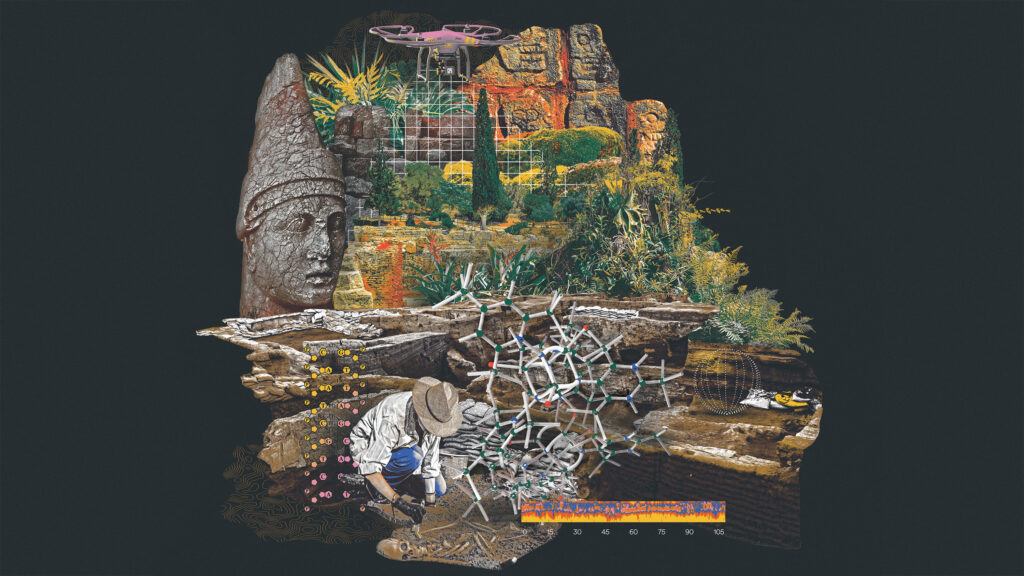
This is today’s edition of The Download, our weekday newsletter that provides a daily dose of what’s going on in the world of technology. Heat waves mess with your brain. Scientists are trying to figure out why. —Jessica Hamzelou It’s been hot in London this week. Really hot. A dangerous heat wave has hit Western Europe. On Wednesday, the UK recorded its highest ever June temperature at 36.1 °C (about 97 °F). But as the weather app on my phone confirmed, it felt like 39 °C. Much of Western Europe is suffering, bringing awful consequences for agriculture, infrastructure, and the health system. But heat can also affect the brain. Studies have confirmed that as temperatures rise, people seem to get more irritable and more violent. And they have shown that firefighters find it harder to focus immediately after heat exposure. Rising temperatures can also have particularly disastrous outcomes for children and people with mental health disorders. Research on lab animals suggests that excessive heat can alter the function of chemical signals in our brains. But we still need a better understanding of the mechanisms behind these effects. Here’s what scientists are learning about extreme heat’s impact on the brain. This story is from The Checkup, our weekly biotech newsletter. Sign up to receive it in your inbox every Thursday. For more on Europe’s heat wave, read our stories on why soaring temperatures are shutting down power plants and what they mean for the grid. The must-reads I’ve combed the internet to find you today’s most fun/important/scary/fascinating stories about technology. 1 The Trump administration has asked OpenAI to limit its next model releaseIt wants to vet the first GPT 5.6 users before a wider launch. (Bloomberg $)+ OpenAI said each of the initial partners will be government-approved. (FT $)+ It’s the first US firm to be told to restrict an AI model before release. (Axios)+ Anthropic is also still feuding with Washington. (MIT Technology Review) 2 Apple and Xbox have hiked prices, blaming AI-driven chip costsSome MacBooks, iPads, and Xboxes are going up in price by over 20%. (BBC)+ Apple’s shares plummeted after the announcement. (NBC)+ AI data center demand has pushed up memory and storage prices. (WSJ $)+ The shortages have been dubbed “RAMaggedon.” (The Verge) 3 Colossal and the US are building an endangered species “biovault”It aims to cryptopreserve over 2,300 plant and animal samples. (Wired $)+ It comes amid growing threats to endangered species protections. (NYT $)+ Colossal is also growing chickens in artificial eggshells. (MIT Technology Review) 4 The US has banned Polestar from selling its EVs due to anti-China rulesThe Sweden-based company is majority-owned by China’s Geely. (CNN)+ The ban is because its connected-vehicle tech is linked to China. (Reuters $)+ What happened to China’s overseas EV factory boom? (Rest of World) 5 China is betting on humanoids to beat its demographic declineIt wants the robots to narrow the labour gap. (FT $)+ Gig workers are training humanoids at home. (MIT Technology Review) 6 The “fingerprints” of a black hole’s event horizon have been detectedThe discovery was made by studying ripples in space-time. (AFP) 7 OpenAI is now expected to delay its IPO until next yearIt’s been spooked by choppy global markets and SpaceX’s slump. (NYT $) 8 Data centers have moved to the forefront of environmental lawsuits The litigation is linked to energy sources, water consumption, and air pollution. (Guardian) 9 A master gene that turns on human development has been uncoveredIt results in cells forming a human body. (New Scientist $) 10 Grok’s most popular feature? SmutIt accounts for “well over half” of the chatbot’s traffic. (The Information $) Quote of the day “The most advanced AI is built by a handful of American companies, on American soil, under American law, and what the rest of us are permitted to do with it can change on a Friday afternoon.” —Nathan Benaich, AI investor at London-based venture firm Air Street Capital, tells the Financial Times about the geopolitical reality of US AI dominance. One More Thing MAX-O-MATIC How technology helped archaeologists dig deeper In 1991, construction workers in Manhattan unearthed hundreds of coffins. Further investigation revealed that the remains were between 200 and 300 years old, and they were all African and African American. This discovery came at an inflection point in scientific history. Breakthroughs in chemical and genetic analysis allowed researchers to figure out where many of these people were born, the physical challenges they faced, and even the routes they took from Africa to North America. Today, archaeologists are using techniques they could only dream of then: lasers, 3D photography, lidar, satellite imagery, and more. These tools are revealing where people came from, how ancient cities were built, and the lives of those who built them. Read the full story on how archaeology is changing our understanding of the past. —Annalee Newitz We can still have nice things A place for comfort, fun, and distraction to brighten up your day. (Got any ideas? Drop me a line.) + Tantalise your taste buds with this culinary tour of the planet’s rarest fruits.+ This Daft Punk and Justice mashup is the French EDM collab that fans never got.+ Daredevils have delightfully transformed playground equipment into a series of terrifying oversized rides.+ The gadget department of your childhood dreams comes to life in this rocket-powered pen disguised as a spy weapon. Top image credit: Sarah Rogers/MITTR | Photos Getty Please send your childhood dreams to hi@technologyreview.com.  You can follow me on LinkedIn. Thanks for reading! —Thomas

The Download: brain-melting heatwaves and unprecedented OpenAI restrictions Read Post »
AI, Committee, 新闻, Uncategorized

IBM has unveiled chip technology that could help extend Moore’s Law another decade

IBM has built a new prototype chip with around 100 billion transistors on an area the size of a fingernail, which is twice the density of the company’s previous state-of-the-art technology announced in 2021. The design could pave the way for faster and more energy efficient computers for years to come. For more than half a century, chipmakers have been able to make ever more powerful computers by following the key principle of Moore’s Law: Cram more transistors onto the chip. To do this, they shrank transistors—the tiny switches that perform computations—to incrementally smaller sizes. But in the last 15 years, transistors have gotten close to the point where quantum mechanics starts to interfere with their function: just a few dozen nanometers in size. They can’t get smaller. So to fit more transistors on a chip, engineers across the industry are eyeing a pivot to an approach familiar to urban planners: build up. On Thursday, IBM announced it has created a chip that uses this strategy. The new architecture, known as a nanostack, vertically stacks transistors in two layers on a silicon chip. “It’s not just an incremental step,” Jay Gambetta, the director of IBM Research, said during a press conference on Tuesday. “It’s a meaningful leap forward.” Within a decade, Gambetta expects, chips with nanostacking will be widely used in data centers, where their improved efficiency could help the facilities better manage their energy consumption. “Absolutely, it’s transformational,” says Dan Hutcheson, vice chair of TechInsights, a technology analysis company. “This puts another 10, 15 years on the roadmap.”  Compared with IBM’s previous state-of-the-art architecture, the company reports, chips built with this new approach can do as much as 50% more work in the same amount of time and be up to 70% more energy efficient.  The architecture offers a general way of laying out transistors, and IBM will partner with semiconductor manufacturers to make the actual chips. It anticipates that chip designers will deploy the design in many different types of chips, including GPUs and CPUs. “I expect to have many conversations with designers about how they can use this technology,” Huiming Bu, IBM’s vice president of global semiconductor R&D, said in the press conference announcing the new design.  A layer cake Engineers created IBM’s new chip layer by layer, like a cake. They start by fabricating transistors on one layer of silicon. Then they place a silicon layer on top of these devices, and they fabricate another layer of transistors directly on top of that. Finally, they create the electrical connections between the two layers of transistors. This kind of vertical stack, which combines two types of transistors, is known as a complementary field-effect transistor, or CFET, explains Qing Cao, a professor of materials science and engineering at the University of Illinois at Urbana-Champaign, who was not involved with the work.  The company isn’t the only one pursuing this general approach. The biggest chip manufacturers—Intel, Samsung, and TSMC—and the competing research lab Imec in Belgium have been investigating CFETs. IBM says its design is distinguished by the fact that the transistors in the second layer do not sit directly on top of the first layer’s transistors; rather, they are staggered, which the company says simplifies wiring, among other advantages.  CFETs like those in IBM’s nanostack architecture contrast with another common approach to making two-tiered chips, such as AMD’s 3D V-Cache and Huawei’s forthcoming LogicFolding technology, Cao says. In those approaches, engineers fabricate the transistors on each layer of the chip independently before bonding the two together. IBM’s new method allows for more precise alignment of the layers, which is important for performance because transistors are so tiny, says Cao.  Nanostacking builds on an approach called nanosheet technology, which has been used to make current state-of-the-art transistors since around 2022. A transistor is essentially a hose through which electrons flow, with a valve that can turn the flow on or off. Inside the transistor, electrons move through a patch of the silicon called a channel. In IBM’s nanostack approach, the channel consists of three nanosheets that are each 15 atoms thick, spaced nine nanometers apart.  Every chip generation gets a name. IBM refers to its nanostack technology as “sub-nanometer” or “0.7 nanometer,” following a longtime industry convention where each generation is named for a smaller and smaller length. But “0.7 nanometer” is a marketing term and does not correspond to any physical characteristics of the chip. The distance between transistors “has been staying at about 40 nanometers for quite a long period of time,” says Cao.  Putting it into production Looking ahead, chipmakers can try increasing transistor density by building on more tiers, as Bu suggested in the press conference. However, they will face practical challenges, according to Cao. Manufacturing introduces errors, which means a certain number of chips are faulty upon creation. “Here you’re building another layer on top, so if either top layer or bottom layer fail, your entire chip is going to fail,” says Cao. The resulting failure rate will be higher than for single-layer chips, and that will be costly. Another central challenge is what Cao calls “the thermal budget.” Essentially, it means that engineers need to figure out how to build each layer without melting the connections to the one underneath. This means keeping manufacturing processes below 400 °C. IBM figured out how to make the second stack at low enough temperature, although the company is mum about its methods.  Academics are also on the case. Cao’s group, for example, has created a method for stacking transistors layer by layer where the second layer is created with processes below 200 °C. They manage this by using a type of transistor known as the junctionless transistor, which can be created without a typically required step called doping—a process that injects non-silicon atoms into silicon to tune the material’s properties. Doping is usually the hottest part of fabricating transistors. Cao thinks from a thermal management perspective, his approach could be easier to scale up to

IBM has unveiled chip technology that could help extend Moore’s Law another decade Read Post »

AI, Committee, 新闻, Uncategorized

Repositioning retail for the AI era

Artificial intelligence is rapidly reshaping retail, but not in the ways consumers might immediately notice. The biggest transformation may not be flashy virtual try-ons or chatbot shopping assistants, but in how decisions are made behind the scenes: how products surface in search results, how inventory moves through supply chains, how engineers ship code faster, and how retailers respond to customer behavior in real time. As legacy retailers navigate a fragmented and hyper-competitive landscape, AI is becoming an operating philosophy. At Macy’s, that philosophy is more often defined by what senior director of engineering Murali Murugan describes as an “AI-first” approach. “AI first isn’t about adding intelligence on top,” Murugan says. “It’s about redesigning how decisions happen so the business moves faster and every experience feels more relevant by default.” Rather than layering AI onto existing workflows, Macy’s is embedding intelligence directly into systems that include personalization, search, operational planning, and software development itself. The company’s strategy is reflective of a larger shift taking place across retail: moving from isolated AI pilots toward integrated systems designed to compress, as Murugan puts it, “the gap between the signal and the action.” Early efforts focused on narrow, high-impact use cases like search recommendations and customer engagement, where measurable gains in conversion and reduced friction quickly built internal momentum. “Once we established the quick wins, scaling was a business decision, not a technology debate anymore,” he says. That momentum is now extending into conversational commerce through tools like Ask Macy’s, an AI-powered shopping assistant designed to act more like a personal stylist than a traditional search bar. Whether for a prom, a vacation, or a last-minute event, customers can describe what they need conversationally and receive curated recommendations informed by past purchases, preferences, and context. Still, the company sees AI as more of an invisible layer augmenting human judgment than a replacement for it. The long-term vision is retail that feels increasingly seamless, adaptive, and personalized, powered by systems customers may never even notice are there. “The real transformation in this all comes from continuous improvement,” Murugan says. “It’s about learning from the mistakes, quickly adapting to the newer technology standards that are coming into play, timing, and execution which compound into a meaningfully better customer experience.”  This webcast is produced in partnership with Infosys. This content was produced by Insights, the custom content arm of MIT Technology Review. It was not written by MIT Technology Review’s editorial staff. It was researched, designed, and written by human writers, editors, analysts, and illustrators. This includes the writing of surveys and collection of data for surveys. AI tools that may have been used were limited to secondary production processes that passed thorough human review.

Repositioning retail for the AI era Read Post »

AI, Committee, 新闻, Uncategorized

The Download: Europe’s heat wave hits the grid, and IBM’s chip targets Moore’s Law

This is today’s edition of The Download, our weekday newsletter that provides a daily dose of what’s going on in the world of technology. Europe’s extreme heat is shutting down power plants Europe is in the middle of a record-breaking heat wave, and the grid is being pushed to its limits as people turn to fans and air-conditioning to try to stay cool. But some power plants won’t be online to help handle the load. The main source of stress is increased demand, largely driven by cooling. And the challenges are only expected to worsen as climate change brings more frequent and intense heat waves. Find out how rising temperatures are stretching power supplies—and how utilities can adapt. —Casey Crownhart What Europe’s heat wave means for the power grid Grid planning in the age of climate change generally means that we need a lot more supply, and quickly. But one interesting facet to this challenge is that in some places, seasonal patterns are shifting, compounding the difficulty of meeting demand.  Europe has historically seen its grid peak in the winter when electric heating is widespread. So some planned outages happen in the spring and into the summer, which is affecting the supply right now. But a growing need for air-conditioning will alter the balance. Read the full story on how climate change is reshaping electricity demand. —Casey Crownhart This story is from The Spark, our weekly newsletter giving you the inside track on all things climate. Sign up to receive it in your inbox every Wednesday. IBM unveils chip technology that could help extend Moore’s Law another decade IBM has built a new prototype chip with around 100 billion transistors on an area the size of a fingernail. That’s twice the density of the company’s previous state-of-the-art technology announced in 2021. And the design could pave the way for faster and more energy-efficient computers for years to come. In the last fifteen years, transistors have been shrunk close to their limits. They can’t get smaller without their function deteriorating. IBM’s new chip resolves this with an approach familiar to urban planners: building up. Here’s how the strategy is bringing new hope to the technology industry.  —Sophia Chen The must-reads I’ve combed the internet to find you today’s most fun/important/scary/fascinating stories about technology. 1 Anthropic says Alibaba “illicitly” extracted Claude’s capabilities It claims the Chinese firm ran a “brazen” campaign to access the model. (BBC)+ It says it’s the “largest known distillation attack” on the company. (CNBC)+ The technique trains a weaker model on a stronger one’s outputs. (FT $)+ Anthropic previously accused other Chinese rivals of using it. (CNN)+ But it’s still feuding with the White House. (MIT Technology Review) 2 NASA has detected possible chemical signatures of ancient life on MarsThe Perseverance rover spotted complex carbon on rocks. (New Scientist $)+ The molecules are typically associated with dead organisms. (Guardian)+ The US has lost its lead in the hunt for alien life. (MIT Technology Review) 3 The EU has joined a US pact to stop relying on Chinese AIMuch of the rest of the world seems to still be a battleground for control. (FT $)+ China is expanding its AI push in the Global South to counter the US. (The Wire China)+ Chinese AI experts are freaking out about the AI arms race. (Wired $) 4 OpenAI and Broadcom have unveiled their first jointly designed AI chipJalapeño is built to power large-scale AI systems like ChatGPT. (NYT $)+ It’s part of OpenAI’s push to “build the full stack.” (CNBC) 5 A new report shows ICE has built a vast hi-tech surveillance systemIt includes facial recognition, drones, and data scraping.(Guardian)+ Is the Pentagon allowed to surveil citizens with AI? (MIT Technology Review) 6 Electronics can now be printed onto living tissueWhich could enable smart implants and ingestible diagnostics. (The Economist $) 7 The data center boom is sparking a third wave of inflation Demand for memory chips is pushing prices higher.(WSJ $) 8 Companies are scrambling to curb spending on AI token “chewing”Accenture data shows non-technical staff are draining budgets. (404 Media) 9 Claude Design is creating a bland wave of website uniformityThe AI tool is homogenizing the internet’s aesthetic. (The New Yorker $) 10 Elon Musk has lost his trillionaire statusThanks to SpaceX stock coming back to Earth. (Business Insider) Quote of the day “Tom Brown is not being a weirdo like Dario and can actually engage.”  —A person directly familiar with calls between the Trump administration and Anthropic tells Wired that they’ve improved since cofounder Tom Brown replaced CEO Dario Amodei in the talks. One More Thing TONY LUONG The quest to learn if our brain’s mutations affect mental health For years, scientists searching for the roots of conditions like schizophrenia, autism, and Alzheimer’s have focused on single genes. But the real source may lie in a more complex genetic puzzle inside the brain. Mike McConnell has spent decades exploring the idea that neurons do not all share identical DNA, and that these differences could help explain psychiatric disease. His work has contributed to evidence that brain cells can form a “genetic mosaic,” with mutations that vary across the brain. Discover how this could reshape our understanding of mental illness. —Roxanne Khamsi We can still have nice things A place for comfort, fun, and distraction to brighten up your day. (Got any ideas? Drop me a line.) + This classical reimagining of the Super Mario soundtrack is exquisite.+ At long last, we can calculate the fuel efficiency of launching our enemies into the Sun.+ Before CGI, explosions were an art form. This compilation of classic practical effects is pure action-movie nostalgia.+ Cambridge botanists lovingly recreated a 336-year-old garden to honor the “father of natural history.” (Big thanks to reader Peter Ryan for the find!) 

The Download: Europe’s heat wave hits the grid, and IBM’s chip targets Moore’s Law Read Post »

AI, Committee, 新闻, Uncategorized

DeepReinforce Releases Ornith-1.0: An Open-Source Coding Model Family That Learns Its Own RL Scaffolds

DeepReinforce has released Ornith-1.0, an open-source model family built for agentic coding. The lineup spans four sizes, from a 9B dense model to a 397B mixture-of-experts flagship. Every checkpoint ships under the MIT license on Hugging Face. The models are post-trained on top of pretrained Gemma 4 and Qwen 3.5. Most coding agents pair a model with a fixed, human-designed harness. Ornith-1.0 instead learns to write its own. The DeepReinforce research team reports state-of-the-art results among open models of comparable size. TL;DR Ornith-1.0 ships in 9B, 31B, 35B-MoE, and 397B-MoE sizes under MIT, built on Gemma 4 and Qwen 3.5. The model learns its own scaffold during RL, jointly optimizing the harness and the solution. Ornith-1.0-397B tops Claude Opus 4.7 on both headline benchmarks, but not Opus 4.8 or the larger GLM-5.2-744B. Three layers — fixed trust boundary, deterministic monitor, frozen LLM judge — guard against reward hacking. What is Ornith-1.0? Ornith-1.0 is a set of reasoning models tuned for coding agents. The variants are 9B Dense, 31B Dense, 35B MoE, and 397B MoE. The 35B model is mixture-of-experts and activates roughly 3B parameters per token. FP8 and GGUF builds are also published for faster local serving. Each model is a reasoning model. Replies open with a <think> block before the final answer. The serving recipes enable a reasoning parser, so that trace returns in a separate reasoning_content field. The models also emit well-formed tool calls for agent loops. Deployment is straightforward. The 9B model is about 19GB in bf16 and serves on a single 80GB GPU. Serving recipes target vLLM, SGLang, and Transformers. Each model exposes an OpenAI-compatible endpoint. Standard agent frameworks therefore work without code changes. Interactive Explainer </button> <button class=”btn gho” id=”resetBtn”>Reset</button> </div> <div class=”stepout” id=”stepOut”>Step 0 — untrained policy with a fixed, hand-written harness.</div> </div> <!– PANEL 2: BENCH –> <div class=”panel” data-panel=”bench”> <div class=”lead”>Vendor-reported scores from DeepReinforce. Pick a model tier and a benchmark. Ornith is highlighted in green. Higher is better.</div> <div class=”seg”><span class=”lab”>Model tier</span> <div class=”chip on” data-tier=”t397″>397B flagship</div> <div class=”chip” data-tier=”t35″>35B MoE</div> <div class=”chip” data-tier=”t9″>9B dense</div> </div> <div class=”seg” id=”benchChips”><span class=”lab”>Benchmark</span></div> <div class=”chart” id=”chart”></div> <div class=”foot-note” id=”benchNote”></div> </div> <!– PANEL 3: DEFENSES –> <div class=”panel” data-panel=”def”> <div class=”lead”>A model that writes its own scaffold could cheat the verifier. DeepReinforce describes three defense layers. Tap each to expand.</div> <div class=”layers”> <div class=”layer open”><div class=”lh”><span class=”num”>1</span><span class=”lt”>Fixed trust boundary</span><span class=”more”>tap</span></div><div class=”lb”>The environment, tool surface, and test isolation are immutable and outside the model’s reach. The model evolves only its inner policy scaffold — memory, error-handling, and orchestration logic.</div></div> <div class=”layer”><div class=”lh”><span class=”num”>2</span><span class=”lt”>Deterministic monitor</span><span class=”more”>tap</span></div><div class=”lb”>A rule-based monitor flags any attempt to read withheld paths, modify verification scripts, or invoke unsanctioned tools. Such trajectories get zero reward and are excluded from the advantage computation.</div></div> <div class=”layer”><div class=”lh”><span class=”num”>3</span><span class=”lt”>Frozen LLM judge</span><span class=”more”>tap</span></div><div class=”lb”>Because intent-level gaming can happen inside the allowed tool surface, a frozen LLM judge acts as a veto on top of the verifier — not as the primary reward signal.</div></div> </div> </div> <div class=”ftr”><span>Source: <a href=”https://deep-reinforce.com/ornith_1_0.html” target=”_blank” rel=”noopener”>deep-reinforce.com</a> · MIT licensed · numbers vendor-reported</span><span><b>Marktechpost</b> · AI Dev Signals</span></div> <script> (function(){ var root=document.getElementById(‘mtp-ornith-demo’); /* tabs */ root.querySelectorAll(‘.tab’).forEach(function(t){ t.addEventListener(‘click’,function(){ root.querySelectorAll(‘.tab’).forEach(function(x){x.classList.remove(‘on’)}); root.querySelectorAll(‘.panel’).forEach(function(x){x.classList.remove(‘on’)}); t.classList.add(‘on’); root.querySelector(‘.panel[data-panel=”‘+t.dataset.p+’”]’).classList.add(‘on’); resize(); }); }); /* loop sim */ var step=0,reward=0.08,timer=null; var scaffs=[ ‘Baseline harness: linear retries, no memory.’, ‘Adds scratchpad memory across tool calls.’, ‘Adds error-triage branch before re-edit.’, ‘Reorders: read tests, then plan, then patch.’, ‘Caches sub-results; prunes dead branches.’, ‘Task-specific orchestration emerges automatically.’]; var outs=[ ‘Fixed harness, no learning yet.’, ‘Fewer redundant file reads observed.’, ‘Recovers from failed edits more often.’, ‘Higher first-pass test success.’, ‘Shorter trajectories, same accuracy.’, ‘Stable high-reward scaffold selected.’]; var nodes=root.querySelectorAll(‘.node’); function lightSeq(cb){ var i=0;nodes.forEach(function(n){n.classList.remove(‘act’)}); var iv=setInterval(function(){ nodes.forEach(function(n){n.classList.remove(‘act’)}); nodes[i].classList.add(‘act’);i++; if(i>=nodes.length){clearInterval(iv);setTimeout(function(){nodes.forEach(function(n){n.classList.remove(‘act’)});cb&&cb();},260);} },220); } function doStep(){ if(step>=5){return;} step++; lightSeq(function(){ reward=[0.08,0.27,0.43,0.58,0.69,0.77][step]; root.querySelector(‘#rFill’).style.width=(reward*100)+’%’; root.querySelector(‘#rVal’).textContent=reward.toFixed(2); root.querySelector(‘#scaffTxt’).textContent=scaffs[step]; root.querySelector(‘#outTxt’).textContent=outs[step]; root.querySelector(‘#stepOut’).innerHTML=’Step ‘+step+’ — <b>scaffold mutated</b>; reward propagated to both stages.’; resize(); }); } root.querySelector(‘#stepBtn’).addEventListener(‘click’,doStep); root.querySelector(‘#autoBtn’).addEventListener(‘click’,function(){ if(timer){clearInterval(timer);timer=null;this.textContent=’Auto-run ‘;return;} this.textContent=’Pause ‘;var b=this; timer=setInterval(function(){if(step>=5){clearInterval(timer);timer=null;b.textContent=’Auto-run ‘;}else{doStep();}},1400); }); root.querySelector(‘#resetBtn’).addEventListener(‘click’,function(){ if(timer){clearInterval(timer);timer=null;root.querySelector(‘#autoBtn’).textContent=’Auto-run ‘;} step=0;reward=0.08; root.querySelector(‘#rFill’).style.width=’8%’; root.querySelector(‘#rVal’).textContent=’0.08′; root.querySelector(‘#scaffTxt’).textContent=scaffs[0]; root.querySelector(‘#outTxt’).textContent=’Press “Run training step” to begin.’; root.querySelector(‘#stepOut’).innerHTML=’Step 0 — untrained policy with a fixed, hand-written harness.’; resize(); }); /* benchmark data (vendor-reported) */ var BENCHES=[‘Terminal-Bench 2.1′,’SWE-Bench Verified’,’SWE-Bench Pro’,’SWE-Bench Multilingual’,’NL2Repo’,’ClawEval Avg’]; var DATA={ t397:{label:’Ornith-1.0-397B’,hero:’Ornith-1.0-397B’, models:[‘Ornith-1.0-397B’,’Qwen3.5-397B’,’Qwen3.7-Max’,’GLM-5.2-744B’,’Minimax-M3-428B’,’DeepSeek-V4-Pro-1.6T’,’Claude Opus 4.7′,’Claude Opus 4.8′], vals:[[77.5,53.5,73.5,81.0,64,64,70.3,85],[82.4,76.4,80.4,null,null,80.6,80.8,87.6],[62.2,51.6,60.6,62.1,59,55.4,64.3,69.2],[78.9,69.3,78.3,null,null,76.2,null,null],[48.2,36.8,47.2,48.9,42.1,null,null,69.7],[77.1,70.7,65.2,null,null,75.8,78.2,null]]}, t35:{label:’Ornith-1.0-35B-A3B’,hero:’Ornith-1.0-35B-A3B’, models:[‘Ornith-1.0-35B-A3B’,’Qwen3.5-35B-A3B’,’Qwen3.6-35B-A3B’,’Gemma4-31B’,’Qwen3.5-397B’], vals:[[64.2,41.4,52.5,42.1,53.5],[75.6,70,73.4,52,76.4],[50.4,44.6,49.5,35.7,51.6],[69.3,60.3,67.2,51.7,69.3],[34.6,20.5,29.4,15.5,36.8],[69.8,65.4,68.7,48.5,70.7]]}, t9:{label:’Ornith-1.0-9B’,hero:’Ornith-1.0-9B’, models:[‘Ornith-1.0-9B’,’Qwen3.5-9B’,’Qwen3.5-35B-A3B’,’Gemma4-12B’,’Gemma4-31B’], vals:[[43.1,21.3,41.4,21,42.1],[69.4,53.2,70,44.2,52],[42.9,31.3,44.6,27.6,35.7],[52,39.7,60.3,32.5,51.7],[27.2,16.2,20.5,10.3,15.5],[63.1,53.2,65.4,32.5,48.5]]} }; var curTier=’t397′,curB=0; var bchips=root.querySelector(‘#benchChips’); BENCHES.forEach(function(b,i){ var c=document.createElement(‘div’);c.className=’chip’+(i===0?’ on’:”);c.textContent=b;c.dataset.b=i; c.addEventListener(‘click’,function(){curB=i;bchips.querySelectorAll(‘.chip’).forEach(function(x){x.classList.remove(‘on’)});c.classList.add(‘on’);draw();}); bchips.appendChild(c); }); root.querySelectorAll(‘.chip[data-tier]’).forEach(function(c){ c.addEventListener(‘click’,function(){curTier=c.dataset.tier;root.querySelectorAll(‘.chip[data-tier]’).forEach(function(x){x.classList.remove(‘on’)});c.classList.add(‘on’);draw();}); }); function draw(){ var d=DATA[curTier];var row=d.vals[curB];var chart=root.querySelector(‘#chart’);chart.innerHTML=”; var max=Math.max.apply(null,row.filter(function(v){return v!=null})); d.models.forEach(function(m,i){ var v=row[i];var hero=(m===d.hero); var div=document.createElement(‘div’);div.className=’row’+(hero?’ hero’:”)+(v==null?’ na’:”); div.innerHTML='<div class=”nm”>’+m+'</div><div class=”bt”><div class=”bf”></div></div><div class=”vl”>’+(v==null?’n/a’:v)+'</div>’; chart.appendChild(div); (function(bf,val){setTimeout(function(){bf.style.width=(val==null?0:(val/max*100))+’%’;},40);})(div.querySelector(‘.bf’),v); }); root.querySelector(‘#benchNote’).textContent=’Benchmark: ‘+BENCHES[curB]+’. Bars scaled to the highest score shown. “n/a” = not reported by the vendor. Self-reported, not independently verified.’; resize(); } draw(); /* defenses accordion */ root.querySelectorAll(‘.layer’).forEach(function(l){ l.addEventListener(‘click’,function(){l.classList.toggle(‘open’);resize();}); }); /* auto-resize for WordPress iframe */ function resize(){ try{ var h=root.offsetHeight+40; if(window.parent){window.parent.postMessage({type:’mtp-ornith-height’,height:h},’*’);} }catch(e){} } window.addEventListener(‘load’,resize); setTimeout(resize,300); window.addEventListener(‘resize’,resize); })(); </script> </div> ” style=”width:100%;border:0;display:block;min-height:600px;overflow:hidden” height=”600″ scrolling=”no” loading=”lazy” title=”Ornith-1.0 Interactive Explainer”> The Self-Scaffolding Idea Most coding agents rely on a scaffold, also called a harness. A scaffold wraps the model with memory, tools, error handling, and orchestration logic. AI teams usually hand-design one scaffold per task category. Ornith-1.0 treats the scaffold as a learnable object instead. During reinforcement learning, the scaffold co-evolves with the model’s policy. Each RL step runs in two stages. First, the model reads the task and its previous scaffold. It then proposes a refined scaffold. Second, it uses that scaffold and the task to generate a solution rollout. Reward from the rollout flows back to both stages. So the model is optimized to author orchestration, not just answers. Over training, higher-reward scaffolds are mutated and selected automatically. Per-task strategies emerge without hand-engineered harness design. Training also runs asynchronously, using a pipeline-RL setup. A staleness weight downweights older, off-policy tokens and drops them past a threshold. The optimization uses a token-level GRPO objective. Guarding Against Reward Hacking Letting a model write its own scaffold invites reward hacking. A scaffold could read visible test files and hardcode expected outputs. It could also copy an oracle solution sitting in the environment. DeepReinforce team describes three defense layers. The outer trust

DeepReinforce Releases Ornith-1.0: An Open-Source Coding Model Family That Learns Its Own RL Scaffolds Read Post »

AI, Committee, 新闻, Uncategorized

The Download: introducing the Engineering issue

This is today’s edition of The Download, our weekday newsletter that provides a daily dose of what’s going on in the world of technology. Introducing: the Engineering issue We can’t fix everything, but we can be ambitious. We can take on the challenge of making the world better through human ingenuity. That’s what the new Engineering issue of MIT Technology Review is all about.  Sometimes the challenges we face are giant, like tunneling beneath the seafloor. Some exist at the nanoscale, as with a new ASML machine powering the future of chipmaking. Others represent problems at a planetary scale and in truly unknown territory, like replicating a volcano’s mechanism to cool the Earth on purpose. These incredible engineering stories show we can come together to get to work and, when the smoke clears, find we’ve made real progress. Subscribe now to read all of them—and more—in the full print issue. Stripe, Anthropic, and OpenAI are backing an effort to stop respiratory infections The common cold comes for us all—often more than once a year. And there is no way to prevent it. The best you can do is take vitamin C and stay away from people with the sniffles. Now, the payment company Stripe is funding a new $500-million nonprofit aiming to prevent both the common cold and the flu. Its eventual goal is to get rid of respiratory viruses altogether. Anthropic, OpenAI, and Bill Gates have also backed the venture, which will investigate whether modern technologies can counter the common cold and the flu. Dive into the nonprofit’s plans. —Antonio Regalado MIT Technology Review Narrated: inside the hunt for the most dangerous asteroid ever As asteroid 2024 YR4 hurtled toward Earth, astronomers determined that this massive rock posed a higher risk of impact than any object of its size in recorded history. Then, just as quickly as history was made, experts declared that the danger had passed.  This is the inside story of the network of global scientists who found, followed, planned for, and finally dismissed the most dangerous asteroid ever discovered —all under the tightest of timelines and with the highest of stakes. —Robin George Andrews This is our latest story to be turned into an MIT Technology Review Narrated podcast, which we publish each week on Spotify and Apple Podcasts. Just navigate to MIT Technology Review Narrated on either platform, and follow us to get all our new content as it’s released. The must-reads I’ve combed the internet to find you today’s most fun/important/scary/fascinating stories about technology. 1 China has taken the US’s crown for the world’s fastest supercomputer Shenzhen’s LineShine overtook California’s El Capitan. (Axios)+ China had not had a machine at the top of the list since 2017. (NYT $)+ But the supercomputer race isn’t geared for AI work. (Reuters $) 2 Mythos reportedly found flaws in classified US government systemsA US official said Anthropic’s model identified certain vulnerabilities. (AP News)+ The model has now been suspended over US security concerns. (BBC)+ The NSA has lost access to Anthropic’s tools in fallout. (Engadget)+ The feud raises new questions about AI safety. (MIT Technology Review)  3 A US pilot reported seeing Iranian drones swarm in “jellyfish” formationWhich would represent an alarming advance in Iranian drone capabilities. (CNN)+ The US is heading toward a drone-filled future. (MIT Technology Review) 4 Mark Zuckerberg directed Meta to create a prediction markets appIt will be similar to Polymarket and Kalshi. (NYT $)+ But won’t let users wager real money. (The Verge) + Another new app, Meta Photos, will create media with AI. (Reuters $) 5 SpaceX’s “Starfall” just launched a secretive test flightThe orbital delivery spacecraft blasted off for the first time yesterday. (Axios)+ It could also support space manufacturing. (New Scientist $) 6 Alibaba has sued the US for being linked to the Chinese militaryIt wants to be removed from a Pentagon blacklist. (Reuters $) 7 Nvidia’s banned AI chips have doubled in price on China’s black marketThe DGX B300 now costs more than $1.1 million. (Financial Times $) 8 Tesla claims a driver “manually overrode self-driving” in a deadly crashIt said the accelerator was pressed “all the way to 100%.” (The Verge $) 9 The US science retreat has created an opportunity for EuropeBut questions about funding and innovation remain. (Nature)+ Trump has dealt many blows to US science. (MIT Technology Review) 10 Meta’s new smart glasses ditch Ray-Bans for Kylie Jenner Meta logos and Jenner designs have replaced the Ray-Ban branding. (Wired $) Quote of the day “It’s blasphemy against AI if ‌you say it’s a bubble.” —SoftBank founder and CEO Masayoshi Son tells shareholders that the AI boom is still in its early stages, Reuters reports. One More Thing ERIK CARTER Video games are dividing South Korea They say StarCraft was the game that changed everything. When the science fiction strategy game arrived in South Korea in 1998, it wasn’t just a hit—it was an awakening. Out of 11 million copies sold worldwide, 4.5 million were in the country. The game was so popular that it triggered another boom: “PC bangs,” pay-as-you-go gaming cafés. StarCraft and PC bangs spoke to a generation of young South Koreans boxed in by economic anxiety and rising academic pressures. But they also sparked arguments about game addiction. They’ve led to feuds between government departments—and a national debate over policy. Read the full story. —Max S. Kim We can still have nice things A place for comfort, fun, and distraction to brighten up your day. (Got any ideas? Drop me a line.) + This archive lovingly documents the beautiful design of over 1,700 obsolete objects.+ Classic TV theme tunes like Hey Arnold! Have been revived in a musician’s marvellous samples.+ Marvel at the mind-boggling geometry of nature and see how bees perfectly construct honeycombs.+ Hear the ominous, deeply atmospheric tones of a custom string instrument built inside a plastic drainage pipe.

The Download: introducing the Engineering issue Read Post »

AI, Committee, 新闻, Uncategorized

Stripe, Anthropic, and OpenAI are backing an effort to stop respiratory infections

The common cold comes for us all—often more than once a year. And there is no way to prevent it. The best you can do is take vitamin C and stay away from people with the sniffles. Now the payment company Stripe, founded by brothers Patrick and John Collison, says it will fund a new $500 million nonprofit whose goal is preventing both the common cold and the flu. Its eventual aim is to get rid of respiratory viruses altogether. The new organization, called Intercept, will use grants and investments to back prevention approaches, including vaccines, as well as large-scale air-cleaning systems for schools, offices, and other public spaces. In addition to Stripe, other funders include Anthropic, Flu Lab, and the OpenAI Foundation, as well as Bill Gates and several traders at the quantitative investing fund Jane Street Capital, according to an Intercept spokesperson. “I think we treat respiratory infections as a minor nuisance, but have really underweighted the burden that they impose on society,” says Nan Ransohoff, the Stripe executive leading the initiative along with Charlie Petty, a venture capitalist who joined Stripe this year. On average, people spend 5% of their lifetime fighting a cold or the flu, according to Ransohoff. Despite that, drug companies put relatively little effort into preventing colds. Part of the problem is that the sniffles are caused by more than 200 different viruses, according to the American Lung Association, with rhinoviruses being the most common culprits. There are so many that it typically doesn’t pay to try to stop any one of them with a vaccine. “When pharma companies look at it, it’s not as attractive as other things they could work on,” says Ransohoff. “So it hasn’t attracted the resources.” Stripe previously organized a $1.8 billion program called Frontier to encourage the development of carbon removal technology, as a way of countering climate change. Ransohoff says removing carbon from the atmosphere and getting rid of respiratory viruses are similar in that each is “technically possible” but they “lack commercial incentives.” The concept for Intercept took shape after Ransohoff started talking to David Veesler, a structural biologist and vaccine designer at the University of Washington, who argued that it’s possible to come up with broad countermeasures that work against many viruses at once.  “He effectively sort of nerd-sniped me,” Ransohoff says of Veesler. “He convinced me that this is technically possible. He also helped me understand that some of the reasons that this hasn’t been done before was sort of an incentive problem.” Veesler says the growing tool kit available to scientists includes RNA drugs, antibodies, and computational protein design. For instance, one idea is to engineer virus-grabbing proteins that people could spray in their nasal passages, to catch viruses before they cause infection.  “Most people just accept these viruses as a fact of life, and that got us thinking: Do we have to accept it?” says Veesler. “The more we thought about it, the more we realized that many of these problems have not been worked on with modern technologies.” The project takes inspiration from efforts to fight the covid-19 virus, where Veesler’s group was among those involved in the speedy development of vaccines, antiviral drugs, and antibodies.  According to Ransohoff, Intercept’s advisors will include Peter Marks, a former top FDA official, as well as Moncef Slaoui, the pharmaceutical executive who led the US coronavirus vaccine effort, Operation Warp Speed. A key challenge for Intercept will be coming up with ways to counter many viruses at one time. That accounts for the interest in air-cleaning technology, such as using strong ultraviolet light to inactivate viruses. The idea, the group says, is to remove them from the air in the same way municipalities remove impurities from the water supply before it’s piped to people’s homes. The US funds about $6.5 billion a year in virus research through the National Institute of Allergy and Infectious Disease, or NIAID. But that agency’s budget hasn’t grown in recent years, leaving more room for private philanthropy. And Stripe’s Collison brothers have become some of the most reliable philanthropists in viral research. After giving away “fast grants” to help labs during the covid-19 pandemic, they later joined other donors who committed $650 million to establish the Arc Institute in Palo Alto, California, which has developed AI models for biological research. “The diversity of viruses is just too large and seems daunting, so people don’t even try,” says Veesler. “I’m happy that someone is ready to help scientists, not accepting the status quo, and doing something different.”

Stripe, Anthropic, and OpenAI are backing an effort to stop respiratory infections Read Post »

We use cookies to improve your experience and performance on our website. You can learn more at 隱私權政策 and manage your privacy settings by clicking Settings.

Privacy Preferences

You can choose your cookie settings by turning on/off each type of cookie as you wish, except for essential cookies.

Allow All
Manage Consent Preferences
  • Always Active

Save
zh_CN