MiniMax Releases M2.1: An Enhanced M2 Version with Features like Multi-Coding Language Support, API Integration, and Improved Tools for Structured Coding
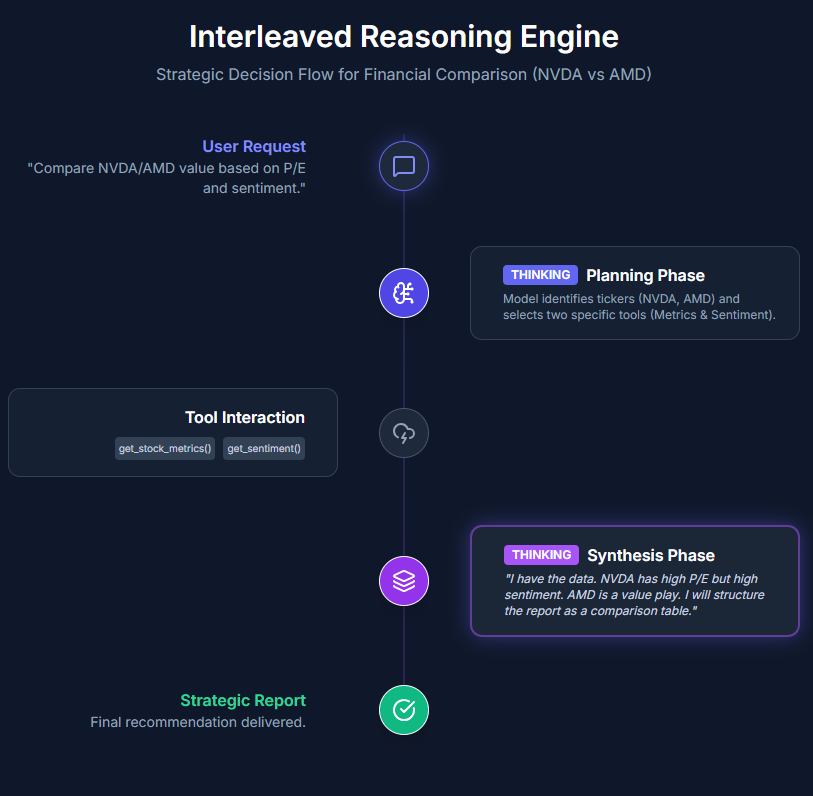
Just months after releasing M2—a fast, low-cost model designed for agents and code—MiniMax has introduced an enhanced version: MiniMax M2.1. M2 already stood out for its efficiency, running at roughly 8% of the cost of Claude Sonnet while delivering significantly higher speed. More importantly, it introduced a different computational and reasoning pattern, particularly in how the model structures and executes its thinking during complex code and tool-driven workflows. M2.1 builds on this foundation, bringing tangible improvements across key areas: better code quality, smarter instruction following, cleaner reasoning, and stronger performance across multiple programming languages. These upgrades extend the original strengths of M2 while staying true to MiniMax’s vision of “Intelligence with Everyone.” Strengthening the core capabilities of M2, M2.1 is no longer just about better coding—it also produces clearer, more structured outputs across conversations, documentation, and writing. Core Capabilities and Benchmark Results Built for real-world coding and AI-native teams: Designed to support everything from rapid “vibe builds” to complex, production-grade workflows. Goes beyond coding: Produces clearer, more structured, and higher-quality outputs across everyday conversations, technical documentation, and writing tasks. State-of-the-art multilingual coding performance: Achieves 72.5% on SWE-Multilingual, outperforming Claude Sonnet 4.5 and Gemini 3 Pro across multiple programming languages. Strong AppDev & WebDev capabilities: Scores 88.6% on VIBE-Bench, exceeding Claude Sonnet 4.5 and Gemini 3 Pro, with major improvements in native Android, iOS, and modern web development. Excellent agent and tool compatibility: Delivers consistent and stable performance across leading coding tools and agent frameworks, including Claude Code, Droid (Factory AI), Cline, Kilo Code, Roo Code, BlackBox, and more. Robust context management support: Works reliably with advanced context mechanisms such as Skill.md, Claude.md / agent.md / cursorrule, and Slash Commands, enabling scalable agent workflows. Automatic caching, zero configuration: Built-in caching works out of the box to reduce latency, lower costs, and deliver a smoother overall experience. Getting Started with MiniMax M2.1 To get started with MiniMax M2.1, you’ll need an API key from the MiniMax platform. You can generate one from the MiniMax user console. Once issued, store the API key securely and avoid exposing it in code repositories or public environments. Installing & Setting up the dependencies MiniMax supports both the Anthropic and OpenAI API formats, making it easy to integrate MiniMax models into existing workflows with minimal configuration changes—whether you’re using Anthropic-style message APIs or OpenAI-compatible setups. Copy CodeCopiedUse a different Browser pip install anthropic Copy CodeCopiedUse a different Browser import os from getpass import getpass os.environ[‘ANTHROPIC_BASE_URL’] = ‘https://api.minimax.io/anthropic’ os.environ[‘ANTHROPIC_API_KEY’] = getpass(‘Enter MiniMax API Key: ‘) With just this minimal setup, you’re ready to start using the model. Sending Requests to the Model MiniMax M2.1 returns structured outputs that separate internal reasoning (thinking) from the final response (text). This allows you to observe how the model interprets intent and plans its answer before producing the user-facing output. Copy CodeCopiedUse a different Browser import anthropic client = anthropic.Anthropic() message = client.messages.create( model=”MiniMax-M2.1″, max_tokens=1000, system=”You are a helpful assistant.”, messages=[ { “role”: “user”, “content”: [ { “type”: “text”, “text”: “Hi, how are you?” } ] } ] ) for block in message.content: if block.type == “thinking”: print(f”Thinking:n{block.thinking}n”) elif block.type == “text”: print(f”Text:n{block.text}n”) Copy CodeCopiedUse a different Browser Thinking: The user is just asking how I am doing. This is a friendly greeting, so I should respond in a warm, conversational way. I’ll keep it simple and friendly. Text: Hi! I’m doing well, thanks for asking! I’m ready to help you with whatever you need today. Whether it’s coding, answering questions, brainstorming ideas, or just chatting, I’m here for you. What can I help you with? What makes MiniMax stand out is the visibility into its reasoning process. Before producing the final response, the model explicitly reasons about the user’s intent, tone, and expected style—ensuring the answer is appropriate and context-aware. By cleanly separating reasoning from responses, the model becomes easier to interpret, debug, and trust, especially in complex agent-based or multi-step workflows, and with M2.1 this clarity is paired with faster responses, more concise reasoning, and substantially reduced token consumption compared to M2. Testing the Model’s Coding Capabilities MiniMax M2 stands out for its native mastery of Interleaved Thinking, allowing it to dynamically plan and adapt within complex coding and tool-based workflows, and M2.1 extends this capability with improved code quality, more precise instruction following, clearer reasoning, and stronger performance across programming languages—particularly in handling composite instruction constraints as seen in OctoCodingBench—making it ready for office automation. To evaluate these capabilities in practice, let’s test the model using a structured coding prompt that includes multiple constraints and real-world engineering requirements. Copy CodeCopiedUse a different Browser import anthropic client = anthropic.Anthropic() def run_test(prompt: str, title: str): print(f”n{‘=’*80}”) print(f”TEST: {title}”) print(f”{‘=’*80}n”) message = client.messages.create( model=”MiniMax-M2.1″, max_tokens=10000, system=( “You are a senior software engineer. ” “Write production-quality code with clear structure, ” “explicit assumptions, and minimal but sufficient reasoning. ” “Avoid unnecessary verbosity.” ), messages=[ { “role”: “user”, “content”: [{“type”: “text”, “text”: prompt}] } ] ) for block in message.content: if block.type == “thinking”: print(” Thinking:n”, block.thinking, “n”) elif block.type == “text”: print(” Output:n”, block.text, “n”) PROMPT= “”” Design a small Python service that processes user events. Requirements: 1. Events arrive as dictionaries with keys: user_id, event_type, timestamp. 2. Validate input strictly (types + required keys). 3. Aggregate events per user in memory. 4. Expose two functions: – ingest_event(event: dict) -> None – get_user_summary(user_id: str) -> dict 5. Code must be: – Testable – Thread-safe – Easily extensible for new event types 6. Do NOT use external libraries. Provide: – Code only – Brief inline comments where needed “”” run_test(prompt=PROMPT, title=”Instruction Following + Architecture”) This test uses a deliberately structured and constraint-heavy prompt designed to evaluate more than just code generation. The prompt requires strict input validation, in-memory state management, thread safety, testability, and extensibility—all without relying on external libraries. By combining architectural decisions with multiple non-trivial constraints, the prompt operates at a medium-to-high complexity level, making it well-suited for assessing how effectively MiniMax M2.1 follows instructions, reasons through design trade-offs, and produces