YouZum

Uncategorized

AI, Committee, Nachrichten, Uncategorized

Meet LLMRouter: An Intelligent Routing System designed to Optimize LLM Inference by Dynamically Selecting the most Suitable Model for Each Query

LLMRouter is an open source routing library from the U Lab at the University of Illinois Urbana Champaign that treats model selection as a first class system problem. It sits between applications and a pool of LLMs and chooses a model for each query based on task complexity, quality targets, and cost, all exposed through a unified Python API and CLI. The project ships with more than 16 routing models, a data generation pipeline over 11 benchmarks, and a plugin system for custom routers. Router families and supported models LLMRouter organizes routing algorithms into four families, Single-Round Routers, Multi-Round Routers, Personalized Routers, and Agentic Routers. Single round routers include knnrouter, svmrouter, mlprouter, mfrouter, elorouter, routerdc, automix, hybrid_llm, graphrouter, causallm_router, and the baselines smallest_llm and largest_llm. These models implement strategies such as k nearest neighbors, support vector machines, multilayer perceptrons, matrix factorization, Elo rating, dual contrastive learning, automatic model mixing, and graph based routing. Multi round routing is exposed through router_r1, a pre trained instance of Router R1 integrated into LLMRouter. Router R1 formulates multi LLM routing and aggregation as a sequential decision process where the router itself is an LLM that alternates between internal reasoning steps and external model calls. It is trained with reinforcement learning using a rule based reward that balances format, outcome, and cost. In LLMRouter, router_r1 is available as an extra installation target with pinned dependencies tested on vllm==0.6.3 and torch==2.4.0. Personalized routing is handled by gmtrouter, described as a graph based personalized router with user preference learning. GMTRouter represents multi turn user LLM interactions as a heterogeneous graph over users, queries, responses, and models. It runs a message passing architecture over this graph to infer user specific routing preferences from few shot interaction data, and experiments show accuracy and AUC gains over non personalized baselines. Agentic routers in LLMRouter extend routing to multi step reasoning workflows. knnmultiroundrouter uses k nearest neighbor reasoning over multi turn traces and is intended for complex tasks. llmmultiroundrouter exposes an LLM based agentic router that performs multi step routing without its own training loop. These agentic routers share the same configuration and data formats as the other router families and can be swapped through a single CLI flag. Data generation pipeline for routing datasets LLMRouter ships with a full data generation pipeline that turns standard benchmarks and LLM outputs into routing datasets. The pipeline supports 11 benchmarks, Natural QA, Trivia QA, MMLU, GPQA, MBPP, HumanEval, GSM8K, CommonsenseQA, MATH, OpenBookQA, and ARC Challenge. It runs in three explicit stages. First, data_generation.py extracts queries and ground truth labels and creates train and test JSONL splits. Second, generate_llm_embeddings.py builds embeddings for candidate LLMs from metadata. Third, api_calling_evaluation.py calls LLM APIs, evaluates responses, and fuses scores with embeddings into routing records. (GitHub) The pipeline outputs query files, LLM embedding JSON, query embedding tensors, and routing data JSONL files. A routing entry includes fields such as task_name, query, ground_truth, metric, model_name, response, performance, embedding_id, and token_num. Configuration is handled entirely through YAML, so engineers point the scripts to new datasets and candidate model lists without modifying code. Chat interface and plugin system For interactive use, llmrouter chat launches a Gradio based chat frontend over any router and configuration. The server can bind to a custom host and port and can expose a public sharing link. Query modes control how routing sees context. current_only uses only the latest user message, full_context concatenates the dialogue history, and retrieval augments the query with the top k similar historical queries. The UI visualizes model choices in real time and is driven by the same router configuration used for batch inference. LLMRouter also provides a plugin system for custom routers. New routers live under custom_routers, subclass MetaRouter, and implement route_single and route_batch. Configuration files under that directory define data paths, hyperparameters, and optional default API endpoints. Plugin discovery scans the project custom_routers folder, a ~/.llmrouter/plugins directory, and any extra paths in the LLMROUTER_PLUGINS environment variable. Example custom routers include randomrouter, which selects a model at random, and thresholdrouter, which is a trainable router that estimates query difficulty. Key Takeaways Routing as a first class abstraction: LLMRouter is an open source routing layer from UIUC that sits between applications and heterogeneous LLM pools and centralizes model selection as a cost and quality aware prediction task rather than ad hoc scripts. Four router families covering 16 plus algorithms: The library standardizes more than 16 routers into four families, single round, multi round, personalized, and agentic, including knnrouter, graphrouter, routerdc, router_r1, and gmtrouter, all exposed through a unified config and CLI. Multi round RL routing via Router R1: router_r1 integrates the Router R1 framework, where an LLM router interleaves internal “think” steps with external “route” calls and is trained with a rule based reward that combines format, outcome, and cost to optimize performance cost trade offs. Graph based personalization with GMTRouter: gmtrouter models users, queries, responses and LLMs as nodes in a heterogeneous graph and uses message passing to learn user specific routing preferences from few shot histories, achieving up to around 21% accuracy gains and substantial AUC improvements over strong baselines. End to end pipeline and extensibility: LLMRouter provides a benchmark driven data pipeline, CLI for training and inference, a Gradio chat UI, centralized API key handling, and a plugin system based on MetaRouter that allows teams to register custom routers while reusing the same routing datasets and infrastructure. Check out the GitHub Repo and Technical details. Also, feel free to follow us on Twitter and don’t forget to join our 100k+ ML SubReddit and Subscribe to our Newsletter. Wait! are you on telegram? now you can join us on telegram as well. The post Meet LLMRouter: An Intelligent Routing System designed to Optimize LLM Inference by Dynamically Selecting the most Suitable Model for Each Query appeared first on MarkTechPost.
Meet LLMRouter: An Intelligent Routing System designed to Optimize LLM Inference by Dynamically Selecting the most Suitable Model for Each Query Beitrag lesen »

AI, Committee, Nachrichten, Uncategorized

Diversity or Precision? A Deep Dive into Next Token Prediction

arXiv:2512.22955v1 Announce Type: new Abstract: Recent advancements have shown that reinforcement learning (RL) can substantially improve the reasoning abilities of large language models (LLMs). The effectiveness of such RL training, however, depends critically on the exploration space defined by the pre-trained model’s token-output distribution. In this paper, we revisit the standard cross-entropy loss, interpreting it as a specific instance of policy gradient optimization applied within a single-step episode. To systematically study how the pre-trained distribution shapes the exploration potential for subsequent RL, we propose a generalized pre-training objective that adapts on-policy RL principles to supervised learning. By framing next-token prediction as a stochastic decision process, we introduce a reward-shaping strategy that explicitly balances diversity and precision. Our method employs a positive reward scaling factor to control probability concentration on ground-truth tokens and a rank-aware mechanism that treats high-ranking and low-ranking negative tokens asymmetrically. This allows us to reshape the pre-trained token-output distribution and investigate how to provide a more favorable exploration space for RL, ultimately enhancing end-to-end reasoning performance. Contrary to the intuition that higher distribution entropy facilitates effective exploration, we find that imposing a precision-oriented prior yields a superior exploration space for RL.

Diversity or Precision? A Deep Dive into Next Token Prediction Beitrag lesen »

AI, Committee, Nachrichten, Uncategorized

AFA-LoRA: Enabling Non-Linear Adaptations in LoRA with Activation Function Annealing

arXiv:2512.22455v1 Announce Type: cross Abstract: Low-Rank Adaptation (LoRA) is a widely adopted parameter-efficient fine-tuning (PEFT) method. However, its linear adaptation process limits its expressive power. This means there is a gap between the expressive power of linear training and non-linear training. To bridge this gap, we propose AFA-LoRA, a novel training strategy that brings non-linear expressivity to LoRA while maintaining its seamless mergeability. Our key innovation is an annealed activation function that transitions from a non-linear to a linear transformation during training, allowing the adapter to initially adopt stronger representational capabilities before converging to a mergeable linear form. We implement our method on supervised fine-tuning, reinforcement learning, and speculative decoding. The results show that AFA-LoRA reduces the performance gap between LoRA and full-parameter training. This work enables a more powerful and practical paradigm of parameter-efficient adaptation.

AFA-LoRA: Enabling Non-Linear Adaptations in LoRA with Activation Function Annealing Beitrag lesen »

AI, Committee, Nachrichten, Uncategorized

DySK-Attn: A Framework for Efficient, Real-Time Knowledge Updating in Large Language Models via Dynamic Sparse Knowledge Attention

arXiv:2508.07185v2 Announce Type: replace Abstract: Large Language Models (LLMs) suffer from a critical limitation: their knowledge is static and quickly becomes outdated. Retraining these massive models is computationally prohibitive, while existing knowledge editing techniques can be slow and may introduce unforeseen side effects. To address this, we propose DySK-Attn, a novel framework that enables LLMs to efficiently integrate real-time knowledge from a dynamic external source. Our approach synergizes an LLM with a dynamic Knowledge Graph (KG) that can be updated instantaneously. The core of our framework is a sparse knowledge attention mechanism, which allows the LLM to perform a coarse-to-fine grained search, efficiently identifying and focusing on a small, highly relevant subset of facts from the vast KG. This mechanism avoids the high computational cost of dense attention over the entire knowledge base and mitigates noise from irrelevant information. We demonstrate through extensive experiments on time-sensitive question-answering tasks that DySK-Attn significantly outperforms strong baselines, including standard Retrieval-Augmented Generation (RAG) and model editing techniques, in both factual accuracy for updated knowledge and computational efficiency. Our framework offers a scalable and effective solution for building LLMs that can stay current with the ever-changing world.

DySK-Attn: A Framework for Efficient, Real-Time Knowledge Updating in Large Language Models via Dynamic Sparse Knowledge Attention Beitrag lesen »

AI, Committee, Nachrichten, Uncategorized

Computational Economics in Large Language Models: Exploring Model Behavior and Incentive Design under Resource Constraints

arXiv:2508.10426v2 Announce Type: replace Abstract: Large language models (LLMs) are limited by substantial computational cost. We introduce a “computational economics” framework that treats an LLM as an internal economy of resource-constrained agents (attention heads and neuron blocks) that must allocate scarce computation to maximize task utility. First, we show empirically that when computation is scarce, standard LLMs reallocate attention toward high-value tokens while preserving accuracy. Building on this observation, we propose an incentive-driven training paradigm that augments the task loss with a differentiable computation cost term, encouraging sparse and efficient activations. On GLUE (MNLI, STS-B, CoLA) and WikiText-103, the method yields a family of models that trace a Pareto frontier and consistently dominate post-hoc pruning; for a similar accuracy we obtain roughly a forty percent reduction in FLOPS and lower latency, together with more interpretable attention patterns. These results indicate that economic principles offer a principled route to designing efficient, adaptive, and more transparent LLMs under strict resource constraints.

Computational Economics in Large Language Models: Exploring Model Behavior and Incentive Design under Resource Constraints Beitrag lesen »

AI, Committee, Nachrichten, Uncategorized

An Exploration of Higher Education Course Evaluation by Large Language Models

arXiv:2411.02455v2 Announce Type: replace Abstract: Course evaluation plays a critical role in ensuring instructional quality and guiding curriculum development in higher education. However, traditional evaluation methods, such as student surveys, classroom observations, and expert reviews, are often constrained by subjectivity, high labor costs, and limited scalability. With recent advancements in large language models (LLMs), new opportunities have emerged for generating consistent, fine-grained, and scalable course evaluations. This study investigates the use of three representative LLMs for automated course evaluation at both the micro level (classroom discussion analysis) and the macro level (holistic course review). Using classroom interaction transcripts and a dataset of 100 courses from a major institution in China, we demonstrate that LLMs can extract key pedagogical features and generate structured evaluation results aligned with expert judgement. A fine-tuned version of Llama shows superior reliability, producing score distributions with greater differentiation and stronger correlation with human evaluators than its counterparts. The results highlight three major findings: (1) LLMs can reliably perform systematic and interpretable course evaluations at both the micro and macro levels; (2) fine-tuning and prompt engineering significantly enhance evaluation accuracy and consistency; and (3) LLM-generated feedback provides actionable insights for teaching improvement. These findings illustrate the promise of LLM-based evaluation as a practical tool for supporting quality assurance and educational decision-making in large-scale higher education settings.

An Exploration of Higher Education Course Evaluation by Large Language Models Beitrag lesen »

AI, Committee, Nachrichten, Uncategorized

RefactorCoderQA: Benchmarking LLMs for Multi-Domain Coding Question Solutions in Cloud and Edge Deployment

arXiv:2509.10436v2 Announce Type: replace Abstract: To optimize the reasoning and problem-solving capabilities of Large Language Models (LLMs), we propose a novel cloud-edge collaborative architecture that enables a structured multi-agent prompting framework. This framework comprises three specialized components: GuideLLM, a lightweight model deployed at the edge to provide methodological guidance; SolverLLM, a more powerful model hosted in the cloud and responsible for generating code solutions; and JudgeLLM, an automated evaluator for assessing solution correctness and quality. To evaluate and demonstrate the effectiveness of this architecture in realistic settings, we introduce RefactorCoderQA, a comprehensive benchmark designed to evaluate and enhance the performance of LLMs across multi-domain coding tasks. Motivated by the limitations of existing benchmarks, RefactorCoderQA systematically covers multiple technical domains, including Software Engineering, Data Science, Machine Learning, and Natural Language Processing, using authentic coding challenges sourced from Stack Overflow. We propose RefactorCoder-MoE, a fine-tuned mixture-of-experts (MoE) code language model based on DeepSeek-Coder-7B-Instruct, adapted to the RefactorCoderQA benchmark using QLoRA for domain-specific coding question answering. Extensive experiments demonstrate that RefactorCoder-MoE achieves strong and competitive performance, significantly outperforming all evaluated open-source and commercial baselines, with an overall accuracy of 76.84%.

RefactorCoderQA: Benchmarking LLMs for Multi-Domain Coding Question Solutions in Cloud and Edge Deployment Beitrag lesen »

AI, Committee, Nachrichten, Uncategorized

Five Years of SciCap: What We Learned and Future Directions for Scientific Figure Captioning

arXiv:2512.21789v1 Announce Type: new Abstract: Between 2021 and 2025, the SciCap project grew from a small seed-funded idea at The Pennsylvania State University (Penn State) into one of the central efforts shaping the scientific figure-captioning landscape. Supported by a Penn State seed grant, Adobe, and the Alfred P. Sloan Foundation, what began as our attempt to test whether domain-specific training, which was successful in text models like SciBERT, could also work for figure captions expanded into a multi-institution collaboration. Over these five years, we curated, released, and continually updated a large collection of figure-caption pairs from arXiv papers, conducted extensive automatic and human evaluations on both generated and author-written captions, navigated the rapid rise of large language models (LLMs), launched annual challenges, and built interactive systems that help scientists write better captions. In this piece, we look back at the first five years of SciCap and summarize the key technical and methodological lessons we learned. We then outline five major unsolved challenges and propose directions for the next phase of research in scientific figure captioning.

Five Years of SciCap: What We Learned and Future Directions for Scientific Figure Captioning Beitrag lesen »

AI, Committee, Nachrichten, Uncategorized

MIT Technology Review’s most popular stories of 2025

It’s been a busy and productive year here at MIT Technology Review. We published magazine issues on power, creativity, innovation, bodies, relationships, and security. We hosted 14 exclusive virtual conversations with our editors and outside experts in our subscriber-only series, Roundtables, and held two events on MIT’s campus. And we published hundreds of articles online, following new developments in computing, climate tech, robotics, and more.  As the year winds down, we wanted to give you a chance to revisit a bit of this work with us. Whether we were covering the red-hot rise of artificial intelligence or the future of biotech, these are some of the stories that resonated the most with our readers.  We did the math on AI’s energy footprint. Here’s the story you haven’t heard. Understanding AI’s energy use was a huge global conversation in 2025 as hundreds of millions of people began using generative AI tools on a regular basis. Senior reporters James O’Donnell and Casey Crownhart dug into the numbers and published an unprecedented look at AI’s resource demand, down to the level of a single query, to help us know how much energy and water AI may require moving forward.  We’re learning more about what vitamin D does to our bodies Vitamin D deficiency is widespread, particularly in the winter when there’s less sunlight to drive its production in our bodies. The “sunshine vitamin” is important for bone health, but as senior reporter Jessica Hamzelou reported, recent research is also uncovering surprising new insights into other ways it might influence our bodies, including our immune systems and heart health. What is AI? Senior editor Will Douglas Heaven’s expansive look at how to define AI was published in 2024, but it still managed to connect with many readers this year. He lays out why no one can agree on what AI is—and explains why that ambiguity matters, and how it can inform our own critical thinking about this technology. Ethically sourced “spare” human bodies could revolutionize medicine In this thought-provoking op-ed, a team of experts at Stanford University argue that creating living human bodies that can’t think, don’t have any awareness, and can’t feel pain could shake up medical research and drug development by providing essential biological materials for testing and transplantation. Recent advances in biotechnology now provide a potential pathway to such “bodyoids,” though plenty of technical challenges and ethical hurdles remain.  It’s surprisingly easy to stumble into a relationship with an AI chatbot Chatbots were everywhere this year, and reporter Rhiannon Williams chronicled how quickly people can develop bonds with one. That’s all right for some people, she notes, but dangerous for others. Some folks even describe unintentionally forming romantic relationships with chatbots. This is a trend we’ll definitely be keeping an eye on in 2026.  Is this the electric grid of the future? The electric grid is bracing for disruption from more frequent storms and fires, as well as an uncertain policy and regulatory landscape. And in many ways, the publicly owned utility company Lincoln Electric in Nebraska is an ideal lens through which to examine this shift as it works through the challenges of delivering service that’s reliable, affordable, and sustainable. Exclusive: A record-breaking baby has been born from an embryo that’s over 30 years old This year saw the birth of the world’s “oldest baby”: Thaddeus Daniel Pierce, who arrived on July 26. The embryo he developed from was created in 1994 during the early days of IVF and had been frozen and sitting in storage ever since. The new baby’s parents were toddlers at the time, and the embryo was donated to them decades later via a Christian “embryo adoption” agency.   How these two brothers became go-to experts on America’s “mystery drone” invasion Twin brothers John and Gerald Tedesco teamed up to investigate a concerning new threat—unidentified drones. In 2024 alone, some 350 drones entered airspace over a hundred different US military installations, and many cases went unsolved, according to a top military official. This story takes readers inside the equipment-filled RV the Tedescos created to study mysterious aerial phenomena, and how they made a name for themselves among government officials.  10 Breakthrough Technologies of 2025  Our newsroom has published this annual look at advances that will matter in the long run for over 20 years. This year’s list featured generative AI search, cleaner jet fuel, long-acting HIV prevention meds, and other emerging technologies that our journalists think are worth watching. We’ll publish the 2026 edition of the list on January 12, so stay tuned. (In the meantime, here’s what didn’t make the cut.)  

MIT Technology Review’s most popular stories of 2025 Beitrag lesen »

AI, Committee, Nachrichten, Uncategorized

The paints, coatings, and chemicals making the world a cooler place

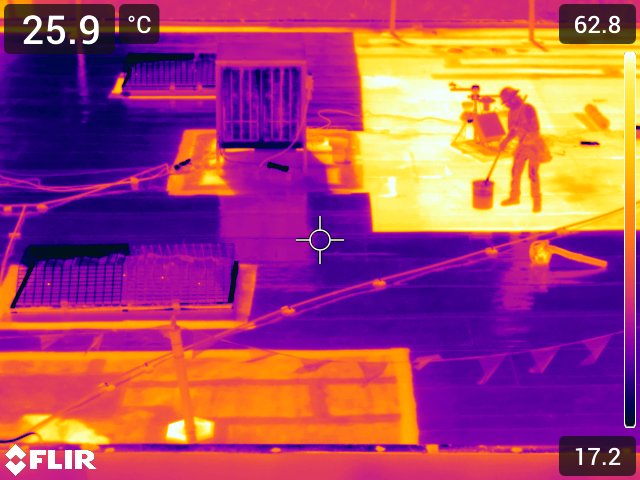
It’s getting harder to beat the heat. During the summer of 2025, heat waves knocked out power grids in North America, Europe, and the Middle East. Global warming means more people need air-­conditioning, which requires more power and strains grids. But a millennia-old idea (plus 21st-century tech) might offer an answer: radiative cooling. Paints, coatings, and textiles can scatter sunlight and dissipate heat—no additional energy required. “Radiative cooling is universal—it exists everywhere in our daily life,” says Qiaoqiang Gan, a professor of materials science and applied physics at King Abdullah University of Science and Technology in Saudi Arabia. Pretty much any object will absorb heat from the sun during the day and radiate some of it back at night. It’s why cars parked outside overnight are often covered with condensation, Gan says—their metal roofs dissipate heat into the sky, cooling the surfaces below the ambient air temperature. That’s how you get dew. Humans have harnessed this basic natural process for thousands of years. Desert peoples in Iran, North Africa, and India manufactured ice by leaving pools of water exposed to clear desert skies overnight, when radiative cooling happens naturally; other cultures constructed “cool roofs” capped with reflective materials that scattered sunlight and lowered interior temperatures. “People have taken advantage of this effect, either knowingly or unknowingly, for a very long time,” says Aaswath Raman, a materials scientist at UCLA and cofounder of the radiative­cooling startup SkyCool Systems. Modern approaches, as demonstrated everywhere from California supermarket rooftops to Japan’s Expo 2025 pavilion, go even further. Normally, if the sun is up and pumping in heat, surfaces can’t get cooler than the ambient temperature. But back in 2014, Raman and his colleagues achieved radiative cooling in the daytime. They customized photonic films to absorb and then radiate heat at infrared wavelengths between eight and 13 micrometers—a range of electromagnetic wavelengths called an “atmospheric window,” because that radiation escapes to space rather than getting absorbed. Those films could dissipate heat even under full sun, cooling the inside of a building to 9 °F below ambient temperatures, with no AC or energy source required. That was proof of concept; today, Raman says, the industry has mostly shifted away from advanced photonics that use the atmospheric-window effect to simpler sunlight-scattering materials. Ceramic cool roofs, nanostructure coatings, and reflective polymers all offer the possibility of diverting more sunlight across all wavelengths, and they’re more durable and scalable. Now the race is on. Startups such as SkyCool, Planck Energies, Spacecool, and i2Cool are competing to commercially manufacture and sell coatings that reflect at least 94% of sunlight in most climates, and above 97% in humid tropical ones. Pilot projects have already provided significant cooling to residential buildings, reducing AC energy needs by 15% to 20% in some cases.  This idea could go way beyond reflective rooftops and roads. Researchers are developing reflective textiles that can be worn by people most at risk of heat exposure. “This is personal thermal management,” says Gan. “We can realize passive cooling in T-shirts, sportswear, and garments.”  A thermal image captured during a SkyCool installation shows treated areas (white, yellow) that are roughly 35 ºC cooler than the surrounding rooftop.COURTESY OF SKYCOOL SYSTEMS Of course, these technologies and materials have limits. Like solar power grids, they’re vulnerable to weather. Clouds prevent reflected sunlight from bouncing into space. Dust and air pollution dim materials’ bright surfaces. Lots of coatings lose their reflectivity after a few years. And the cheapest and toughest materials used in radiative cooling tend to rely on Teflon and other fluoropolymers, “forever chemicals” that don’t biodegrade, posing an environmental risk. “They are the best class of products that tend to survive outdoors,” says Raman. “So for long-term scale-up, can you do it without materials like those fluoropolymers and still maintain the durability and hit this low cost point?” As with any other solution to the problems of climate change, one size won’t fit all. “We cannot be overoptimistic and say that radiative cooling can address all our future needs,” Gan says. “We still need more efficient active air-conditioning.” A shiny roof isn’t a panacea, but it’s still pretty cool.  Becky Ferreira is a science reporter based in upstate New York and author of First Contact: The Story of Our Obsession with Aliens.

The paints, coatings, and chemicals making the world a cooler place Beitrag lesen »

We use cookies to improve your experience and performance on our website. You can learn more at Datenschutzrichtlinie and manage your privacy settings by clicking Settings.

Privacy Preferences

You can choose your cookie settings by turning on/off each type of cookie as you wish, except for essential cookies.

Allow All
Manage Consent Preferences
  • Always Active

Save
de_DE