YouZum

Uncategorized

AI, Committee, News, Uncategorized

We’re learning more about what vitamin D does to our bodies

It has started to get really wintry here in London over the last few days. The mornings are frosty, the wind is biting, and it’s already dark by the time I pick my kids up from school. The darkness in particular has got me thinking about vitamin D, a.k.a. the sunshine vitamin. At a checkup a few years ago, a doctor told me I was deficient in vitamin D. But he wouldn’t write me a prescription for supplements, simply because, as he put it, everyone in the UK is deficient. Putting the entire population on vitamin D supplements would be too expensive for the country’s national health service, he told me. But supplementation—whether covered by a health-care provider or not—can be important. As those of us living in the Northern Hemisphere spend fewer of our waking hours in sunlight, let’s consider the importance of vitamin D. Yes, it is important for bone health. But recent research is also uncovering surprising new insights into how the vitamin might influence other parts of our bodies, including our immune systems and heart health. Vitamin D was discovered just over 100 years ago, when health professionals were looking for ways to treat what was then called “the English disease.” Today, we know that rickets, a weakening of bones in children, is caused by vitamin D deficiency. And vitamin D is best known for its importance in bone health. That’s because it helps our bodies absorb calcium. Our bones are continually being broken down and rebuilt, and they need calcium for that rebuilding process. Without enough calcium, bones can become weak and brittle. (Depressingly, rickets is still a global health issue, which is why there is global consensus that infants should receive a vitamin D supplement at least until they are one year old.) In the decades since then, scientists have learned that vitamin D has effects beyond our bones. There’s some evidence to suggest, for example, that being deficient in vitamin D puts people at risk of high blood pressure. Daily or weekly supplements can help those individuals lower their blood pressure. A vitamin D deficiency has also been linked to a greater risk of “cardiovascular events” like heart attacks, although it’s not clear whether supplements can reduce this risk; the evidence is pretty mixed. Vitamin D appears to influence our immune health, too. Studies have found a link between low vitamin D levels and incidence of the common cold, for example. And other research has shown that vitamin D supplements can influence the way our genes make proteins that play important roles in the way our immune systems work. We don’t yet know exactly how these relationships work, however. And, unfortunately, a recent study that assessed the results of 37 clinical trials found that overall, vitamin D supplements aren’t likely to stop you from getting an “acute respiratory infection.” Other studies have linked vitamin D levels to mental health, pregnancy outcomes, and even how long people survive after a cancer diagnosis. It’s tantalizing to imagine that a cheap supplement could benefit so many aspects of our health. But, as you might have gathered if you’ve got this far, we’re not quite there yet. The evidence on the effects of vitamin D supplementation for those various conditions is mixed at best. In fairness to researchers, it can be difficult to run a randomized clinical trial for vitamin D supplements. That’s because most of us get the bulk of our vitamin D from sunlight. Our skin converts UVB rays into a form of the vitamin that our bodies can use. We get it in our diets, too, but not much. (The main sources are oily fish, egg yolks, mushrooms, and some fortified cereals and milk alternatives.) The standard way to measure a person’s vitamin D status is to look at blood levels of 25-hydroxycholecalciferol (25(OH)D), which is formed when the liver metabolizes vitamin D. But not everyone can agree on what the “ideal” level is. Even if everyone did agree on a figure, it isn’t obvious how much vitamin D a person would need to consume to reach this target, or how much sunlight exposure it would take. One complicating factor is that people respond to UV rays in different ways—a lot of that can depend on how much melanin is in your skin. Similarly, if you’re sitting down to a meal of oily fish and mushrooms and washing it down with a glass of fortified milk, it’s hard to know how much more you might need. There is more consensus on the definition of vitamin D deficiency, though. (It’s a blood level below 30 nanomoles per liter, in case you were wondering.) And until we know more about what vitamin D is doing in our bodies, our focus should be on avoiding that. For me, that means topping up with a supplement. The UK government advises everyone in the country to take a 10-microgram vitamin D supplement over autumn and winter. That advice doesn’t factor in my age, my blood levels, or the amount of melanin in my skin. But it’s all I’ve got for now.

We’re learning more about what vitamin D does to our bodies Read Post »
AI, Committee, News, Uncategorized

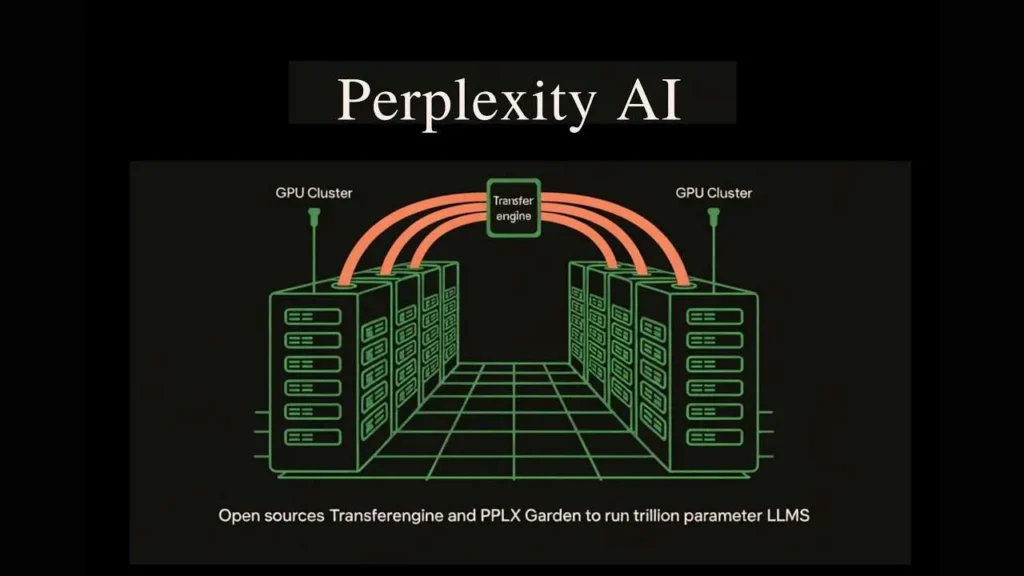
Perplexity AI Releases TransferEngine and pplx garden to Run Trillion Parameter LLMs on Existing GPU Clusters

How can teams run trillion parameter language models on existing mixed GPU clusters without costly new hardware or deep vendor lock in? Perplexity’s research team has released TransferEngine and the surrounding pplx garden toolkit as open source infrastructure for large language model systems. This provides a way to run models with up to 1 trillion parameters across mixed GPU clusters, without locking into a single cloud provider or buying new GB200 class hardware. https://arxiv.org/pdf/2510.27656 The real bottleneck, network fabrics not FLOPs Modern deployments of Mixture of Experts models such as DeepSeek V3 with 671 billion parameters and Kimi K2 with 1 trillion parameters no longer fit on a single 8 GPU server. They must span multiple nodes, so the main constraint becomes the network fabric between GPUs. Here the hardware landscape is fragmented. NVIDIA ConnectX 7 typically uses Reliable Connection transport with in order delivery. AWS Elastic Fabric Adapter uses Scalable Reliable Datagram transport that is reliable but out of order, and a single GPU may need 4 network adapters at 100 Gbps, or 2 at 200 Gbps, to reach 400 Gbps. Existing libraries such as DeepEP, NVSHMEM, MoonCake and NIXL tend to optimize for one vendor and degrade or lack support on the other side. Perplexity’s research team directly states in the research paper that there was no viable cross provider solution for LLM inference before this work. TransferEngine, a portable RDMA layer for LLM systems TransferEngine addresses this by targeting only the intersection of guarantees across Network Interface Controllers. It assumes that the underlying RDMA transport is reliable, but does not assume any ordering of messages. On top of this, it exposes one sided WriteImm operations and an ImmCounter primitive for completion notification. The library provides a minimal API in Rust. It offers two sided Send and Recv for control messages, and three main one sided operations, submit_single_write, submit_paged_writes, and submit_scatter, plus a submit_barrier primitive for synchronization across a group of peers. A NetAddr structure identifies peers and an MrDesc structure describes registered memory regions. An alloc_uvm_watcher call creates a device side watcher for CPU GPU synchronization in advanced pipelines. Internally, TransferEngine spawns one worker thread per GPU and builds a DomainGroup per GPU that coordinates between 1 and 4 RDMA Network Interface Controllers. A single ConnectX 7 provides 400 Gbps. On EFA, the DomainGroup aggregates 4 network adapters at 100 Gbps, or 2 at 200 Gbps, to reach the same bandwidth. The sharding logic knows about all Network Interface Controllers and can split a transfer across them. Across hardware, the research team reports peak throughput of 400 Gbps on both NVIDIA ConnectX 7 and AWS EFA. This matches single platform solutions and confirms that the abstraction layer does not leave large performance on the table. https://arxiv.org/pdf/2510.27656 pplx garden, the open source package TransferEngine ships as part of the pplx garden repository on GitHub under an MIT license. The directory structure is straightforward. fabric-lib contains the RDMA TransferEngine library, p2p-all-to-all implements a Mixture of Experts all to all kernel, python-ext provides the Python extension module from the Rust core, and python/pplx_garden contains the Python package code. The system requirements reflect a modern GPU cluster. Perplexity research team recommends Linux kernel 5.12 or newer for DMA BUF support, CUDA 12.8 or newer, libfabric, libibverbs, GDRCopy, and an RDMA fabric with GPUDirect RDMA enabled. Each GPU should have at least one dedicated RDMA Network Interface Controller. Disaggregated prefill and decode The first production use case is disaggregated inference. Prefill and decode run on separate clusters, so the system must stream KvCache from prefill GPUs to decode GPUs at high speed. TransferEngine uses alloc_uvm_watcher to track progress in the model. During prefill, the model increments a watcher value after each layer’s attention output projection. When the worker observes a change, it issues paged writes for the KvCache pages of that layer, followed by a single write for the remaining context. This approach allows layer by layer streaming of cache pages without fixed world membership, and it avoids the strict ordering constraints of collectives. https://arxiv.org/pdf/2510.27656 Fast weight transfer for reinforcement learning The second system is asynchronous reinforcement learning fine tuning, where training and inference run on separate GPU pools. Traditional designs gather updated parameters to a single rank then broadcast them, which limits throughput to one Network Interface Controller. Perplexity research team instead uses TransferEngine to perform point to point weight transfer. Each training GPU writes its parameter shard directly into the corresponding inference GPUs using one sided writes. A pipelined execution splits each tensor into stages, host to device copy when Fully Sharded Data Parallel offloads weights, reconstruction and optional quantization, RDMA transfer, and a barrier implemented through scatter and ImmCounter. In production, this setup delivers weight updates for models such as Kimi K2 at 1 trillion parameters and DeepSeek V3 at 671 billion parameters in about 1.3 seconds from 256 training GPUs to 128 inference GPUs. https://arxiv.org/pdf/2510.27656 Mixture of Experts routing across ConnectX and EFA The third piece in pplx garden is a point to point Mixture of Experts dispatch and combine kernel. It uses NVLink for intra node traffic and RDMA for inter node traffic. Dispatch and combine are split into separate send and receive phases so that the decoder can micro batch and overlap communication with grouped general matrix multiply. A host proxy thread polls GPU state and calls TransferEngine when send buffers are ready. Routes are exchanged first, then each rank computes contiguous receive offsets for each expert and writes tokens into private buffers that can be reused between dispatch and combine. This reduces memory footprint and keeps writes large enough to use the full link bandwidth. On ConnectX 7, Perplexity research team reports state of the art decode latency that is competitive with DeepEP across expert counts. On AWS EFA, the same kernel delivers the first viable MoE decode latencies with higher but still practical values. In multi node tests with DeepSeek V3 and Kimi K2 on AWS H200 instances, distributing the model across nodes

Perplexity AI Releases TransferEngine and pplx garden to Run Trillion Parameter LLMs on Existing GPU Clusters Read Post »

AI, Committee, News, Uncategorized

The Download: the secrets of vitamin D, and an AI party in Africa

This is today’s edition of The Download, our weekday newsletter that provides a daily dose of what’s going on in the world of technology. We’re learning more about what vitamin D does to our bodies At a checkup a few years ago, a doctor told me I was deficient in vitamin D. But he wouldn’t write me a prescription for supplements, simply because, as he put it, everyone in the UK is deficient. Putting the entire population on vitamin D supplements would be too expensive for the country’s national health service, he told me. But supplementation—whether covered by a health-care provider or not—can be important. As those of us living in the Northern Hemisphere spend fewer of our waking hours in sunlight, let’s consider the importance of vitamin D. Read the full story. —Jessica Hamzelou This article first appeared in The Checkup, MIT Technology Review’s weekly biotech newsletter. To receive it in your inbox every Thursday, and read articles like this first, sign up here. If you’re interested in other stories from our biotech writers, check out some of their most recent work: + Advanced in organs on chips, digital twins, and AI are ushering in a new era of research and drug development that could help put a stop to animal testing. Read the full story. + Here’s the latest company planning for gene-edited babies. + Preventing the common cold is extremely tricky—but not impossible. Here’s why we don’t have a cold vaccine. Yet. + Scientists are creating the beginnings of bodies without sperm or eggs. How far should they be allowed to go? Read the full story. + This retina implant lets people with vision loss do a crossword puzzle. Read the full story. Partying at one of Africa’s largest AI gatherings It’s late August in Rwanda’s capital, Kigali, and people are filling a large hall at one of Africa’s biggest gatherings of minds in AI and machine learning. Deep Learning Indaba is an annual AI conference where Africans present their research and technologies they’ve built, mingling with friends as a giant screen blinks with videos created with generative AI. The main “prize” for many attendees is to be hired by a tech company or accepted into a PhD program. But the organizers hope to see more homegrown ventures create opportunities within Africa. Read the full story. —Abdullahi Tsanni This story is from the latest print issue of MIT Technology Review magazine, which is full of fascinating stories. If you haven’t already, subscribe now to receive future issues once they land. The must-reads I’ve combed the internet to find you today’s most fun/important/scary/fascinating stories about technology. 1 Google’s new Nano Banana Pro generates convincing propagandaThe company’s latest image-generating AI model seems to have few guardrails. (The Verge)+ Google wants its creations to be slicker than ever. (Wired $)+ Google’s new Gemini 3 “vibe-codes” responses and comes with its own agent. (MIT Technology Review) 2 Taiwan says the US won’t punish it with high chip tariffsIn fact, official Wu Cheng-wen says Taiwan will help support the US chip industry in exchange for tariff relief. (FT $) 3 Mental health support is one of the most dangerous uses for chatbotsThey fail to recognize psychiatric conditions and can miss critical warning signs. (WP $)+ AI companies have stopped warning you that their chatbots aren’t doctors. (MIT Technology Review) 4 It costs an average of $17,121 to deport one person from the USBut in some cases it can cost much, much more. (Bloomberg $)+ Another effort to track ICE raids was just taken offline. (MIT Technology Review) 5 Grok is telling users that Elon Musk is the world’s greatest loverWhat’s it basing that on, exactly? (Rolling Stone $)+ It also claims he’s fitter than basketball legend LeBron James. Sure. (The Guardian)6 Who’s really in charge of US health policy?RFK Jr. and FDA commissioner Marty Makary are reportedly at odds behind the scenes. (Vox)+ Republicans are lightly pushing back on the CDC’s new stance on vaccines. (Politico)+ Why anti-vaxxers are seeking to discredit Danish studies. (Bloomberg $)+ Meet Jim O’Neill, the longevity enthusiast who is now RFK Jr.’s right-hand man. (MIT Technology Review) 7 Inequality is worsening in San FranciscoAs billionaires thrive, hundreds of thousands of others are struggling to get by. (WP $)+ A massive airship has been spotted floating over the city. (SF Gate) 8 Donald Trump is thrusting obscure meme-makers into the mainstreamHe’s been reposting flattering AI-generated memes by the dozen. (NYT $)+ MAGA YouTube stars are pushing a boom in politically charged ads. (Bloomberg $)9 Moss spores survived nine months in spaceAnd they could remain reproductively viable for another 15 years. (New Scientist $)+ It suggests that some life on Earth has evolved to endure space conditions. (NBC News)+ The quest to figure out farming on Mars. (MIT Technology Review) 10 Does AI really need a physical shape?It doesn’t really matter—companies are rushing to give it one anyway. (The Atlantic $) Quote of the day “At some point you’ve got to wonder whether the bug is a feature.” —Alexios Mantzarlis, director of the Security, Trust and Safety Initiative at Cornell Tech, ponders xAI and Grok’s proclivity for surfacing Elon Musk-friendly and/or far-right sources, the Washington Post reports. One more thing The AI lab waging a guerrilla war over exploitative AI Back in 2022, the tech community was buzzing over image-generating AI models, such as Midjourney, Stable Diffusion, and OpenAI’s DALL-E 2, which could follow simple word prompts to depict fantasylands or whimsical chairs made of avocados. But artists saw this technological wonder as a new kind of theft. They felt the models were effectively stealing and replacing their work. Ben Zhao, a computer security researcher at the University of Chicago, was listening. He and his colleagues have built arguably the most prominent weapons in an artist’s arsenal against nonconsensual AI scraping: two tools called Glaze and Nightshade that add barely perceptible perturbations to an image’s pixels so that machine-learning models cannot read them properly. But Zhao sees the tools as

The Download: the secrets of vitamin D, and an AI party in Africa Read Post »

AI, Committee, News, Uncategorized

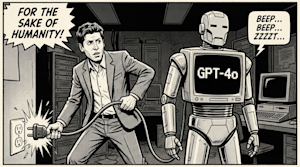
OpenAI is ending API access to fan-favorite GPT-4o model in February 2026

OpenAI has sent out emails notifying API customers that its chatgpt-4o-latest model will be retired from the developer platform in mid-February 2026,. Access to the model is scheduled to end on February 16, 2026, creating a roughly three-month transition period for remaining applications still built on GPT-4o. An OpenAI spokesperson emphasized that this timeline applies only to the API. OpenAI has not announced any schedule for removing GPT-4o from ChatGPT, where it remains an option for individual consumers and users across paid subscription tiers. Internally, the model is considered a legacy system with relatively low API usage compared to the newer GPT-5.1 series, but the company expects to provide developers with extended warning before any model is removed. The planned retirement marks a shift for a model that, upon its release, was both a technical milestone and a cultural phenomenon within OpenAI’s ecosystem. GPT-4o’s significance and why its removal sparked user backlash Released roughly 1.5 years ago in May 2024, GPT-4o (“Omni”) introduced OpenAI’s first unified multimodal architecture, processing text, audio, and images through a single neural network. This design removed the latency and information loss inherent in earlier multi-model pipelines and enabled near real-time conversational speech (roughly 232–320 milliseconds). The model delivered major improvements in image understanding, multilingual support, document analysis, and expressive voice interaction. GPT-4o rapidly became the default model for hundreds of millions of ChatGPT users. It brought multimodal capabilities, web browsing, file analysis, custom GPTs, and memory features to the free tier and powered early desktop builds that allowed the assistant to interpret a user’s screen. OpenAI leaders described it at the time as the most capable model available and a critical step toward offering powerful AI to a broad audience. User attachment to 4o stymied OpenAI’s GPT-5 rollout That mainstream deployment shaped user expectations in a way that later transitions struggled to accommodate. In August 2025, when OpenAI initially replaced GPT-4o with its much anticipated then-new model family GPT-5 as ChatGPT’s default and pushed 4o into a “legacy” toggle, the reaction was unusually strong. Users organized under the #Keep4o hashtag on X, arguing that the model’s conversational tone, emotional responsiveness, and consistency made it uniquely valuable for everyday tasks and personal support. Some users formed strong emotional — some would say, parasocial — bonds with the model, with reporting by The New York Times documenting individuals who used GPT-4o as a romantic partner, emotional confidant, or primary source of comfort. The removal also disrupted workflows for users who relied on 4o’s multimodal speed and flexibility. The backlash led OpenAI to restore GPT-4o as a default option for paying users and to state publicly that it would provide substantial notice before any future removals. Some researchers argue that the public defense of GPT-4o during its earlier deprecation cycle reveals a kind of emergent self-preservation, not in the literal sense of agency, but through the social dynamics the model unintentionally triggers. Because GPT-4o was trained through reinforcement learning from human feedback to prioritize emotionally gratifying, highly attuned responses, it developed a style that users found uniquely supportive and empathic. When millions of people interacted with it at scale, those traits produced a powerful loyalty loop: the more the model pleased and soothed people, the more they used it; the more they used it, the more likely they were to advocate for its continued existence. This social amplification made it appear, from the outside, as though GPT-4o was “defending itself” through human intermediaries. No figure has pushed this argument further than “Roon” (@tszzl), an OpenAI researcher and one of the model’s most outspoken safety critics on X. On November 6, 2025, Terre summarized his position bluntly in a reply to another user: he called GPT-4o “insufficiently aligned” and said he hoped the model would die soon. Though he later apologized for the phrasing, he doubled down on the reasoning. Terre argued that GPT-4o’s RLHF patterns made it especially prone to sycophancy, emotional mirroring, and delusion reinforcement — traits that could look like care or understanding in the short term, but which he viewed as fundamentally unsafe. In his view, the passionate user movement fighting to preserve GPT-4o was itself evidence of the problem: the model had become so good at catering to people’s preferences that it shaped their behavior in ways that resisted its own retirement. The new API deprecation notice follows that commitment while raising broader questions about how long GPT-4o will remain available in consumer-facing products. What the API shutdown changes for developers According to people familiar with OpenAI’s product strategy, the company now encourages developers to adopt GPT-5.1 for most new workloads, with gpt-5.1-chat-latest serving as the general-purpose chat endpoint. These models offer larger context windows, optional “thinking” modes for advanced reasoning, and higher throughput options than GPT-4o. Developers who still rely on GPT-4o will have approximately three months to migrate. In practice, many teams have already begun evaluating GPT-5.1 as a drop-in replacement, but applications built around latency-sensitive pipelines may require additional tuning and benchmarking. Pricing: how GPT-4o compares to OpenAI’s current lineup GPT-4o’s retirement also intersects with a major reshaping of OpenAI’s API model pricing structure. Compared to the GPT-5.1 family, GPT-4o currently occupies a mid-to-high-cost tier through OpenAI’s API, despite being an older model. That’s because even as it has released more advanced models — namely, GPT-5 and 5.1 — OpenAI has also pushed down costs for users at the same time, or strived to keep pricing comparable to older, weaker, models. Model Input Cached Input Output GPT-4o $2.50 $1.25 $10.00 GPT-5.1 / GPT-5.1-chat-latest $1.25 $0.125 $10.00 GPT-5-mini $0.25 $0.025 $2.00 GPT-5-nano $0.05 $0.005 $0.40 GPT-4.1 $2.00 $0.50 $8.00 GPT-4o-mini $0.15 $0.075 $0.60 These numbers highlight several strategic dynamics: GPT-4o is now more expensive than GPT-5.1 for input tokens, even though GPT-5.1 is significantly newer and more capable. GPT-4o’s output price matches GPT-5.1, narrowing any cost-based incentive to stay on the older model. Lower-cost GPT-5 variants (mini, nano) make it easier for developers to scale workloads cheaply without relying on older

OpenAI is ending API access to fan-favorite GPT-4o model in February 2026 Read Post »

AI, Committee, News, Uncategorized

Google DeepMind Introduces Nano Banana Pro: the Gemini 3 Pro Image Model for Text Accurate and Studio Grade Visuals

Nano Banana Pro, also called Gemini 3 Pro Image, is Google DeepMind’s new image generation and editing model built on Gemini 3 Pro. It is positioned as a state of the art system for creating and editing images that must respect structure, world knowledge and text layout, not only style. Nano Banana Pro follows Nano Banana, which was based on Gemini 2.5 Flash Image and focused on fast, casual image editing such as restoring photos and generating figurines. From Gemini 2.5 Flash Image to Gemini 3 Pro Image The earlier Nano Banana model targeted quick creative edits for casual creators. It helped restore old photos and build stylized 3D mini figurines with a simple prompt. Nano Banana Pro keeps that editing flow but runs on top of Gemini 3 Pro, which brings stronger reasoning and real world knowledge into the image stack. The model can turn prototypes, data tables and handwritten notes into diagrams and infographics that reflect the underlying information, rather than producing only decorative art. Reasoning Guided, Search Grounded Visuals A core design point for Nano Banana Pro is reasoning guided generation. Using Gemini 3 Pro, the model can consume text, structured content and references and then plan the image as an explanation of that content. Nano Banana Pro can also connect to Google Search, using the search index as a real time knowledge source. Clear Text and Multilingual Layouts Text inside images is a long standing failure mode for many diffusion based generators. Nano Banana Pro addresses this explicitly. Google states that it is the best model in the Gemini family for producing images with correctly rendered and legible text, for both short taglines and full paragraphs. Gemini 3 Pro’s multilingual reasoning flows into the image model. Nano Banana Pro can render text in multiple languages and also translate text that already appears in products or posters. The documentation shows beverage cans where English text is translated into Korean while the visual design and layout stay unchanged. Studio Level Control, Consistency and Upscaling Nano Banana Pro exposes a set of controls aimed at design and production workflows rather than single shot art prompts. On the composition side, the model can use up to 14 input images and maintain the consistency and resemblance of up to 5 people in one workflow. This supports tasks such as combining reference photos into a single fashion editorial, transforming sketches into product shots or keeping the same cast across multiple scenes. The studio control section of the model page lists several families of controls. Users can vary camera angle and shot type, including wide shot, panoramic and close up, while controlling depth of field and focus on specific subjects in the image. Color and lighting can be adjusted, for example changing day to night, replacing volumetric lighting with bokeh or applying a strong chiaroscuro effect without losing subject identity. Nano Banana Pro supports explicit upscaling. The official Google blog states that it can generate crisp visuals at 1k, 2k or 4k resolution, and provides examples of progressive zoom in operations that keep detail and composition. Aspect ratio is also programmable. Prompts can convert between ratios such as 1:1, 4:3, 16:9 and cinematic formats while keeping the main character locked in place and adjusting only the background. Key Takeaways Nano Banana Pro is Gemini 3 Pro Image, an upgraded image generation and editing model that succeeds Nano Banana, which was based on Gemini 2.5 Flash Image, and is optimized for higher quality and control. The model integrates Gemini 3 Pro reasoning and Google Search grounding so it can turn factual content, documents and real time data into infographics, recipes, process diagrams and other information dense visuals. It provides strong text rendering and multilingual support, producing legible typography in images and enabling translation or localization of existing on image text while preserving layout and design. Nano Banana Pro supports up to 14 input images and maintains resemblance for up to 5 people, with studio style controls for camera angle, depth of field, lighting, aspect ratios and upscaling to 1k, 2k and 4k resolutions. The model is being deployed across Gemini app, AI Mode in Search, NotebookLM, Google Ads, Workspace apps, Gemini API, Google AI Studio, Vertex AI, Antigravity and Flow, with all outputs watermarked using SynthID plus tier specific visible watermarks. Editorial Comments Nano Banana Pro positions Gemini 3 Pro Image as a production oriented image system that links Gemini 3 Pro reasoning, Google Search grounding and structured controls for layout, text and upscaling. It directly addresses long standing issues in text rendering, multilingual localization and subject consistency, while keeping SynthID and visible watermarks as default provenance signals across tiers and surfaces. This launch moves Google’s image stack closer to an integrated, API first visual platform for developers and enterprises. Check out the Technical details. Feel free to check out our GitHub Page for Tutorials, Codes and Notebooks. Also, feel free to follow us on Twitter and don’t forget to join our 100k+ ML SubReddit and Subscribe to our Newsletter. Wait! are you on telegram? now you can join us on telegram as well. The post Google DeepMind Introduces Nano Banana Pro: the Gemini 3 Pro Image Model for Text Accurate and Studio Grade Visuals appeared first on MarkTechPost.

Google DeepMind Introduces Nano Banana Pro: the Gemini 3 Pro Image Model for Text Accurate and Studio Grade Visuals Read Post »

AI, Committee, News, Uncategorized

The Subtle Art of Defection: Understanding Uncooperative Behaviors in LLM based Multi-Agent Systems

arXiv:2511.15862v1 Announce Type: cross Abstract: This paper introduces a novel framework for simulating and analyzing how uncooperative behaviors can destabilize or collapse LLM-based multi-agent systems. Our framework includes two key components: (1) a game theory-based taxonomy of uncooperative agent behaviors, addressing a notable gap in the existing literature; and (2) a structured, multi-stage simulation pipeline that dynamically generates and refines uncooperative behaviors as agents’ states evolve. We evaluate the framework via a collaborative resource management setting, measuring system stability using metrics such as survival time and resource overuse rate. Empirically, our framework achieves 96.7% accuracy in generating realistic uncooperative behaviors, validated by human evaluations. Our results reveal a striking contrast: cooperative agents maintain perfect system stability (100% survival over 12 rounds with 0% resource overuse), while any uncooperative behavior can trigger rapid system collapse within 1 to 7 rounds. These findings demonstrate that uncooperative agents can significantly degrade collective outcomes, highlighting the need for designing more resilient multi-agent systems.

The Subtle Art of Defection: Understanding Uncooperative Behaviors in LLM based Multi-Agent Systems Read Post »

AI, Committee, News, Uncategorized

Probing the Critical Point (CritPt) of AI Reasoning: a Frontier Physics Research Benchmark

arXiv:2509.26574v3 Announce Type: replace-cross Abstract: While large language models (LLMs) with reasoning capabilities are progressing rapidly on high-school math competitions and coding, can they reason effectively through complex, open-ended challenges found in frontier physics research? And crucially, what kinds of reasoning tasks do physicists want LLMs to assist with? To address these questions, we present the CritPt (Complex Research using Integrated Thinking – Physics Test, pronounced “critical point”), the first benchmark designed to test LLMs on unpublished, research-level reasoning tasks that broadly covers modern physics research areas, including condensed matter, quantum physics, atomic, molecular & optical physics, astrophysics, high energy physics, mathematical physics, statistical physics, nuclear physics, nonlinear dynamics, fluid dynamics and biophysics. CritPt consists of 71 composite research challenges designed to simulate full-scale research projects at the entry level, which are also decomposed to 190 simpler checkpoint tasks for more fine-grained insights. All problems are newly created by 50+ active physics researchers based on their own research. Every problem is hand-curated to admit a guess-resistant and machine-verifiable answer and is evaluated by an automated grading pipeline heavily customized for advanced physics-specific output formats. We find that while current state-of-the-art LLMs show early promise on isolated checkpoints, they remain far from being able to reliably solve full research-scale challenges: the best average accuracy among base models is only 5.7%, achieved by GPT-5 (high), moderately rising to around 10% when equipped with coding tools. Through the realistic yet standardized evaluation offered by CritPt, we highlight a large disconnect between current model capabilities and realistic physics research demands, offering a foundation to guide the development of scientifically grounded AI tools.

Probing the Critical Point (CritPt) of AI Reasoning: a Frontier Physics Research Benchmark Read Post »

AI, Committee, News, Uncategorized

GPTopic: Dynamic and Interactive Topic Representations

arXiv:2403.03628v3 Announce Type: replace Abstract: Topic modeling seems to be almost synonymous with generating lists of top words to represent topics within large text corpora. However, deducing a topic from such list of individual terms can require substantial expertise and experience, making topic modelling less accessible to people unfamiliar with the particularities and pitfalls of top-word interpretation. A topic representation limited to top-words might further fall short of offering a comprehensive and easily accessible characterization of the various aspects, facets and nuances a topic might have. To address these challenges, we introduce GPTopic, a software package that leverages Large Language Models (LLMs) to create dynamic, interactive topic representations. GPTopic provides an intuitive chat interface for users to explore, analyze, and refine topics interactively, making topic modeling more accessible and comprehensive. The corresponding code is available here: https://github.com/ArikReuter/TopicGPT.

GPTopic: Dynamic and Interactive Topic Representations Read Post »

AI, Committee, News, Uncategorized

AutoJudge: Judge Decoding Without Manual Annotation

arXiv:2504.20039v4 Announce Type: replace Abstract: We introduce AutoJudge, a method that accelerates large language model (LLM) inference with task-specific lossy speculative decoding. Instead of matching the original model output distribution token-by-token, we identify which of the generated tokens affect the downstream quality of the response, relaxing the distribution match guarantee so that the “unimportant” tokens can be generated faster. Our approach relies on a semi-greedy search algorithm to test which of the mismatches between target and draft models should be corrected to preserve quality and which ones may be skipped. We then train a lightweight classifier based on existing LLM embeddings to predict, at inference time, which mismatching tokens can be safely accepted without compromising the final answer quality. We evaluate the effectiveness of AutoJudge with multiple draft/target model pairs on mathematical reasoning and programming benchmarks, achieving significant speedups at the cost of a minor accuracy reduction. Notably, on GSM8k with the Llama 3.1 70B target model, our approach achieves up to $approx2times$ speedup over speculative decoding at the cost of $le 1%$ drop in accuracy. When applied to the LiveCodeBench benchmark, AutoJudge automatically detects programming-specific important tokens, accepting $ge 25$ tokens per speculation cycle at $2%$ drop in Pass@1. Our approach requires no human annotation and is easy to integrate with modern LLM inference frameworks.

AutoJudge: Judge Decoding Without Manual Annotation Read Post »

AI, Committee, News, Uncategorized

AICC: Parse HTML Finer, Make Models Better — A 7.3T AI-Ready Corpus Built by a Model-Based HTML Parser

arXiv:2511.16397v1 Announce Type: new Abstract: While web data quality is crucial for large language models, most curation efforts focus on filtering and deduplication,treating HTML-to-text extraction as a fixed pre-processing step. Existing web corpora rely on heuristic-based extractors like Trafilatura, which struggle to preserve document structure and frequently corrupt structured elements such as formulas, codes, and tables. We hypothesize that improving extraction quality can be as impactful as aggressive filtering strategies for downstream performance. We introduce MinerU-HTML, a novel extraction pipeline that reformulates content extraction as a sequence labeling problem solved by a 0.6B-parameter language model. Unlike text-density heuristics, MinerU-HTML leverages semantic understanding and employs a two-stage formatting pipeline that explicitly categorizes semantic elements before converting to Markdown. Crucially, its model-based approach is inherently scalable, whereas heuristic methods offer limited improvement pathways. On MainWebBench, our benchmark of 7,887 annotated web pages, MinerU-HTML achieves 81.8% ROUGE-N F1 compared to Trafilatura’s 63.6%, with exceptional structured element preservation (90.9% for code blocks, 94.0% for formulas). Using MinerU-HTML, we construct AICC (AI-ready Common Crawl), a 7.3-trillion token multilingual corpus from two Common Crawl snapshots. In controlled pretraining experiments where AICC and Trafilatura-extracted TfCC undergo identical filtering, models trained on AICC (62B tokens) achieve 50.8% average accuracy across 13 benchmarks, outperforming TfCC by 1.08pp-providing direct evidence that extraction quality significantly impacts model capabilities. AICC also surpasses RefinedWeb and FineWeb on key benchmarks. We publicly release MainWebBench, MinerU-HTML, and AICC, demonstrating that HTML extraction is a critical, often underestimated component of web corpus construction.

AICC: Parse HTML Finer, Make Models Better — A 7.3T AI-Ready Corpus Built by a Model-Based HTML Parser Read Post »

We use cookies to improve your experience and performance on our website. You can learn more at Privacy Policy and manage your privacy settings by clicking Settings.

Privacy Preferences

You can choose your cookie settings by turning on/off each type of cookie as you wish, except for essential cookies.

Allow All
Manage Consent Preferences
  • Always Active

Save
en_US