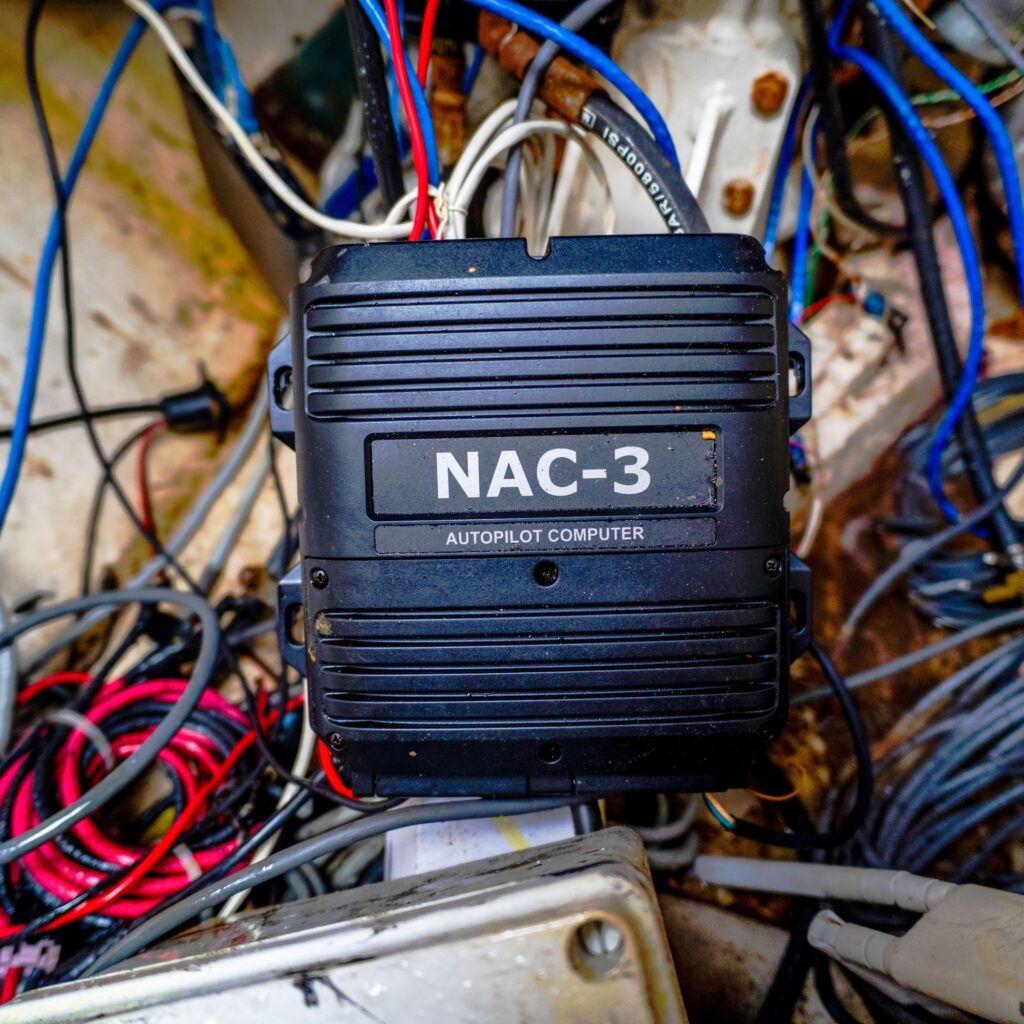
On a bright morning last April, a surveillance plane operated by the Colombian military spotted a 40-foot-long shark-like silhouette idling in the ocean just off Tayrona National Park. It was, unmistakably, a “narco sub,” a stealthy fiberglass vessel that sails with its hull almost entirely underwater, used by drug cartels to move cocaine north. The plane’s crew radioed it in, and eventually nearby coast guard boats got the order, routine but urgent: Intercept. In Cartagena, about 150 miles from the action, Captain Jaime González Zamudio, commander of the regional coast guard group, sat down at his desk to watch what happened next. On his computer monitor, icons representing his patrol boats raced toward the sub’s coordinates as updates crackled over his radio from the crews at sea. This was all standard; Colombia is the world’s largest producer of cocaine, and its navy has been seizing narco subs for decades. And so the captain was pretty sure what the outcome would be. His crew would catch up to the sub, just a bit of it showing above the water’s surface. They’d bring it to heel, board it, and force open the hatch to find two, three, maybe four exhausted men suffocating in a mix of diesel fumes and humidity, and a cargo compartment holding several tons of cocaine. The boats caught up to the sub. A crew boarded, forced open the hatch, and confirmed that the vessel was secure. But from that point on, things were different. First, some unexpected details came over the radio: There was no cocaine on board. Neither was there a crew, nor a helm, nor even enough room for a person to lie down. Instead, inside the hull the crew found a fuel tank, an autopilot system and control electronics, and a remotely monitored security camera. González Zamudio’s crew started sending pictures back to Cartagena: Bolted to the hull was another camera, as well as two plastic rectangles, each about the size of a cookie sheet—antennas for connecting to Starlink satellite internet. The authorities towed the boat back to Cartagena, where military techs took a closer look. Weeks later, they came to an unsettling conclusion: This was Colombia’s first confirmed uncrewed narco sub. It could be operated by remote control, but it was also capable of some degree of autonomous travel. The techs concluded that the sub was likely a prototype built by the Clan del Golfo, a powerful criminal group that operates along the Caribbean coast. For decades, handmade narco subs have been some of the cocaine trade’s most elusive and productive workhorses, ferrying multi-ton loads of illicit drugs from Colombian estuaries toward markets in North America and, increasingly, the rest of the world. Now off-the-shelf technology—Starlink terminals, plug-and-play nautical autopilots, high-resolution video cameras—may be advancing that cat-and-mouse game into a new phase. Uncrewed subs could move more cocaine over longer distances, and they wouldn’t put human smugglers at risk of capture. Law enforcement around the world is just beginning to grapple with what the Tayrona sub means for the future—whether it was merely an isolated experiment or the opening move in a new era of autonomous drug smuggling at sea. Drug traffickers love the ocean. “You can move drug traffic through legal and illegal routes,” says Juan Pablo Serrano, a captain in the Colombian navy and head of the operational coordination center for Orión, a multiagency, multinational counternarcotics effort. The giant container ships at the heart of global commerce offer a favorite approach, Serrano says. Bribe a chain of dockworkers and inspectors, hide a load in one of thousands of cargo boxes, and put it on a totally legal commercial vessel headed to Europe or North America. That route is slow and expensive—involving months of transit and bribes spread across a wide network—but relatively low risk. “A ship can carry 5,000 containers. Good luck finding the right one,” he says. Far less legal, but much faster and cheaper, are small, powerful motorboats. Quick to build and cheap to crew, these “go-fasts” top out at just under 50 feet long and can move smaller loads in hours rather than days. But they’re also easy for coastal radars and patrols to spot. Submersibles—or, more accurately, “semisubmersibles”—fit somewhere in the middle. They take more money and engineering to build than an open speedboat, but they buy stealth—even if a bit of the vessel rides at the surface, the bulk stays hidden underwater. That adds another option to a portfolio that smugglers constantly rebalance across three variables: risk, time, and cost. When US and Colombian authorities tightened control over air routes and commercial shipping in the early 1990s, subs became more attractive. The first ones were crude wooden hulls with a fiberglass shell and extra fuel tanks, cobbled together in mangrove estuaries, hidden from prying eyes. Today’s fiberglass semisubmersible designs ride mostly below the surface, relying on diesel engines that can push multi-ton loads for days at a time while presenting little more than a ripple and a hot exhaust pipe to radar and infrared sensors. A typical semisubmersible costs under $2 million to build and can carry three metric tons of cocaine. That’s worth over $160 million in Europe—wholesale. Most ferry between South American coasts and handoff points in Central America and Mexico, where allied criminal organizations break up the cargo and slowly funnel it toward the US. But some now go much farther. In 2019, Spanish authorities intercepted a semisubmersible after a 27-day transatlantic voyage from Brazil. In 2024, police in the Solomon Islands found the first narco sub in the Asia-Pacific region, a semisubmersible probably originating from Colombia on its way to Australia or New Zealand. If the variables are risk, time, and cost, then the economics of a narco sub are simple. Even if they spend more time on the water than a powerboat, they’re less likely to get caught—and a relative bargain to produce. A narco sub might cost between $1 million and $2 million to build, but a kilo of cocaine costs