YouZum

Uncategorized

AI, Committee, Noticias, Uncategorized

Beyond Multiple Choice: Evaluating Steering Vectors for Summarization

arXiv:2505.24859v3 Announce Type: replace-cross Abstract: Steering vectors are a lightweight method for controlling text properties by adding a learned bias to language model activations at inference time. While predominantly studied for multiple-choice and toy tasks, their effectiveness in free-form generation remains largely unexplored. Moving “Beyond Multiple Choice,” we evaluate steering vectors for controlling topical focus, sentiment, toxicity, and readability in abstractive summaries across the SAMSum, NEWTS, and arXiv datasets. We find that steering effectively controls targeted properties, but high steering strengths consistently induce degenerate repetition and factual hallucinations. Prompting alone preserves summary quality but offers weaker control. Combining both methods yields the strongest control and the most favorable efficacy-quality trade-off at moderate steering strengths. Our work demonstrates that steering vectors face a critical control-quality trade-off in free-form generation, and that hybrid approaches offer the best balance in practice.

Beyond Multiple Choice: Evaluating Steering Vectors for Summarization Leer entrada »

AI, Committee, Noticias, Uncategorized

LLM as Graph Kernel: Rethinking Message Passing on Text-Rich Graphs

arXiv:2603.14937v3 Announce Type: replace-cross Abstract: Text-rich graphs, which integrate complex structural dependencies with abundant textual information, are ubiquitous yet remain challenging for existing learning paradigms. Conventional methods and even LLM-hybrids compress rich text into static embeddings or summaries before structural reasoning, creating an information bottleneck and detaching updates from the raw content. We argue that in text-rich graphs, the text is not merely a node attribute but the primary medium through which structural relationships are manifested. We introduce RAMP, a Raw-text Anchored Message Passing approach that moves beyond using LLMs as mere feature extractors and instead recasts the LLM itself as a graph-native aggregation operator. RAMP exploits the text-rich nature of the graph via a novel dual-representation scheme: it anchors inference on each node’s raw text during each iteration while propagating dynamically optimized messages from neighbors. It further handles both discriminative and generative tasks under a single unified generative formulation. Extensive experiments show that RAMP effectively bridges the gap between graph propagation and deep text reasoning, achieving competitive performance and offering new insights into the role of LLMs as graph kernels for general-purpose graph learning.

LLM as Graph Kernel: Rethinking Message Passing on Text-Rich Graphs Leer entrada »

AI, Committee, Noticias, Uncategorized

The Download: a Nobel winner on AI, and the case for fixing everything

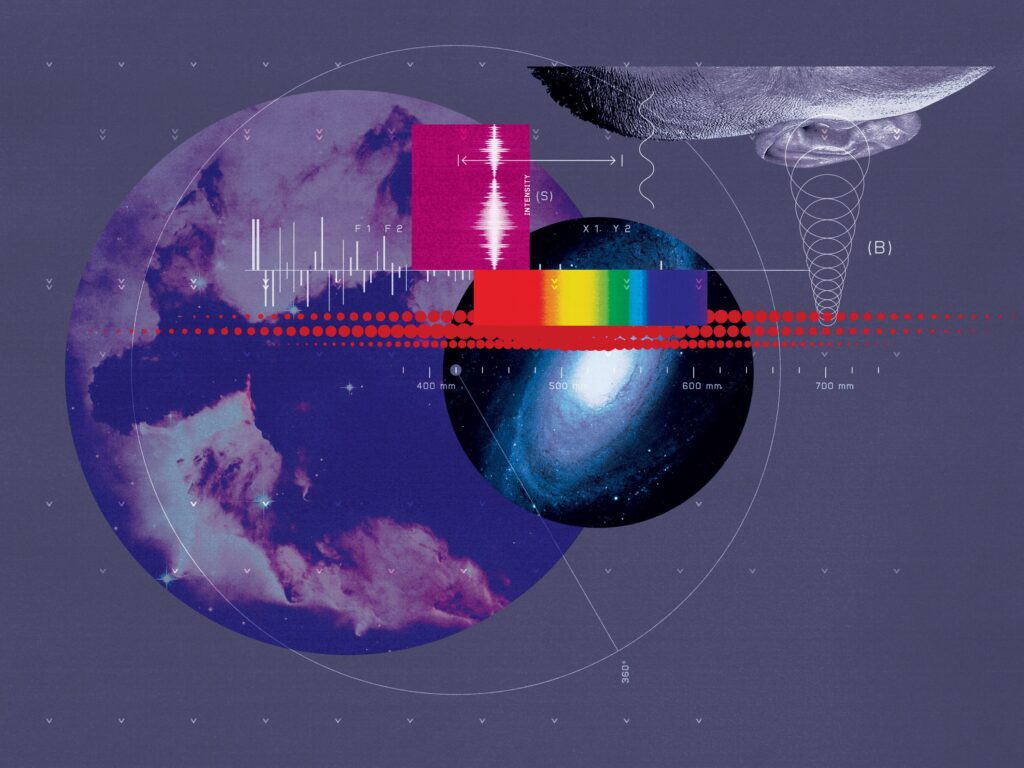
This is today’s edition of The Download, our weekday newsletter that provides a daily dose of what’s going on in the world of technology. Three things in AI to watch, according to a Nobel-winning economist A few months before he won the Nobel Prize in economics in 2024, Daron Acemoglu published a paper that earned him few fans in Silicon Valley. He argued that AI would give only a small boost to US productivity and would not eliminate the need for human work. Two years later, Acemoglu’s measured take has not caught on. The technology has advanced quite a bit since his cautious predictions, but the data is still largely on his side.  MIT Technology Review spoke with him to understand if any of the latest developments have changed his thesis. Here are the three things Acemoglu is paying closest attention to in AI right now. —James O’Donnell This story is from The Algorithm, our weekly newsletter giving you the inside track on all things AI. Sign up to receive it in your inbox every Monday.  The case for fixing everything Stewart Brand, the counterculture icon and tech industry legend, considers maintenance a “civilizational” act. His new book argues that taking responsibility for maintaining something, whether a motorcycle, a monument, or the planet, can be radical. Brand argues that maintainers haven’t gotten the laurels they deserve—and he’s right. Yet his vision of maintenance often feels solitary: profound, but more about personal fulfillment than tending to a shared world or making it better. Read the full review of his handsome new book, Maintenance: Of Everything, Part One. —Lee Vinsel Lee Vinsel is an associate professor of science, technology, and society at Virginia Tech, a cofounder of The Maintainers, and the host of Peoples & Things, a podcast about human life with technology. This story is from the latest edition of our print magazine, which is all about nature. Subscribe now to read the full issue and receive future print copies once they land. The must-reads I’ve combed the internet to find you today’s most fun/important/scary/fascinating stories about technology. 1 The first zero-day exploit built by AI has been discoveredGoogle spotted and stopped the attempted “mass exploitation event.” (CNBC)+ The hackers used AI to discover an unknown bug. (NYT $)+ AI-powered hacking has exploded into an industrial-scale threat. (Guardian)+ New tools are simplifying online crime. (MIT Technology Review) 2 OpenAI just launched its answer to Claude MythosDaybreak patches vulnerabilities before attackers find them. (The Verge)+ Sam Altman said it will “continuously secure software.” (Gizmodo)+ It will rival Anthropic’s Claude Mythos, which arrived a month ago. (BBC)+ OpenAI is allowing wider access to its cyber models than Anthropic. (CNBC) 3 Trump is heading to China to spread the gospel of American techWhile taking cues from Beijing’s more stringent approach. (Guardian)+ But investors want Trump and Xi to stay out of AI’s way. (Reuters $)+ Elon Musk and Tim Cook are joining him on the trip this week. (BBC) 4 Ilya Sutskever has testified on Sam Altman’s “pattern of lying”OpenAI co-founder Sutskever took the stand in the Altman v. Musk trial. (BI)+ He said he spent a year gathering proof of Altman’s dishonesty. (Reuters $)+ But he also added to OpenAI’s defense. (Wired $)+ While Satya Nadella called attempts to remove Altman “amateur city.” (FT $)+ Here’s what happened last week in the trial. (MIT Technology Review) 5 A new hantavirus vaccine is in the worksModerna and Korea University are developing an mRNA vaccine. (Wired $)+ Here’s what you need to know about the cruise ship outbreak. (MIT Technology Review) 6 Texas has sued Netflix over alleged data harvesting and “addictive” designAG Ken Paxton accuses Netflix of secretly collecting and selling user data. (Quartz)+ And spying on children while deliberately fostering addiction. (Guardian) 7 A data center guzzled 30 million gallons of water—and no one noticedThe curious case serves as a warning for other data center projects. (Ars Technica) 8 Europe is reportedly selling spyware to human rights abusersEU states allegedly sold the tech to countries violating rights. (Bloomberg $) 9 The US government’s AI vetting announcement has mysteriously vanishedIt had detailed a security test agreement with Google, xAI, and Microsoft. (Gizmodo) 10 Amazon staff are using AI for pointless tasks just to inflate usage scoresIn a bid to impress managers. (FT $) + An AI expert says we should stop using AI so much. (MIT Technology Review) Quote of the day “This is like the cheating husband complaining about the cheating wife.”  —Anupam Chander, a professor of law and technology at Georgetown Law School, tells the New York Times that Elon Musk’s hypocrisy over OpenAI becoming a for-profit company will undermine his courtroom battle with Sam Altman. One More Thing STUART BRADFORD How sounds can turn us on to the wonders of the universe For decades, astronomy has relied on visual information to make sense of the cosmos: images, charts, and graphs. Now, some researchers are trying something different: listening to the universe. Using sonification, the process of turning information into sound, they’re helping blind and visually impaired researchers explore the cosmos—and even uncover patterns that might otherwise go unnoticed. The approach is spreading beyond astronomy into fields like climate science, navigation, and education. Discover how sound could make science more accessible—and even more revealing. —Corey S. Powell We can still have nice things A place for comfort, fun, and distraction to brighten up your day. (Got any ideas? Drop me a line.) + This musical mashup beautifully blends LCD Soundsystem with Twin Peaks.+ Match your speculative ideas to sci-fi stories with the Extrapolated Futures Archive.+ A live-action animation Coyote vs. ACME is coming soon—and the first trailer just dropped.+ Want to surf elsewhere in the galaxy? Here’s what it would be like to catch waves on distant planets.

The Download: a Nobel winner on AI, and the case for fixing everything Leer entrada »

AI, Committee, Noticias, Uncategorized

Innovation abounds in device charging

The changes may be less perceptible than in smartphones, tablets, or wearables, but chargers have also been quietly reinvented over the last decade. At one time a bulky mix of tangled cables and connectors, slow to perform and prone to overheating, they’re now smaller, safer, and faster, thanks to a slew of technological advances. These advances include a switch to gallium nitride (GaN), which has now usurped silicon as the preferred semiconductor, capable of handling higher voltages, faster switches, and more efficient conduction. Multi-port chargers, coupled with an industry-wide shift toward USB-C standardization, mean a single charger can handle multiple devices. And early smart chargers are also trickling onto the market, able to dynamically distribute power and carry out autonomous safety checks. Combined, these have repositioned chargers as differentiated standalone devices, rather than peripheral accessories. But, manufacturers say there is much further to go if chargers are to accommodate the demands of a connected ecosystem now made up of an estimated 20 billion devices, according to IoT Analytics. “Charging products are undergoing a fundamental identity shift—from accessory to primary component,” says Mario Wu, general manager for North America at Anker Innovations. “This is not simply a functional upgrade; It is a repositioning of charging’s role within the broader digital lifestyle ecosystem. As charging becomes normalized, the charger is no longer an appendage to your devices—it is the infrastructure underlying every digital experience.” Pillars of performance If this vision for the future of charging sounds ambitious, there are concrete advancements to back it up. Newly refined semiconductors are already bolstering power and performance, building on the gains delivered by GaN with some sweeping changes to systems architecture. To take advantage of the fast-moving technology, Anker launched GaNPrime 2.0, which combines GaN materials with higher-frequency controllers and other power devices, achieving higher power output and lower heat generation, explains Wu. For example, the addition of a multi-level buck converter converts voltage from a binary on/off pattern, to multiple, smaller steps that create smoother transitions and reduce stress on components. Combined with Anker’s proprietary control algorithm, this simultaneously achieves a more compact product design and reduced energy loss. Changes such as this mean secondary-stage power conversion now reaches over 99.5%, says Wu, and some products can maintain 140 watts on a single port without falling below optimal levels. “In traditional setups, you might use three separate chargers—adding up to roughly 210 watts combined,” says Wu. “But Anker’s Prime 160W Charger with PowerIQ 5.0 can charge those same three devices in roughly the same time because it dynamically reallocates unused capacity instead of locking it in place.” But if GaNPrime 2.0 represents where the architecture stands today, it’s by no means the end point. Says Wu, “The next phase of GaN development focuses on higher frequency switching: When paired with breakthroughs in materials and control technology, higher switching frequency enables lower energy loss, improved conversion efficiency, and even more compact designs.” Other third-generation semiconductors like silicon carbide (SiC) will also have a role to play. Already deployed at scale in EV inverters and industrial power systems, Wu explains that SiC can deliver “exceptional, high-temperature stability and reliable support for high-voltage, high-power applications.” Improving circuit design using SiC to make it compact and cost-effective for smaller devices has proven a stumbling block until now, but Wu is hopeful that as manufacturing scales up, the material will become “an increasingly credible direction.” Without constraints Consumers also demand portability in their device charger. They want chargers without the spatial constraints of wires or surface-to-surface connection—or what’s known as imperceptible charging. Wireless charging innovations today go part of the way, but they’re based on the principle of magnetic coupling—i.e., only when transmitter and receiver coils are aligned is energy transfer efficient and stable. That means devices must be in contact with the charging pad surface. But research into technologies that use magnetic resonance and infrared are moving the dial. Best known for creating non-invasive imaging in health care via MRIs, magnetic resonance uses magnetic fields to allow energy transfer over greater distances by tuning transmitter and receiver coils to the same resonant frequency. Transmitters emit an oscillating magnetic field from which the receiver can extract energy even if coils are not perfectly aligned. This “significantly relaxes placement requirements for users, [but currently] the trade-off is reduced transmission efficiency,” says Wu. Infrared wireless charging also represents a meaningful area ripe for exploration, Wu adds. This sees infrared beams deliver energy to photovoltaic receivers on devices, with transmitters installable at any location so long as there is clear line-of-sight to the device. This enables wireless power delivery across meters rather than centimetres. He explains, “The core challenge it currently faces is further increasing power levels, and related research is ongoing.” Wu says Anker is engaged in technical exchanges with both universities and industry associations to find workarounds for these trade-offs. “Our strategy is to remain at the forefront: continuously tracking, conducting in-depth evaluations, and delivering the next generation of wireless charging technology to users the moment it matures and becomes viable.” Levelling up intelligence If the power, performance, and portability of chargers have made incremental gains in the last decade, though, then imbuing devices with smart capabilities is arguably more of a step change in what users might expect. Wu defines smart charging as “the shift from passive power delivery to active, adaptive energy management.” In short, if conventional chargers supply fixed current, then smart chargers can read device signals, monitor conditions, and adjust their output accordingly to optimize speed, safety, and efficiency. Some products on the market already hint at these possibilities. Next-gen chargers already deliver dynamic power allocation, for example, recognizing individual device IDs to adapt the distribution of power to multiple devices simultaneously. But in 10 years’ time, the goal is to create chargers that go much further, says Wu, capable of autonomously managing energy across multiple connected devices, communicating with users, and adaptively optimizing performance. “Smart charging will feel less like a feature and more

Innovation abounds in device charging Leer entrada »

AI, Committee, Noticias, Uncategorized

The Download: the hantavirus outbreak and Musk v. Altman week 2

This is today’s edition of The Download, our weekday newsletter that provides a daily dose of what’s going on in the world of technology. Here’s what you need to know about the cruise ship hantavirus outbreak Last week, eight passengers aboard a Dutch-flagged cruise ship contracted a type of hantavirus transmitted by rats. Three have since died. But health experts stress that this situation is nothing like the coronavirus outbreak in 2020. The Andes virus is known to spread between people, and there are no specific antiviral treatments or vaccines. Yet transmission appears to require a specific form of contact that the cruise ship fostered. Here’s what you need to know about the outbreak—and why experts believe it can be contained. —Jessica Hamzelou This story is part of MIT Technology Review Explains, our series untangling the complex, messy world of technology to help you understand what’s coming next. You can read more from the series here.  Musk v. Altman week 2: OpenAI fires back, and Shivon Zilis reveals that Musk tried to poach Sam Altman In the second week of the landmark trial between Elon Musk and OpenAI, Musk’s motivations for bringing the suit came under intense scrutiny. OpenAI president Greg Brockman testified that Musk had pushed for the company to create a for-profit entity, while Shivon Zilis, a former board member, revealed that the Tesla tycoon had sought to lure Sam Altman to a new AI venture. The courtroom also heard about Brockman’s private journals, Musk’s abandoned plans for a rival AI lab, and the moment he stormed out of a pivotal meeting carrying a painting of a Tesla. Here’s what happened in the second week of the trial—and what’s coming next.  —Michelle Kim Michelle Kim, who’s also a lawyer, has been in court on each day of the Musk v. Altman trial. To keep up with her ongoing coverage of their legal showdown, follow @techreview or @michelletomkim on X.  How LLMs could supercharge mass surveillance in the US: 10 Things That Matter in AI Right Now There are pieces of your life scattered all over the internet, and some of them are for sale. Data brokers collect web searches, financial records, and location data from millions of people and sell them to various clients, including the US government. While gathering that data has become easier in the smartphone era, making use of it at scale has remained difficult. But researchers are beginning to show that LLM agents can connect anonymized data to real people quickly, cheaply, and at a massive scale. Find out why privacy experts fear AI could remove the friction that has long protected the public from mass surveillance. —Grace Huckin “How LLMs could supercharge mass surveillance in the US” is a feature accompanying MIT Technology Review’s 10 Things That Matter in AI Right Now, our guide to what’s really worth your attention in the busy, buzzy world of AI. Check out the full list of the big ideas, trends, and advances in the field here. The must-reads I’ve combed the internet to find you today’s most fun/important/scary/fascinating stories about technology. 1 Meta’s embrace of AI is making employees miserableWorkers feel pressured to use the tech while fearing AI-driven layoffs. (NYT $)+ They’re also unhappy about Meta tracking them to train AI. (The Verge)+ AI’s rise has been described as “the most joyless tech revolution ever.” (WSJ $)+ Gen-Z is particularly fed up with it. (NYT $)+ We’ve entered the era of AI malaise. (MIT Technology Review) 2 South Korea’s military wants robots to fill gaps in troop numbersIt’s in talks with Hyundai to bring robotics to the front lines. (Bloomberg $)+ They could include Boston Dynamics’ Spot and a new exoskeleton. (SCMP)+ South Korea’s military has shrunk by 20% over six years. (BBC) 3 OpenAI is being sued over ChatGPT’s alleged role in guiding a mass shooterA lawsuit claims the bot said targeting children would bring more attention. (NBC)+ Florida’s AG has opened a criminal investigation into the case. (NPR)+ Does AI cause or amplify delusions? (MIT Technology Review) 4 The Canvas hack was the biggest-ever student data privacy disasterIt exposes the risks of centralizing the data of millions of students. (404 Media)+ While the platform is back online, the hack disrupted university exams. (NPR)+ The breach is part of a trend of edtech vulnerabilities. (WP $) 5 Alibaba has joined China’s “chat to buy” shopping crazeBy integrating AI assistant Qwen into its e-commerce platforms. (Reuters $)+ Companies are betting that chat is the future of online shopping. (SCMP)+ OpenClaw is a driving force behind the trend. (MIT Technology Review) 6 Cybercrime increasingly comes with threats of physical violenceIn the US, the physical threats rose more than twofold last year. (BBC) 7 AI’s next phase plays into TSMC’s handsTaiwan’s chip-making giant stands to gain from the supply squeeze. (WSJ $) 8 Europe is confronting life without American techDependence on Silicon Valley is a growing geopolitical concern. (FT $) 9 The US, UK, and China top new rankings for AI in life sciencesSwitzerland and Germany follow in the AI Competitiveness Index. (SCMP) 10 The Pentagon has released a massive trove of declassified UFO filesIncluding newly declassified documents, images and footage. (New Scientist)+ The files contain reports of “orbs,” “saucers,” and lunar “flashes.”  (Wired $)+ Here’s how to spot an alien. (MIT Technology Review) Quote of the day “There’s a real sense where ‘safety’ isn’t a bad word anymore.” —Nathan Calvin, general counsel at Encode, a nonprofit AI advocacy group, tells the Washington Post that Anthropic’s Mythos has forced a White House reset on AI safety. One More Thing This computer-generated image of Mars was built with laser altimeter data from NASA’s Mars Global Surveyor, which operated for nine years in orbit around the planet.NASA/JPL-CALTECH Inside NASA’s bid to make spacecraft as small as possible As NASA’s InSight lander descended to Mars in November 2018, two tiny spacecraft tracked its progress. InSight had touched down, they reported, and survived its treacherous journey. The mission offered a pathway to cheaper space exploration, with small,

The Download: the hantavirus outbreak and Musk v. Altman week 2 Leer entrada »

AI, Committee, Noticias, Uncategorized

Fostering breakthrough AI innovation through customer-back engineering

Despite years of digitization, organizations capture less than one-third of the value expected from digital investments, according to McKinsey research. That’s because most big companies begin with technological capabilities and bolt applications onto them, rather than starting with customer needs and working backward to technology solutions. Not prioritizing the customer can create fragmented solutions; disjointed customer experiences; and ultimately, failed transformations. Organizations that achieve outsized results from AI flip the script. They adopt a “customer-back engineering” mindset, putting customers at the heart of technology transformation. It’s a strategy in which products and services are developed with the customer experience first in mind, including the customers’ challenges, needs, and expectations. Product development teams then work backward in a nimble and agile way to find the steps necessary to design and build solutions that achieve the desired experience. “When you get your engineers closer to customers, you get a lot more sideways innovation,” says Ashish Agrawal, managing vice president of business cards and payments tech at Capital One. “That leads to a multiplier effect, because engineers can approach a problem from a different dimension that can be unique to the sales or product perspective.” The case for customer-centricity in engineering Engineers are problem-solvers by nature, says Agrawal. When they hear about challenges customers are experiencing, or how they are using products and services in the real world, they can devise ways to efficiently address customer needs, since they are naturally closer to systems and data than many other teams across the company. “Fostering a customer-centric culture has a motivational effect on engineers when they actually start seeing how the core changes they’re making, or the features they’re adding, are having a direct impact on the lives of customers,” says Agrawal. It also takes discipline. Agrawal explains that Capital One has set a goal for every engineer in his organization to establish several touchpoints with customers throughout the year in different forms, including: Digital empathy sessions to observe user journeys and identify where users hit friction Embedded customer support for periods of time to deepen understanding of servicing needs Engineering ride-alongs, in which engineers join customer success, sales, and support staff on calls or on-site visits Hackathon competitions to build solutions around real customer problems The AI opportunities with customer-centricity “The biggest challenge engineers within large companies face is a lack of direct access to customers,” says Agrawal. “This can make it harder for technologists to work with customers to identify problems and innovate solutions.” AI has accelerated the challenges as well as the opportunities. The lifecycle of launching products has become significantly faster. But the good news is that engineers are closer to the data that feeds into AI, so they can more rapidly apply AI-informed data techniques to solve customer problems. Agrawal outlines a recent scenario: In the customer servicing space, conversations can instantly be summarized and give a customer agent context on the member’s original request and remaining action points. Agentic AI can also be enabled to ask pointed follow-up questions about the interaction that would otherwise take human agents time to read through the entire thread. “A solution would have been a lot harder in an ecosystem without a lot of high-quality data,” says Agrawal. “But when you combine a rich data ecosystem with agentic tools, you move from incremental fixes to high-velocity transformation.” By investing in AI data and tools and focusing on rapid experimentation, Agrawal says the cycle of deploying solutions can be accelerated. Teams learn that if they meet customer needs and iterate on a wider range of solutions much faster, then the entire innovation cycle speeds up. For example, Capital One used customer insights to build a state-of-the-art, multi-agent AI framework called Chat Concierge to enhance the customer experience for car buyers and dealers. In a single conversation, Chat Concierge can perform tasks like comparing vehicles to help car buyers decide on the best choice and scheduling test drives or appointments with salespeople. Agrawal explains that car buyers can engage with Chat Concierge directly through participating dealer websites. Dealers can access and can take over the chat through Navigator Platform. The AI assistant consists of multiple logical agents that work together to mimic human reasoning, allowing it to provide information and take action based on the customer’s requests. The elements of an AI-first mindset According to a recent MIT Technology Review Insights survey, 70% of leaders say their firm uses agentic AI to some degree. Roughly half of executives say agentic AI systems are highly capable of improving fraud detection (56%) and security (51%), reducing cost and increasing efficiency (41%), and improving the customer experience (41%). Looking into the future, achieving these outcomes looks even more likely. More than half of the banking executives surveyed say they expect to continue to improve fraud detection (75%), security (64%), and the customer experience (51%). Agentic AI use cases that show strong potential to transform the customer experience in financial services include responding to customer services requests, adjusting bill payments to align with regular paychecks, or extracting key terms and conditions from financial agreements. Placing the customer at the center of a transformation requires an AI-first mindset. Companies must shift from simply augmenting an existing product to fundamentally reimagining the problem and the user’s needs through the lens of AI’s capabilities. A few best practices that Agrawal recommends include: Reimagine the core function of AI to solve a user’s problem: “The true value isn’t in chasing the AI hype; it’s in solving meaningful customer problems. By focusing on impact, we ensure that our innovation isn’t just fast; it’s transformative,” says Agrawal. Start with high-quality, well-governed data as the foundation: “Data readiness and unified information across systems are the non-negotiable foundations of AI. A clean data layer is what orchestrates the agentic loop— enabling the perception, reasoning, and execution required to solve a customer’s problem before they even have to ask,” explains Agrawal. Rebuild workflows with AI embedded from the start: “People treat models as black boxes, but

Fostering breakthrough AI innovation through customer-back engineering Leer entrada »

AI, Committee, Noticias, Uncategorized

Implementing advanced AI technologies in finance

In finance departments that have long been defined by precision and control, AI has arrived less as a neatly managed upgrade than as a quiet insurgency. Employees are already using it while leadership races to impose structure, governance, and strategy after the fact. The result is a paradox: one of the most tightly regulated functions in the enterprise is now among the most experimentally transformed. REGISTER TO WATCH What’s emerging is a layered shift in how work gets done. From variance commentary and fraud detection to contract review and close narrative drafting, AI is embedding itself across workflows, particularly where unstructured data once slowed down everything. Yet, as Glenn Hopper, head of AI and managing director at VAi Consulting, puts it, “the proliferation of AI happened kind of before governance and before a real plan came about.” That bottom-up adoption is forcing a recalibration at the top, where executives must now reconcile productivity gains with oversight, risk, and accountability. Just as critical is reframing AI’s role. “AI as a means to an end, as opposed to AI being the end,” says Ranga Bodla, VP of industry and field marketing at Oracle NetSuite, underscores a growing consensus: the technology is most effective when it disappears into existing processes rather than outright replaces them. Embedded systems, seamless integrations, and tools like model context protocol (MCP) are accelerating this shift, making AI an ambient capability. Notably, ease of integration, not cost savings or new features, has become the strongest driver of adoption. Still, the real constraint may be neither data nor technology, but people. “Talent is the actual root cause,” Hopper argues, pointing to a widening gap between domain expertise and AI fluency. Even as concerns about data security and model opacity persist, the more pressing risk may be misunderstanding the tools altogether or restricting them so tightly that employees look for workarounds beyond leadership control. “The auditability of it, I think, is critical,” Bodla notes.  Looking ahead, the trajectory is clear but variable. AI agents capable of executing complex, multi-step tasks are beginning to materialize, while expanding context windows and interoperable systems promise deeper, more persistent intelligence. But the real transformation may be a gradual shift toward systems that bolster judgement, automate routines, and allow finance teams to spend less time reconciling the past and more time shaping what comes next.  This webcast is produced in partnership with Oracle NetSuite. Register to watch the webcast. This content was produced by Insights, the custom content arm of MIT Technology Review. It was not written by MIT Technology Review’s editorial staff. It was researched, designed, and written by human writers, editors, analysts, and illustrators. This includes the writing of surveys and collection of data for surveys. AI tools that may have been used were limited to secondary production processes that passed thorough human review.

Implementing advanced AI technologies in finance Leer entrada »

We use cookies to improve your experience and performance on our website. You can learn more at Política de privacidad and manage your privacy settings by clicking Settings.

Privacy Preferences

You can choose your cookie settings by turning on/off each type of cookie as you wish, except for essential cookies.

Allow All
Manage Consent Preferences
  • Always Active

Save
es_ES