YouZum

Uncategorized

AI, Committee, Noticias, Uncategorized

Text Rationalization for Robust Causal Effect Estimation

arXiv:2512.05373v1 Announce Type: cross Abstract: Recent advances in natural language processing have enabled the increasing use of text data in causal inference, particularly for adjusting confounding factors in treatment effect estimation. Although high-dimensional text can encode rich contextual information, it also poses unique challenges for causal identification and estimation. In particular, the positivity assumption, which requires sufficient treatment overlap across confounder values, is often violated at the observational level, when massive text is represented in feature spaces. Redundant or spurious textual features inflate dimensionality, producing extreme propensity scores, unstable weights, and inflated variance in effect estimates. We address these challenges with Confounding-Aware Token Rationalization (CATR), a framework that selects a sparse necessary subset of tokens using a residual-independence diagnostic designed to preserve confounding information sufficient for unconfoundedness. By discarding irrelevant texts while retaining key signals, CATR mitigates observational-level positivity violations and stabilizes downstream causal effect estimators. Experiments on synthetic data and a real-world study using the MIMIC-III database demonstrate that CATR yields more accurate, stable, and interpretable causal effect estimates than existing baselines.

Text Rationalization for Robust Causal Effect Estimation Leer entrada »

AI, Committee, Noticias, Uncategorized

Learning from Self Critique and Refinement for Faithful LLM Summarization

arXiv:2512.05387v1 Announce Type: new Abstract: Large Language Models (LLMs) often suffer from hallucinations: output content that is not grounded in the input context, when performing long-form text generation tasks such as summarization. Prior works have shown that hallucinations can be reduced by iteratively critiquing and refining previously generated outputs using either the same model or a more powerful teacher model as the critique. However, these approaches either require additional test-time compute or assume access to more powerful teacher models, making them costly and less practical. In this work, we propose Self Critique and Refinement-based Preference Optimization (SCRPO), which is a self-supervised training framework that first constructs a preference dataset by leveraging the LLM’s own critique and refinement capabilities, and then applies preference learning to improve the same LLM for faithful summarization. Experiments on three summarization benchmarks (XSUM CNNDM and SAMSum), demonstrate that our approach outperforms state-of-the-art self-supervised learning methods in terms of faithfulness metrics while either maintaining or improving other metrics that measure the overall quality of the summary. Moreover, compared to test-time refinement, our approach not only improves efficiency but also results in more faithful summaries.

Learning from Self Critique and Refinement for Faithful LLM Summarization Leer entrada »

AI, Committee, Noticias, Uncategorized

Faithfulness metric fusion: Improving the evaluation of LLM trustworthiness across domains

arXiv:2512.05700v1 Announce Type: new Abstract: We present a methodology for improving the accuracy of faithfulness evaluation in Large Language Models (LLMs). The proposed methodology is based on the combination of elementary faithfulness metrics into a combined (fused) metric, for the purpose of improving the faithfulness of LLM outputs. The proposed strategy for metric fusion deploys a tree-based model to identify the importance of each metric, which is driven by the integration of human judgements evaluating the faithfulness of LLM responses. This fused metric is demonstrated to correlate more strongly with human judgements across all tested domains for faithfulness. Improving the ability to evaluate the faithfulness of LLMs, allows for greater confidence to be placed within models, allowing for their implementation in a greater diversity of scenarios. Additionally, we homogenise a collection of datasets across question answering and dialogue-based domains and implement human judgements and LLM responses within this dataset, allowing for the reproduction and trialling of faithfulness evaluation across domains.

Faithfulness metric fusion: Improving the evaluation of LLM trustworthiness across domains Leer entrada »

AI, Committee, Noticias, Uncategorized

Reinforce-Ada: An Adaptive Sampling Framework under Non-linear RL Objectives

arXiv:2510.04996v3 Announce Type: replace-cross Abstract: Reinforcement learning (RL) for large language model reasoning is frequently hindered by signal loss, a phenomenon where standard uniform sampling with small group sizes fails to uncover informative learning signals for difficult prompts. We demonstrate that this collapse is a statistical artifact of undersampling rather than an inherent model limitation. To address this systematically, we introduce a theoretical framework based on optimizing a non-linear RL objective (e.g., log-likelihood). We show that this objective naturally induces a weighted gradient estimator that prioritizes difficult prompts, which can be robustly realized through adaptive sampling. Guided by this framework, we propose Reinforce-Ada, a family of algorithms that dynamically allocates inference budgets based on prompt difficulty, effectively scaling up RL compute to where it is needed most. Unlike passive filtering methods that discard low-signal prompts, Reinforce-Ada actively invests compute to recover them. We introduce two efficient realizations: an estimation-based approach and a model-free sequential sampling approach. Extensive experiments across multiple benchmarks show that Reinforce-Ada significantly outperforms uniform baselines like GRPO, recovering lost signals and accelerating convergence by up to $2times$ while maintaining the same total inference budget. Code is available at https://github.com/RLHFlow/Reinforce-Ada.

Reinforce-Ada: An Adaptive Sampling Framework under Non-linear RL Objectives Leer entrada »

AI, Committee, Noticias, Uncategorized

Fair Text Classification via Transferable Representations

arXiv:2503.07691v2 Announce Type: replace-cross Abstract: Group fairness is a central research topic in text classification, where reaching fair treatment between sensitive groups (e.g., women and men) remains an open challenge. We propose an approach that extends the use of the Wasserstein Dependency Measure for learning unbiased neural text classifiers. Given the challenge of distinguishing fair from unfair information in a text encoder, we draw inspiration from adversarial training by inducing independence between representations learned for the target label and those for a sensitive attribute. We further show that Domain Adaptation can be efficiently leveraged to remove the need for access to the sensitive attributes in the dataset we cure. We provide both theoretical and empirical evidence that our approach is well-founded.

Fair Text Classification via Transferable Representations Leer entrada »

AI, Committee, Noticias, Uncategorized

Microsoft AI Releases VibeVoice-Realtime: A Lightweight Real‑Time Text-to-Speech Model Supporting Streaming Text Input and Robust Long-Form Speech Generation

Microsoft has released VibeVoice-Realtime-0.5B, a real time text to speech model that works with streaming text input and long form speech output, aimed at agent style applications and live data narration. The model can start producing audible speech in about 300 ms, which is critical when a language model is still generating the rest of its answer. Where VibeVoice Realtime Fits in the VibeVoice Stack? VibeVoice is a broader framework that focuses on next token diffusion over continuous speech tokens, with variants designed for long form multi speaker audio such as podcasts. The research team shows that the main VibeVoice models can synthesize up to 90 minutes of speech with up to 4 speakers in a 64k context window using continuous speech tokenizers at 7.5 Hz. The Realtime 0.5B variant is the low latency branch of this family. The model card reports an 8k context length and a typical generation length of about 10 minutes for a single speaker, which is enough for most voice agents, system narrators and live dashboards. A separate set of VibeVoice models, VibeVoice-1.5B and VibeVoice Large, handle long form multi speaker audio with 32k and 64k context windows and longer generation times. Interleaved Streaming Architecture The realtime variant uses an interleaved windowed design. Incoming text is split into chunks. The model incrementally encodes new text chunks while, in parallel, continuing diffusion based acoustic latent generation from prior context. This overlap between text encoding and acoustic decoding is what lets the system reach about 300 ms first audio latency on suitable hardware. Unlike the long form VibeVoice variants, which use both semantic and acoustic tokenizers, the realtime model removes the semantic tokenizer and uses only an acoustic tokenizer that operates at 7.5 Hz. The acoustic tokenizer is based on a σ VAE variant from LatentLM, with a mirror symmetric encoder decoder architecture that uses 7 stages of modified transformer blocks and performs 3200x downsampling from 24 kHz audio. On top of this tokenizer, a diffusion head predicts acoustic VAE features. The diffusion head has 4 layers and about 40M parameters and is conditioned on hidden states from Qwen2.5-0.5B. It uses a Denoising Diffusion Probabilistic Models process with Classifier Free Guidance and DPM Solver style samplers, following the next token diffusion approach of the full VibeVoice system. Training proceeds in two stages. First, the acoustic tokenizer is pre trained. Then the tokenizer is frozen and the team trains the LLM along with the diffusion head with curriculum learning on sequence length, increasing from about 4k to 8,192 tokens. This keeps the tokenizer stable, while the LLM and diffusion head learn to map from text tokens to acoustic tokens across long contexts. Quality on LibriSpeech and SEED The VibeVoice Realtime reports zero shot performance on LibriSpeech test clean. VibeVoice Realtime 0.5B reaches word error rate (WER) 2.00 percent and speaker similarity 0.695. For comparison, VALL-E 2 has WER 2.40 with similarity 0.643 and Voicebox has WER 1.90 with similarity 0.662 on the same benchmark. On the SEED test benchmark for short utterances, VibeVoice Realtime-0.5B reaches WER 2.05 percent and speaker similarity 0.633. SparkTTS gets a slightly lower WER 1.98 but lower similarity 0.584, while Seed TTS reaches WER 2.25 and the highest reported similarity 0.762. The research team noted that the realtime model is optimized for long form robustness, so short sentence metrics are informative but not the main target. From an engineering point of view, the interesting part is the tradeoff. By running the acoustic tokenizer at 7.5 Hz and using next token diffusion, the model reduces the number of steps per second of audio compared to higher frame rate tokenizers, while preserving competitive WER and speaker similarity. Integration Pattern for Agents And Applications The recommended setup is to run VibeVoice-Realtime-0.5B next to a conversational LLM. The LLM streams tokens during generation. These text chunks feed directly into the VibeVoice server, which synthesizes audio in parallel and streams it back to the client. For many systems this looks like a small microservice. The TTS process has a fixed 8k context and about 10 minutes of audio budget per request, which fits typical agent dialogs, support calls and monitoring dashboards. Because the model is speech only and does not generate background ambience or music, it is better suited for voice interfaces, assistant style products and programmatic narration rather than media production. Key Takeaways Low latency streaming TTS: VibeVoice-Realtime-0.5B is a real time text to speech model that supports streaming text input and can emit the first audio frames in about 300 ms, which makes it suitable for interactive agents and live narration where users cannot tolerate 1 to 3 second delays. LLM along with diffusion over continuous speech tokens: The model follows the VibeVoice design, it uses a Qwen2.5 0.5B language model to process text context and dialogue flow, then a diffusion head operates on continuous acoustic tokens from a low frame rate tokenizer to generate waveform level detail, which scales better to long sequences than classic spectrogram based TTS. Around 1B total parameters with acoustic stack: While the base LLM has 0.5B parameters, the acoustic decoder has about 340M parameters and the diffusion head about 40M parameters, so the full realtime stack is roughly 1B parameters, which is important for GPU memory planning and deployment sizing. Competitive quality on LibriSpeech and SEED: On LibriSpeech test clean, VibeVoice-Realtime-0.5B reaches word error rate 2.00 percent and speaker similarity 0.695, and on SEED test en it reaches 2.05 percent WER and 0.633 similarity, which places it in the same quality band as strong recent TTS systems while still being tuned for long form robustness. Check out the Model Card on HF. Feel free to check out our GitHub Page for Tutorials, Codes and Notebooks. Also, feel free to follow us on Twitter and don’t forget to join our 100k+ ML SubReddit and Subscribe to our Newsletter. Wait! are you on telegram? now you can join us on telegram as well. The post Microsoft AI Releases VibeVoice-Realtime: A Lightweight Real‑Time Text-to-Speech Model Supporting Streaming Text Input and Robust Long-Form Speech Generation appeared first on MarkTechPost.

Microsoft AI Releases VibeVoice-Realtime: A Lightweight Real‑Time Text-to-Speech Model Supporting Streaming Text Input and Robust Long-Form Speech Generation Leer entrada »

AI, Committee, Noticias, Uncategorized

AI denial is becoming an enterprise risk: Why dismissing “slop” obscures real capability gains

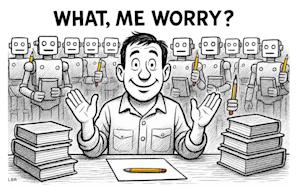
Three years ago, ChatGPT was born. It amazed the world and ignited unprecedented investment and excitement in AI. Today, ChatGPT is still a toddler, but public sentiment around the AI boom has turned sharply negative. The shift began when OpenAI released GPT-5 this summer to mixed reviews, mostly from casual users who, unsurprisingly, judged the system by its surface flaws rather than its underlying capabilities. Since then, pundits and influencers have declared that AI progress is slowing, that scaling has “hit the wall,” and that the entire field is just another tech bubble inflated by blusterous hype. In fact, many influencers have latched onto the dismissive phrase “AI slop” to diminish the amazing images, documents, videos and code that frontier AI models generate on command. This perspective is not just wrong, it is dangerous. It makes me wonder, where were all these “experts” on irrational technology bubbles when electric scooter startups were touted as a transportation revolution and cartoon NFTs were being auctioned for millions? They were probably too busy buying worthless land in the metaverse or adding to their positions in GameStop. But when it comes to the AI boom, which is easily the most significant technological and economic transformation agent of the last 25 years, journalists and influencers can’t write the word “slop” enough times.  Doth we protest too much?  After all, by any objective measure AI is wildly more capable than the vast majority of computer scientists predicted only five years ago and it is still improving at a surprising pace. The impressive leap demonstrated by Gemini 3 is only the latest example. At the same time, McKinsey recently reported that 20% of organizations already derive tangible value from genAI. Also, a recent survey by Deloitte indicates that 85% of organizations boosted their AI investment in 2025, and 91% plan to increase again in 2026. This doesn’t fit the “bubble” narrative and the dismissive “slop” language. As a computer scientist and research engineer who began working with neural networks back in 1989 and tracked progress through cold winters and hot booms ever since, I find myself amazed almost every day by the rapidly increasing capabilities of frontier AI models. When I talk with other professionals in the field, I hear similar sentiments. If anything, the rate of AI advancement leaves many experts feeling overwhelmed and frankly somewhat scared.   The dangers of AI denial So why is the public buying into the narrative that AI is faltering, that the output is “slop,” and that the AI boom lacks authentic use cases? Personally, I believe it’s because we’ve fallen into a collective state of AI denial, latching onto the narratives we want to hear in the face of strong evidence to the contrary. Denial is the first stage of grief and thus a reasonable reaction to the very disturbing prospect that we humans may soon lose cognitive supremacy here on planet earth. In other words, the overblown AI bubble narrative is a societal defense mechanism.   Believe me, I get it. I’ve been warning about the destabilizing risks and demoralizing impact of superintelligence for well over a decade, and I too feel AI is getting too smart too fast. The fact is, we are rapidly headed towards a future where widely available AI systems will be able to outperform most humans in most cognitive tasks, solving problems faster, more accurately and yes, more creatively than any individual can. I emphasize “creativity” because AI denialists often insist that certain human qualities (particularly creativity and emotional intelligence) will always be out of reach of AI systems. Unfortunately, there is little evidence supporting this perspective. On the creativity front, today’s AI models can generate content faster and with more variation than any individual human. Critics argue that true creativity requires inner motivation. I resonate with that argument but find it circular — we’re defining creativity based on how we experience it rather than the quality, originality or usefulness of the output. Also, we just don’t know if AI systems will develop internal drives or a sense of agency. Either way, if AI can produce original work that rivals most human professionals, the impact on creative jobs will still be quite devastating. The AI manipulation problem Our human edge around emotional intelligence is even more precarious. It’s likely that AI will soon be able to read our emotions faster and more accurately than any human, tracking subtle cues in our micro-expressions, vocal patterns, posture, gaze and even breathing. And as we integrate AI assistants into our phones, glasses and other wearable devices, these systems will monitor our emotional reactions throughout our day, building predictive models of our behaviors. Without strict regulation, which is increasingly unlikely, these predictive models could be used to target us with individually optimized influence that maximizes persuasion. This is called the AI manipulation problem and it suggests that emotional intelligence may not give humanity an advantage. In fact, it could be a significant weakness, fostering an asymmetric dynamic where AI systems can read us with superhuman accuracy, while we can’t read AI at all. When you talk with photorealistic AI agents (and you will) you’ll see a smiling façade designed to appear warm, empathic and trustworthy. It will look and feel human, but that’s just an illusion, and it could easily sway your perspectives. After all, our emotional reactions to faces are visceral reflexes shaped by millions of years of evolution on a planet where every interactive human face we encountered was actually human. Soon, that will no longer be true. We are rapidly heading toward a world where many of the faces we encounter will belong to AI agents hiding behind digital facades. In fact, these “virtual spokespeople” could easily have appearances that are designed for each of us based on our prior reactions – whatever gets us to best let down our guard. And yet many insist that AI is just another tech cycle. This is wishful thinking. The massive investment pouring into AI isn’t driven by

AI denial is becoming an enterprise risk: Why dismissing “slop” obscures real capability gains Leer entrada »

AI, Committee, Noticias, Uncategorized

The Download: political chatbot persuasion, and gene editing adverts

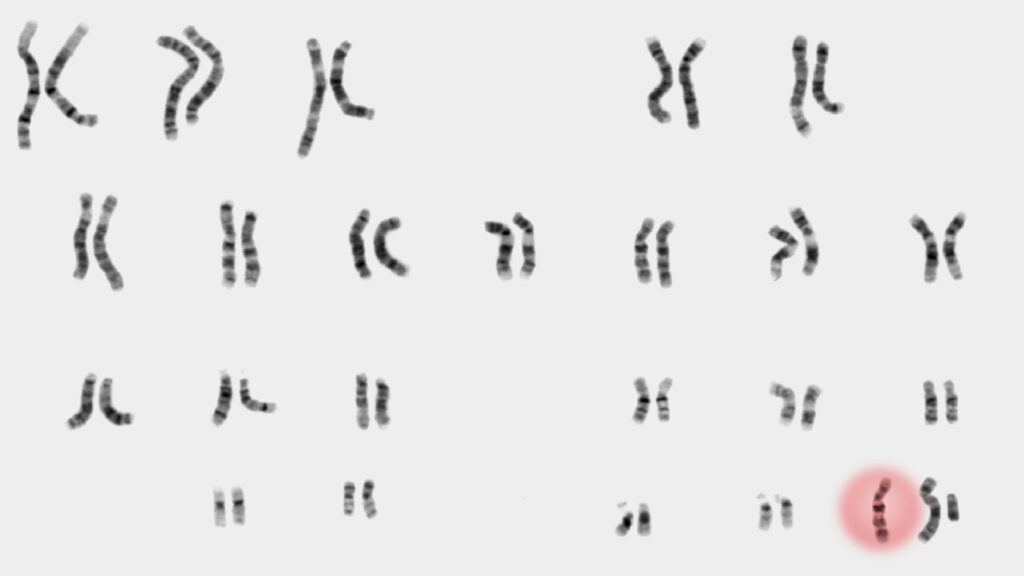
This is today’s edition of The Download, our weekday newsletter that provides a daily dose of what’s going on in the world of technology. AI chatbots can sway voters better than political advertisements The news: Chatting with a politically biased AI model is more effective than political ads at nudging both Democrats and Republicans to support presidential candidates of the opposing party, new research shows. The catch: The chatbots swayed opinions by citing facts and evidence, but they were not always accurate—in fact, the researchers found, the most persuasive models said the most untrue things. The findings are the latest in an emerging body of research demonstrating the persuasive power of LLMs. They raise profound questions about how generative AI could reshape elections.  Read the full story. —Michelle Kim  The era of AI persuasion in elections is about to begin  —Tal Feldman is a JD candidate at Yale Law School who focuses on technology and national security. Aneesh Pappu is a PhD student and Knight-Hennessy scholar at Stanford University who focuses on agentic AI and technology policy.  The fear that elections could be overwhelmed by AI-generated realistic fake media has gone mainstream—and for good reason. But that’s only half the story. The deeper threat isn’t that AI can just imitate people—it’s that it can actively persuade people. And new research published this week shows just how powerful that persuasion can be. AI chatbots can shift voters’ views by a substantial margin, far more than traditional political advertising tends to do. In the coming years, we will see the rise of AI that can personalize arguments, test what works, and quietly reshape political views at scale. That shift—from imitation to active persuasion—should worry us deeply. Read the full story.  The ads that sell the sizzle of genetic trait discrimination —Antonio Regalado, senior editor for biomedicine One day this fall, I watched an electronic sign outside the Broadway-Lafayette subway station in Manhattan switch seamlessly between an ad for makeup and one promoting the website Pickyourbaby.com, which promises a way for potential parents to use genetic tests to influence their baby’s traits, including eye color, hair color, and IQ. Inside the station, every surface was wrapped with more of its ads—babies on turnstiles, on staircases, on banners overhead. “Think about it. Makeup and then genetic optimization,” exulted Kian Sadeghi, the 26-year-old founder of Nucleus Genomics, the startup running the ads.  The day after the campaign launched, Sadeghi and I had briefly sparred online. He’d been on X showing off a phone app where parents can click through traits like eye color and hair color. I snapped back that all this sounded a lot like Uber Eats—another crappy, frictionless future invented by entrepreneurs, but this time you’d click for a baby. That night, I agreed to meet Sadeghi in the station under a banner that read, “IQ is 50% genetic.” Read on to see how Antonio’s conversation with Sadeghi went.  This story first appeared in The Checkup, MIT Technology Review’s weekly biotech newsletter. To receive it in your inbox every Thursday, and read articles like this first, sign up here. The must-reads I’ve combed the internet to find you today’s most fun/important/scary/fascinating stories about technology. 1 The metaverse’s future looks murkier than everOG believer Mark Zuckerberg is planning deep cuts to the division’s budget. (Bloomberg $)+ However some of that money will be diverted toward smart glasses and wearables. (NYT $)+ Meta just managed to poach one of Apple’s top design chiefs. (Bloomberg $) 2 Kids are effectively AI’s guinea pigsAnd regulators are slowly starting to take note of the risks. (The Economist $)+ You need to talk to your kid about AI. Here are 6 things you should say. (MIT Technology Review) 3 How a group of women changed UK law on non-consensual deepfakesIt’s a big victory, and they managed to secure it with stunning speed. (The Guardian)+ But bans on deepfakes take us only so far—here’s what else we need. (MIT Technology Review)+ An AI image generator startup just leaked a huge trove of nude images. (Wired $)  4 OpenAI is acquiring an AI model training startupIts researchers have been impressed by the monitoring and de-bugging tools built by Neptune. (NBC)+ It’s not just you: the speed of AI deal-making really is accelerating. (NYT $) 5 Russia has blocked Apple’s FaceTime video calling featureIt seems the Kremlin views any platform it doesn’t control as dangerous. (Reuters $)+ How Russia killed its tech industry. (MIT Technology Review) 6 The trouble with AI browsersThis reviewer tested five of them and found them to be far more effort than they’re worth. (The Verge $)+ AI means the end of internet search as we’ve known it. (MIT Technology Review) 7 An anti-AI activist has disappeared Sam Kirchner went AWOL after failing to show up at a scheduled court hearing, and friends are worried. (The Atlantic$) 8 Taiwanese chip workers are creating a community in the Arizona desertA TSMC project to build chip factories is rapidly transforming this corner of the US. (NYT $) 9 This hearing aid has become a status symbol Rich people with hearing issues swear by a product made by startup Fortell. (Wired $)+ Apple AirPods can be a gateway hearing aid. (MIT Technology Review)  10 A plane crashed after one of its 3D-printed parts melted Just because you can do something, that doesn’t mean you should. (BBC) Quote of the day “Some people claim we can scale up current technology and get to general intelligence…I think that’s bullshit, if you’ll pardon my French.” —AI researcher Yann LeCun explains why he’s leaving Meta to set up a world-model startup, Sifted reports.  One more thing ILLUSTRATION SOURCES: NATIONAL HUMAN GENOME RESEARCH INSTITUTE What to expect when you’re expecting an extra X or Y chromosome Sex chromosome variations, in which people have a surplus or missing X or Y, occur in as many as one in 400 births. Yet the majority of people affected don’t even know they have them, because these conditions can fly under the radar. As more expectant parents opt for noninvasive prenatal testing in hopes of ruling out serious conditions, many of them are surprised to discover instead that their fetus has a far less severe—but far less well-known—condition. And because so many

The Download: political chatbot persuasion, and gene editing adverts Leer entrada »

AI, Committee, Noticias, Uncategorized

Harnessing human-AI collaboration for an AI roadmap that moves beyond pilots

The past year has marked a turning point in the corporate AI conversation. After a period of eager experimentation, organizations are now confronting a more complex reality: While investment in AI has never been higher, the path from pilot to production remains elusive. Three-quarters of enterprises remain stuck in experimentation mode, despite mounting pressure to convert early tests into operational gains. WATCH THE WEBCAST “Most organizations can suffer from what we like to call PTSD, or process technology skills and data challenges,” says Shirley Hung, partner at Everest Group. “They have rigid, fragmented workflows that don’t adapt well to change, technology systems that don’t speak to each other, talent that is really immersed in low-value tasks rather than creating high impact. And they are buried in endless streams of information, but no unified fabric to tie it all together.” The central challenge, then, lies in rethinking how people, processes, and technology work together. Across industries as different as customer experience and agricultural equipment, the same pattern is emerging: Traditional organizational structures—centralized decision-making, fragmented workflows, data spread across incompatible systems—are proving too rigid to support agentic AI. To unlock value, leaders must rethink how decisions are made, how work is executed, and what humans should uniquely contribute. “It is very important that humans continue to verify the content. And that is where you’re going to see more energy being put into,” Ryan Peterson, EVP and chief product officer at Concentrix. Much of the conversation centered on what can be described as the next major unlock: operationalizing human-AI collaboration. Rather than positioning AI as a standalone tool or a “virtual worker,” this approach reframes AI as a system-level capability that augments human judgment, accelerates execution, and reimagines work from end to end. That shift requires organizations to map the value they want to create; design workflows that blend human oversight with AI-driven automation; and build the data, governance, and security foundations that make these systems trustworthy. “My advice would be to expect some delays because you need to make sure you secure the data,” says Heidi Hough, VP for North America aftermarket at Valmont. “As you think about commercializing or operationalizing any piece of using AI, if you start from ground zero and have governance at the forefront, I think that will help with outcomes.” Early adopters are already showing what this looks like in practice: starting with low-risk operational use cases, shaping data into tightly scoped enclaves, embedding governance into everyday decision-making, and empowering business leaders, not just technologists, to identify where AI can create measurable impact. The result is a new blueprint for AI maturity grounded in reengineering how modern enterprises operate. “Optimization is really about doing existing things better, but reimagination is about discovering entirely new things that are worth doing,” says Hung. Watch the webcast. This webcast is produced in partnership with Concentrix. This content was produced by Insights, the custom content arm of MIT Technology Review. It was not written by MIT Technology Review’s editorial staff. It was researched, designed, and written by human writers, editors, analysts, and illustrators. This includes the writing of surveys and collection of data for surveys. AI tools that may have been used were limited to secondary production processes that passed thorough human review.

Harnessing human-AI collaboration for an AI roadmap that moves beyond pilots Leer entrada »

AI, Committee, Noticias, Uncategorized

Apple Researchers Release CLaRa: A Continuous Latent Reasoning Framework for Compression‑Native RAG with 16x–128x Semantic Document Compression

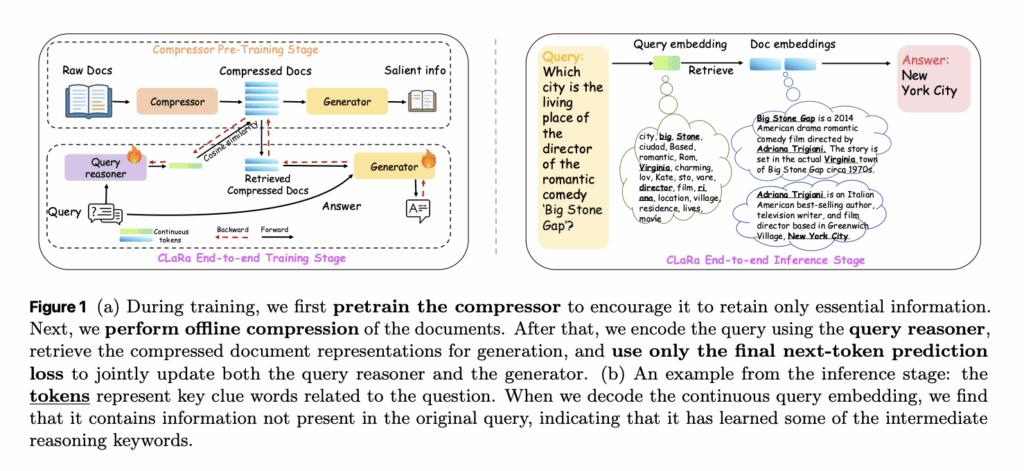
How do you keep RAG systems accurate and efficient when every query tries to stuff thousands of tokens into the context window and the retriever and generator are still optimized as 2 separate, disconnected systems? A team of researchers from Apple and University of Edinburgh released CLaRa, Continuous Latent Reasoning, (CLaRa-7B-Base, CLaRa-7B-Instruct and CLaRa-7B-E2E) a retrieval augmented generation framework that compresses documents into continuous memory tokens and then performs both retrieval and generation in that shared latent space. The goal is simple. Shorten context, avoid double encoding, and let the generator teach the retriever what actually matters for downstream answers. https://arxiv.org/pdf/2511.18659 From raw documents to continuous memory tokens CLaRa starts with a semantic compressor that attaches a small number of learned memory tokens to each document. During Salient Compressor Pretraining, SCP, the base model is a Mistral 7B style transformer with LoRA adapters that switch between a compressor role and a generator role. The final layer hidden states of the memory tokens become the compressed representation for that document. SCP is trained on about 2M passages from Wikipedia 2021. A local Qwen-32B model generates 3 supervision signals for each passage. Simple QA pairs cover atomic facts. Complex QA pairs connect several facts in one question to enforce multi hop reasoning. Paraphrases reorder and compress the text while preserving semantics. A verification loop checks factual consistency and coverage and can regenerate missing questions or paraphrases for up to 10 rounds before accepting a sample. Training uses 2 losses. A cross entropy term trains the generator to answer questions or produce paraphrases conditioned only on the memory tokens and an instruction prefix. A mean squared error term aligns the average hidden state of document tokens with the average hidden state of the memory tokens. The MSE loss gives modest but consistent gains of about 0.3 to 0.6 F1 points at compression ratios 32 and 128 and keeps compressed and original representations in the same semantic region. https://arxiv.org/pdf/2511.18659 Joint retrieval and generation in a shared space After offline compression, each document is represented only by its memory tokens. CLaRa then trains a query reasoner and an answer generator on top of the same backbone. The query reasoner is another LoRA adapter that maps an input question into the same number of memory tokens used for documents. Retrieval becomes pure embedding search. The system computes cosine similarity between the query embedding and each candidate document embedding. The best compressed document embeddings for a query are concatenated with the query tokens and fed into the generator adapter. Training uses only a standard next token prediction loss on the final answer. There are no explicit relevance labels. The key trick is a differentiable top k selector implemented with a Straight Through estimator. During the forward pass the model uses hard top k selection. During the backward pass a softmax distribution over document scores allows gradients from the generator to flow into the query reasoner parameters. The research team shows 2 effects in the gradient analysis. First, the retriever is encouraged to assign higher probability to documents that increase answer likelihood. Second, because retrieval and generation share the same compressed representations, generator gradients reshape the latent document space to make it easier to reason over. Logit lens analysis of the query embeddings recovers topic tokens such as “NFL” and “Oklahoma” for a question about the nephew of Ivory Lee Brown, even though those tokens are not in the raw query but are present in the supporting articles. https://arxiv.org/pdf/2511.18659 Compression quality and QA accuracy The compressor is evaluated on 4 QA datasets: Natural Questions, HotpotQA, MuSiQue and 2WikiMultihopQA. Under the Normal setting, where the system retrieves the top 5 Wikipedia 2021 documents per query, SCP-Mistral-7B at 4 times compression reaches an average F1 of 39.86. This is 5.37 points better than the hard compression baseline LLMLingua 2 and 1.13 points better than the best soft compression baseline PISCO. Under the Oracle setting, where the gold document is guaranteed to be in the candidate set, SCP-Mistral-7B at 4 times compression reaches an average F1 of 66.76. That is 17.31 points above LLMLingua-2 and 5.35 points above PISCO. Even more interesting, the compressed representations outperform a BGE based text retriever plus full document Mistral-7B generator by about 2.36 average F1 points for Mistral and about 6.36 points for Phi 4 mini. Well trained soft compression can exceed full text RAG while cutting context length by factors from 4 to 128. https://arxiv.org/pdf/2511.18659 The performance at very high compression ratios, above 32 in Oracle, does drop, but the decline remains moderate in Normal retrieval conditions. The key explanation as per the research team is, weak document relevance bottlenecks the system before compression quality does. End to end QA and retrieval behavior For end to end QA, CLaRa uses 20 candidate documents per query with compression ratios 4, 16 and 32. On the Normal setting, CLaRa-Mistral-7B with instruction initialized weights and 16 times compression reaches F1 equal to 50.89 on Natural Questions and 44.66 on 2WikiMultihopQA. This is comparable to DRO-Mistral-7B, which reads full uncompressed text, while using 16 times shorter document representations. On some datasets, CLaRa at 16 times compression slightly improves F1 over DRO, for example from 43.65 to 47.18 on 2Wiki. In the Oracle setting, CLaRa-Mistral-7B exceeds 75, F1 on both Natural Questions and HotpotQA at 4 times compression. This shows that the generator can fully exploit accurate retrieval even when all evidence is stored only in compressed memory tokens. Instruction initialized CLaRa generally wins over pre-training initialized CLaRa in the Normal setting, while the gap narrows in Oracle, where retrieval noise is limited. On the retrieval side, CLaRa used as a reranker under Oracle conditions delivers strong Recall at 5. With pretraining initialization at compression 4 on HotpotQA, CLaRa-Mistral-7B reaches Recall at 5 equal to 96.21. This beats the supervised BGE Reranker baseline at 85.93 by 10.28 points and even outperforms a fully supervised Sup Instruct retriever trained with contrastive relevance labels. https://arxiv.org/pdf/2511.18659 What Apple has released? Apple’s

Apple Researchers Release CLaRa: A Continuous Latent Reasoning Framework for Compression‑Native RAG with 16x–128x Semantic Document Compression Leer entrada »

We use cookies to improve your experience and performance on our website. You can learn more at Política de privacidad and manage your privacy settings by clicking Settings.

Privacy Preferences

You can choose your cookie settings by turning on/off each type of cookie as you wish, except for essential cookies.

Allow All
Manage Consent Preferences
  • Always Active

Save
es_ES