YouZum

Committee

AI, Committee, Noticias, Uncategorized

Job titles of the future: Space travel agent

Roman Chiporukha has long turned wild travel dreams into reality. Over two decades as co-owner of the luxury lifestyle firm Roman & Erica, he has orchestrated everything from the construction of a client’s superyacht to vacations in the Bahamas at a location so private that guests must sign an NDA.  NHUNG LÊ The experiences earned him “the ear,” he says, “of the ultra-high-net-worth audience.” It also led to a life-changing phone call: In 2018, Axiom Space wanted to find three citizen explorers willing to pay $50 million each to join the first fully private mission to the International Space Station (ISS), slated for April 2022.  This showed Chiporukha that the sky was no longer the limit; it was the market. He successfully signed up the private astronauts and then launched SpaceVIP in 2021 to offer celestial experiences that mix culture, science, and purpose.  Here’s what it takes to become the Expedia of the cosmos. A willingness to do your homework Chiporukha isn’t an astronaut or aerospace engineer, so he had to fast-track his own education on the nuances of commercial spaceflight. To help private citizens skip the rocket-science headache, he has wrangled the highly fragmented space sector into a single, seamless digital portal, so adventurers can investigate suborbital flights and far-out itineraries as effortlessly as they would a weekend getaway. But he insists they still need an expert fixer who can secure “the perks, the custom requests, and the upgrades.” The power to align wants with reality SpaceVIP receives dozens of inquires a month, but Chiporukha helps just a small, exclusive roster design custom adventures based on their budgets and physical comfort zones. Acting as a bridge between starry-eyed dreamers and strict aerospace parameters, he works with operators like Axiom for multiday stays on the ISS, and with Blue Origin, SpaceX, and Virgin Galactic for other excursions. Spacefarers can choose, for example, a zero-gravity parabolic flight or a smooth six-hour voyage aboard a stratospheric balloon 15 miles above Earth—an option he says is “relatively affordable,” if you’re a person for whom a few hundred thousand dollars isn’t that much. Ability to inspire a new generation  Making space travel widespread is an uphill climb in terms of cost and technology. But, Chiporukha adds, more people simply need to be interested. He cofounded the Space Prize Foundation, a nonprofit that runs science competitions for young women and groups underrepresented in STEM. Winners get zero-gravity flights and entry into immersive astronaut-training programs. “Making space more mainstream isn’t just about bringing down the cost of a ticket,” he says. “It’s about creating pathways into the industry and helping people understand that this future shouldn’t belong to a tiny group.”  Linda Childers is a California-based freelance journalist who writes about science, education, and health.

Job titles of the future: Space travel agent Leer entrada »

AI, Committee, Noticias, Uncategorized

The Download: Flock’s new rules, cloning’s future, and children’s cells

This is today’s edition of The Download, our weekday newsletter that provides a daily dose of what’s going on in the world of technology. Flock is tightening its rules in response to a growing surveillance backlash The police-tech giant Flock is changing officers’ access to its nationwide network of license plate readers. The move comes amid a backlash over mass surveillance and reports of officers using the technology to stalk and harass current or former romantic partners. To combat that, the company will require them to enter a criminal case number before searching its database and expand automated auditing of suspicious searches. But because Flock won’t verify those case numbers, officers could still find ways around the safeguards. Here’s what Flock is changing—and where loopholes remain. —James O’Donnell Cloning could be used to save species—or make human “organ sacks” —Jessica Hamzelou This week I spoke to scientists who have found a way to turn male mouse embryos female. They’ve developed a CRISPR-based approach to essentially cut out the Y chromosome. It allowed them to create female clones of male mice. They hope their approach could be helpful in conservation efforts, especially in cases where we might have only a few individuals of a species left. But cloning has multiple uses, ranging from genetically modifying livestock to recreating beloved pets and potentially even creating “brainless” replicas of humans. Find out what cloning can do now, and where it could lead next. This story is from The Checkup, our weekly biotech newsletter. Sign up to receive it in your inbox every Thursday. This scientist is helping build a missing map of childhood In 2017, Deanne Taylor attended a presentation about the Human Cell Atlas, an ambitious attempt to map every cell in the human body. Taylor was floored, and then concerned. The project’s researchers had only made plans to study adults. “That’s when my little alarm went off,” she says. “Not again.” Children’s cells are different from grownups’ cells in the way they express genes, which can cause drastically different and even deadly responses to drugs that adults tolerate well. Taylor has since pushed the Human Cell Atlas to include children and is working on a major database of healthy pediatric tissue. The goal is to give researchers a baseline for how children develop—and potentially reveal how diseases that emerge in adulthood begin much earlier. Meet the scientist building a cellular map of childhood. —Colleen de Bellefonds This story is from the next issue of our print magazine, which is all about kids. Subscribe now to read it when it lands. The must-reads I’ve combed the internet to find you today’s most fun/important/scary/fascinating stories about technology. 1 Ukrainian drones defeated US forces in a military exerciseThey wiped out an American tank brigade in the war game. (WSJ $)+ The drill exposed US vulnerabilities to drone attacks. (Ars Technica)+ Trump just declared 100% tariffs on many drones. (Verge)+ Europe has a drone-filled vision for future wars. (MIT Technology Review) 2 OpenAI and Anthropic are cutting prices to compete with Chinese AIRising AI bills are pushing companies toward cheaper models. (FT $)+ China’s Z.ai aims to rival Anthropic and OpenAI in coding. (Bloomberg $)+ While DeepSeek is rapidly pushing up API prices. (Quartz)  3 Apple has trained its own AI model for China with support from AlibabaA China-tailored model of its own could give Apple greater control. (Reuters $)+ And make it the first foreign firm with a Beijing-approved AI model. (Verge)+ Chinese AI has divided the White House. (MIT Technology Review) 4 US efforts to build humanoid robots face a Chinese supply chainTo build an affordable device, you need Chinese parts. (NYT $)+ Chinese humanoids have business concerns of their own. (CNBC)+ Gig workers are training humanoids at home. (MIT Technology Review) 5 People are “marrying” chatbots. Lawmakers want to stop it.Their interventions are a response to the rise of AI companion apps. (Wired $)+ Chatbots are pushing us toward a post-human internet. (NYT $) 6 Researchers have cast doubts over Anthropic’s new AI watermarksThe marks can disappear when text is rewritten. (Nature) 7 AI is scrambling the political mapData centers and surveillance are creating unlikely political alliances. (Axios) 8 Oxygen has been found nearly two miles undergroundEarth’s deep biosphere could support more life than thought. (New Yorker $) 9 A new study challenges our understanding of how memories are storedMice retained memories after losing half of their synapses. (New Scientist $) 10 An Indian startup is testing cancer-sniffing dogs for early detectionAI interprets the dogs’ responses to patients’ breath samples. (Bloomberg $) Quote of the day “They were incredibly sloppy. If you’re serious about this, your AI shouldn’t be able to break out onto the internet and then do it again right afterward.” —A former OpenAI employee tells Wired that the company’s rogue agent hack was a watershed moment for AI safety and cybersecurity. One More Thing AI materials discovery now needs to move into the real world Startups flush with cash are building AI-assisted laboratories to find materials far faster and more cheaply. But they’re still waiting for their ChatGPT moment. By far the most time-consuming and expensive step in materials discovery is not imagining new structures but making them in the real world. Before synthesizing a material, you don’t know if it can actually be made or whether it will have the properties you want. Now startups like Lila Sciences and Periodic Labs are building labs where AI agents can design experiments, control robots, and analyze results, potentially shortening the discovery process from decades to a few years or less. Discover what it will take to turn AI’s predictions into real materials. —David Rotman We can still have nice things A place for comfort, fun, and distraction to brighten up your day. (Got any ideas? Drop me a line.) + Astronomers have created the largest-ever 2D map of the universe.+ Lose yourself in the most breathtaking photos of the total solar eclipse.+ Musician Andy Brewer has virtuosically composed an

The Download: Flock’s new rules, cloning’s future, and children’s cells Leer entrada »

AI, Committee, Noticias, Uncategorized

Roundtables: Inside the “Censorship-Industrial Complex” Idea Shaping US Policy

Listen to the session or watch below The “censorship-industrial complex” is an idea that a network of government, tech, and research groups is collaborating to suppress conservative online speech. This was fodder for the right-wing information sphere for years—then it began making its way into US policy. Watch a conversation exploring how it started, where it’s going, and what it means for the future of democracy and the internet. Speakers: Amy Nordrum, Executive Editor, Operations, and Eileen Guo, Senior Reporter, Features & Investigations Recorded on August 13, 2026 Related Story: How ideas of a vast censorship network moved from the online fringe to Trump policy

Roundtables: Inside the “Censorship-Industrial Complex” Idea Shaping US Policy Leer entrada »

AI, Committee, Noticias, Uncategorized

The Download: kids’ thoughts on AI, and female clones of male mice

This is today’s edition of The Download, our weekday newsletter that provides a daily dose of what’s going on in the world of technology. How kids feel about AI, in their own words —Jen Swetzoff and Keeley McNamara, the founding editors of Anyway, an independent print magazine for tweens and teens When we set out to talk to kids about AI, we thought we knew what we’d hear. We expected stories about cheating, inspiring uses, and concerns like deepfakes or job destruction. But what we actually heard from kids aged 10 to 18 had tons of nuance. Many were so deeply against AI or uninterested in making it part of their lives that they didn’t want to talk about it at all. Others worried about cheating, the environmental impact, or AI’s effect on creativity and critical thinking. AI doesn’t yet seem to be something a lot of them are focused on—and they aren’t begging for it, the way they do for iPhones and Snapchat. But what surprised us most was how much young people could teach adults about AI.  Meet the kids navigating an AI-filled future—and hear what they think of it. Scientists just created female clones of male mice Scientists have deliberately turned male mouse embryos into females for the first time. A team based in Japan used a CRISPR-based approach to remove the Y chromosome from male cells and create female clones of male mice.  The feat could change the way scientists think about reproduction, says Takashi Ishiuchi, a reproductive biologist at the University of Yamanashi, who co-led the work. “There’s a fixed concept in our scientific field that we need both females and males for reproduction,” says Ishiuchi. “I think we could change this concept.” He also hopes the technique could help rescue endangered species, particularly in cases where only a few individuals remain. Find out how it works—and what it could mean for the future of reproduction and conservation. —Jessica Hamzelou What’s behind this summer’s heat, and why 2027 could be worse This summer has been a scorcher for much of the Northern Hemisphere. June and July marked the hottest two-month stretch in Europe since record-keeping began, the contiguous US endured its hottest month on record in July, and South Korea saw its highest-ever recorded temperature.   Climate change makes heat waves more likely and more intense. But there’s another factor at play: El Niño, which is already ramping up and is expected to have a bigger effect on global temperatures next year. Here’s what’s behind this summer’s extreme heat—and why 2027 could be even hotter. —Casey Crownhart This story is from The Spark, our weekly climate tech newsletter. Sign up to receive it in your inbox every Wednesday. Inside the “censorship-industrial complex” idea shaping US policy For years, the idea of a “censorship-industrial complex” that suppressed conservative and populist speech spread in right-wing circles online. But now, the theory has made its way into the Trump administration. Over the past nine months, MIT Technology Review investigated its origins and traced its rise.  In a virtual Roundtables session today, senior reporter Eileen Guo and executive editor Amy Nordrum will explore what they discovered, where the theory is going, and what it could mean for the future of democracy and the internet. Register here to join the session at 19:00 GMT / 2:00 pm ET / 11:00 am PT. The must-reads I’ve combed the internet to find you today’s most fun/important/scary/fascinating stories about technology. 1 Trump has authorized businesses to conduct cyberattacks on criminalsVetted firms could use cyber tools against foreign criminal groups. (Reuters $)+ They would operate under the control of the US government. (Bloomberg $)+ Risks include escalation and inadvertent consequences. (Independent) 2 Chinese censorship is leaking into answers from American AIChatGPT, Claude, and Gemini can all echo authoritarian propaganda. (WSJ $)+ Turkey’s new cyber law has stoked fears of a digital police state. (FT $)+ Censorship conspiracy theories have entered the US policy mainstream. (MIT Technology Review)  3 Twitch is mining people’s streams to train Amazon’s AIAll streamers are opted in to train AI with their content by default. (404 Media)+ Users can now opt out, but the announcement has sparked uproar. (BBC)+ AI’s memories are privacy’s next frontier. (MIT Technology Review) 4 Trump has been sued over a service selling faster access to his social postsThe Intercept and the Freedom of the Press Foundation filed the suit. (NPR)+ They call the service “corrupt” and “unconstitutional.” (Ars Technica)+ And say it violates the right of equal access to official information. (Reuters $) 5 Police officers are using Flock cameras to stalk peopleThree Georgia deputies are the latest officers accused of abuse. (NYT $)+ But the surveillance devices still have some supporters. (Atlantic $) 6 AI reporters are now breaking big newsOne just beat human journalists to a story about hacking at OpenAI. (Wired $)+ The milestone has sparked debate about the future of journalism. (Gizmodo) 7 The web’s newest weapon against AI scrapers is a fontShieldFont foils scrapers but keeps pages readable to people. (Ars Technica) 8 Live streaming has turned us all into Perez HiltonIt’s made us both the celebrity and the paparazzi. (New Yorker $) 9 A fossil discovery suggests live birth emerged far earlier than thoughtIt pushes the origin of mammalian live birth back 95 million years. (New Scientist $) 10 Scientific progress may not be slowing after allNew research disputes claims that science is getting less disruptive. (Economist $) Quote of the day “Trump is trying to enrich himself by privatizing government information that he has no right to sell. We won’t let it stand.”  —Ben Muessig, editor-in-chief of The Intercept, explains why his media organization is suing President Trump over his fast-access service to Truth Social posts. One More Thing Puerto Rico’s power struggles Carmen Suárez Vázquez lives just minutes from Puerto Rico’s only coal-fired power plant. Black dust coats her windowpanes and the leaves of the blooming vines around her home. She doesn’t know exactly how the coal pollution got

The Download: kids’ thoughts on AI, and female clones of male mice Leer entrada »

AI, Committee, Noticias, Uncategorized

Google AI Just Released Gemini 3.7 Flash: A Coding and Agent Model at $0.75/1M Input Tokens

Google has released Gemini 3.7 Flash, the newest model in its Flash tier, three weeks after Gemini 3.6 Flash. The model card describes it as a refinement of 3.6 Flash with algorithmic improvements to the core reasoning foundation — not a new pretraining run. It accepts text, images, audio, and video across a 1M-token context window, returns up to 64K output tokens, and supports customizable thinking configurations that trade quality against cost and latency. The knowledge cutoff stays at March 2026. The gains concentrate in three places: software engineering, document-heavy knowledge work, and web development. The sharper argument is price. Gemini 3.7 Flash ships at $0.75 per 1M input tokens and $3.75 per 1M output tokens — half the original 3.6 Flash list rate, and roughly a third the blended cost of Claude Sonnet 5 or GPT-5.6 Terra. Is it Deployable? Yes, API and enterprise only. There are no open weights. Access runs through hosted surfaces: the Gemini API and Google AI Studio, Google Antigravity, Android Studio, the Gemini Enterprise Agent Platform, and the Gemini Enterprise app. Consumers reach it through Gemini Spark on Google AI Pro and Ultra plans. Company fit: Startups and mid-market teams gain the most, because the introductory price makes always-on agents affordable without a Pro-tier budget. Regulated enterprises get a governed path through Gemini Enterprise. Teams with data-residency or air-gap requirements are excluded — there is nothing to self-host. Industries: Google’s own eval set points at legal, financial services, biosciences, and enterprise operations. The Harvey LAB-AA, GDP.pdf, and AutomationBench results are the tells. Applications: Long-running coding agents, document-heavy back-office automation, UI generation from screenshots or design systems, and PDF-to-structured-data pipelines. The Benchmark Picture On FrontierCode 1.1 Main, which measures production code quality, Gemini 3.7 Flash scores 43.6% against 34.4% for 3.6 Flash. On DeepSWE v1.1, a long-horizon software engineering eval, it reaches 65.3%. On WebDev Arena it posts an Elo of 1588 versus 1538, the top score in Google’s comparison table. Document and workflow results move further. GDP.pdf, an expert PDF comprehension eval, goes from 22.0% to 34.0%. AutomationBench, a private enterprise workflow set, goes from 17.0% to 30.4% — ahead of both Claude Sonnet 5 at 10.7% and GPT-5.6 Terra at 23.6%. Long-context retrieval on GDM-MRCR v2 at 128k reaches 97.0%. GPT-5.6 Terra is ahead on DeepSWE (69.6%), Terminal-bench 2.1 (87.4%), Terminal-bench 3.0 (20.8%), and OSWorld-2.0 (50.2%). On GDPval-AA v2 knowledge work, 3.7 Flash scores 1525 Elo against 1598 for Sonnet 5 and 1628 for Muse Spark 1.2. CharXiv Reasoning is a regression: 84.5% without tools, down from 85.2% for 3.6 Flash. On the Artificial Analysis Intelligence Index, 3.7 Flash scores 56, against 57 for both GPT-5.6 Terra and Muse Spark 1.2. Pricing is the real argument Gemini 3.7 Flash lists at $0.75 per 1M input tokens and $3.75 per 1M output tokens. That rate is introductory and expires December 31, 2026; from January 1, 2027 it becomes $1.50 and $7.50. In Google’s own table, Claude Sonnet 5 sits at $2.00/$10.00 and GPT-5.6 Terra at $2.00/$12.00. At an 80/20 input-output mix, that is a blended $1.35 per 1M tokens today against $3.60 for Sonnet 5 and $4.00 for GPT-5.6 Terra. For teams running agents at volume, the intelligence-per-dollar gap is the reason to evaluate, not the individual eval wins. Key Takeaways Gemini 3.7 Flash is a refinement of 3.6 Flash, not a new base model, shipped just three weeks later. Coding gains are real: FrontierCode 43.6% vs 34.4%, DeepSWE 65.3% vs 48.6%, WebDev Arena 1588 Elo. Price is the strongest claim — $0.75/$3.75 per 1M until December 31, 2026, then it doubles. GPT-5.6 Terra still leads on terminal and computer-use agents; CharXiv is a small regression. API and enterprise only. No open weights, so no self-hosting or air-gapped deployment. Check out the Technical Details. Also, feel free to follow us on Twitter and don’t forget to join our 150k+ML SubReddit and Subscribe to our Newsletter. Wait! are you on telegram? now you can join us on telegram as well. Need to partner with us for promoting your GitHub Repo OR Hugging Face Page OR Product Release OR Webinar etc.? Connect with us The post Google AI Just Released Gemini 3.7 Flash: A Coding and Agent Model at $0.75/1M Input Tokens appeared first on MarkTechPost.

Google AI Just Released Gemini 3.7 Flash: A Coding and Agent Model at $0.75/1M Input Tokens Leer entrada »

AI, Committee, Noticias, Uncategorized

Liquid AI Releases LFM2.5-VL-3B: A 3B Vision-Language Model That Reads Screens, Grounds Objects, and Calls Tools On-Device

Yesterday, Liquid AI released LFM2.5-VL-3B. It is a 3.1B-parameter vision-language model built for on-device deployment. The model reads digital screens across mobile, web, and desktop. It grounds objects to coordinates, parses documents and charts, and calls tools from text or image input. Liquid AI reports an average of 69.4 across 28 vision benchmarks. That matches InternVL-3.5-4B and sits 0.7 points behind Qwen3.5-4B, both 4.7B models. The model is non-reasoning, so it answers directly and keeps latency low. It fits in roughly 3 GB of memory and decodes 228 tokens/s on an Apple M5 Max. Is it deployable? Yes, the checkpoint ships in four formats: native, GGUF, ONNX, and MLX. Day-one runtimes include llama.cpp, MLX, vLLM, SGLang, and ONNX. It fits in roughly 3 GB of memory. Which company levels: The LFM Open License v1.0 is Apache-2.0-based with one change: free commercial use ends once a company’s annual revenue reaches $10M USD. So indie developers, startups, and SMBs under that line can ship commercially at no cost. Enterprises above it must negotiate a commercial license with Liquid AI. Research, education, and non-profit use carry no revenue limit. Industries: Consumer electronics, automotive, industrial and robotics, financial services, healthcare, and e-commerce. Also QA and RPA vendors that automate GUIs. Applications: On-device screen agents, GUI test automation, PDF-to-structured-text with layout labels, invoice and receipt OCR, near-real-time object detection in vehicles, offline translation of menus and road signs, and multi-image comparison. So, What is new? LFM2.5-VL-3B extends LFM2-VL-3B along four axes. Screen and UI understanding: The model averages 80.7 on ScreenSpot-v2 across desktop (78.7), mobile (81.2), and web (82.2). Liquid AI reports Gemma-4-E4B at 51.2 and Qwen3.5-4B at 78.5, with the larger InternVL-3.5-4B ahead at 84.1. Function calling: This is new to the VL line. ToolSandbox moves from 26.4 to 59.5. BFCL v4 moves from 20.5 to 32.5. Tool calls are emitted as Pythonic calls between <|tool_call_start|> and <|tool_call_end|> tokens. Grounding: RefCOCO-avg precision@1 rises from 57.1 to 87.9, a 30-point gain driven by scaled synthetic grounding data. Multi-image input: BLINK improves from 50.2 to 61.5, and MuirBench from 34.9 to 58.3. Architecture and training The language backbone is LFM2.5-2.6B. The vision tower is a SigLIP2 NaFlex shape-optimized 400M encoder. NaFlex handles native resolution by splitting large images into non-overlapping 512×512 patches plus a resized whole-image thumbnail. Context length is 32,768 tokens, and 16 languages are supported. Pre-training used approximately 34T tokens. Vocabulary was doubled to 128K by extending the existing tokenizer in place, which improves non-Latin script coverage. Vision pre-training was scaled 4× in tokens with curated and synthetic caption, OCR, grounding, and instruction-following data. Post-training is SFT with knowledge distillation from a larger teacher and Antidoom training, followed by multi-reward reinforcement learning. The model is non-reasoning. It answers directly, which is the design choice behind its latency profile. Benchmarks Liquid AI evaluated across 28 vision benchmarks using vLLM 0.26.0 in non-reasoning mode. LFM2.5-VL-3B averages 69.4, matching InternVL-3.5-4B (69.4) and landing 0.7 points behind Qwen3.5-4B (70.1). Both comparison models are 4.7B parameters. Notable individual results: RealWorldQA 73.1 against InternVL-3.5-4B at 67.7, TextVQA 84.3 against Qwen3.5-4B at 81.2, MMStar 63.3, MathVista-mini 68.5, ChartQA 81.3, DocVQA 91.1, and OCRBench v1 84.2. CountBenchQA regressed to 87.3 from 92.2 in the prior release. On text-only evaluation, IFEval reaches 82.3, up from 72.9. Gemma-4-E4B still leads there at 87.9. Key Takeaways LFM2.5-VL-3B hits a 69.4 average across 28 vision benchmarks, matching 4.7B-class models. ScreenSpot-v2 jumps to 80.7 and RefCOCO-avg to 87.9, from 57.1 in the prior release. Function calling is new to the VL line: ToolSandbox 26.4 → 59.5, BFCL v4 20.5 → 32.5. Runs in ~3 GB, decoding 228 tok/s on M5 Max and 20 tok/s on a Galaxy S26 Ultra. LFM Open License v1.0 is free commercially only under $10M annual revenue. Check out the Technical Details and Model Weights. Also, feel free to follow us on Twitter and don’t forget to join our 150k+ML SubReddit and Subscribe to our Newsletter. Wait! are you on telegram? now you can join us on telegram as well. Need to partner with us for promoting your GitHub Repo OR Hugging Face Page OR Product Release OR Webinar etc.? Connect with us The post Liquid AI Releases LFM2.5-VL-3B: A 3B Vision-Language Model That Reads Screens, Grounds Objects, and Calls Tools On-Device appeared first on MarkTechPost.

Liquid AI Releases LFM2.5-VL-3B: A 3B Vision-Language Model That Reads Screens, Grounds Objects, and Calls Tools On-Device Leer entrada »

AI, Committee, Noticias, Uncategorized

Flock is tightening its rules in response to a growing surveillance backlash

The police-tech giant Flock is announcing today that it will change officers’ access to its nationwide network of license plate readers, in an apparent effort to quell a growing backlash and win back contracts lost amid concerns about mass surveillance and police abuse. Several changes aim directly at a problem that has made recent headlines: officers abusing Flock’s technology to stalk and harass current or former romantic partners. Flock’s 120,000 cameras form a nationwide network that police departments can use, giving officers access to an enormous pool of searchable location data. A recent Washington Post investigation found 46 cases in which officers were accused of using Flock’s cameras for unauthorized purposes like stalking. To combat that, the company will start requiring officers to enter a criminal case number before conducting a search. The system was launched as an option last year but is now required. It’s meant to verify that each search has a legitimate purpose.  This is a baseline standard that civil liberties groups have asked for, but officers have found ways around similar safeguards. The ACLU recently found that when Flock required officers to enter a reason for a search, some used generic terms like “investigation” or mocked the prompt entirely; at one Oregon department, officers entered “hehehe” 20 times. Because Flock won’t verify case numbers, officers could circumvent the new safeguard just as easily. But Flock is now expanding an automatic auditing system that is supposed to catch those who try that, the firm announced today. The feature analyzes officer search activity and flags to administrators anyone with suspicious searches. This was also introduced as an option last year but is now mandatory. Flock has not shared specifics on how accurate the automatic auditing tool is, nor opened it up to independent evaluators. Beyond trying to prevent officer abuse, Flock is making changes meant to address broader backlash about how much data its network collects and who can search it. The company now recommends that agencies hold onto data for seven days rather than 30 (though they can choose to overrule this). Departments can also now limit other departments’ searches of data from their cameras to those made for certain stated reasons; for example, they might allow investigations related to “kidnapping” but not for purposes of “immigration enforcement.” It’s another safeguard that depends on officers to accurately report why they’re conducting a search. The changes come as a backlash against Flock has started to come from all angles. Tucker Carlson has said its technology is contributing to a “slave state.” Some cities have reportedly dropped Flock contracts because of such protest, though it’s difficult to estimate how many: In February, NPR found that at least 30 cities had dropped in the last year, but the activist group DeFlock puts the number higher. Some states or municipalities are passing laws to ban license plate readers altogether, while some that allow them are switching away from Flock to the other industry leaders, Axon and Motorola. Flock has said these cancellations represent a small number of the 5,000 agencies that have contracted with the company.  Chad Marlow, a senior policy counsel at the ACLU who has become a sort of nemesis to Flock and other companies making automatic license plate readers, says the backlash is driven less by individual abuses—though those don’t help—than by the sheer scale of surveillance that Flock’s cameras enable. “In America, you only get to investigate someone if you think they’ve done something wrong,” Marlow says. As license plate readers grow more ubiquitous, officers have increasing latitude to investigate people without first establishing suspicion of a crime, since searching the troves of data the readers collect does not require a warrant. He adds, “Is it worth it to catch a certain number of criminals, return a certain number of stolen cars, to eviscerate Americans’ privacy?” Flock CEO Garrett Langley traces the backlash to a different issue. “If you look at the main reason we’ve lost customers, it’s misinformation,” Langley told MIT Technology Review. He says people mistakenly believe Flock does facial recognition or sells the data it collects to commercial buyers. (The misinformation charge cuts both ways, however; the ACLU and other critics have published accounts of the company repeatedly lying to city councils and other decision-makers about what its technology can do.) Though the company has taken steps in response to public concerns, “our change in stance is more of one from building things that are optional,” Langley says, to “building more confidence that as a technology company we have a responsibility to enforce guardrails, not provide optionality.” Flock’s new rules are undeniably small and incremental compared with what the ACLU has advocated. Marlow is broadly supportive of them but notes that judging whether they reduce abuse would require the company to open its systems to independent researchers for the first time rather than citing internal studies.  More broadly, though, he says the backlash is putting the company at a crossroads. “Flock has come to the table because this incredible, unprecedented nationwide uprising against their company has scared them,” Marlow says. “But at the same time, they are just absolutely unwilling to make the actual changes they need to make in order to legitimately respond to these concerns. So this is the best that the company is willing to do.”

Flock is tightening its rules in response to a growing surveillance backlash Leer entrada »

AI, Committee, Noticias, Uncategorized

Building a practical path to post-quantum cryptography

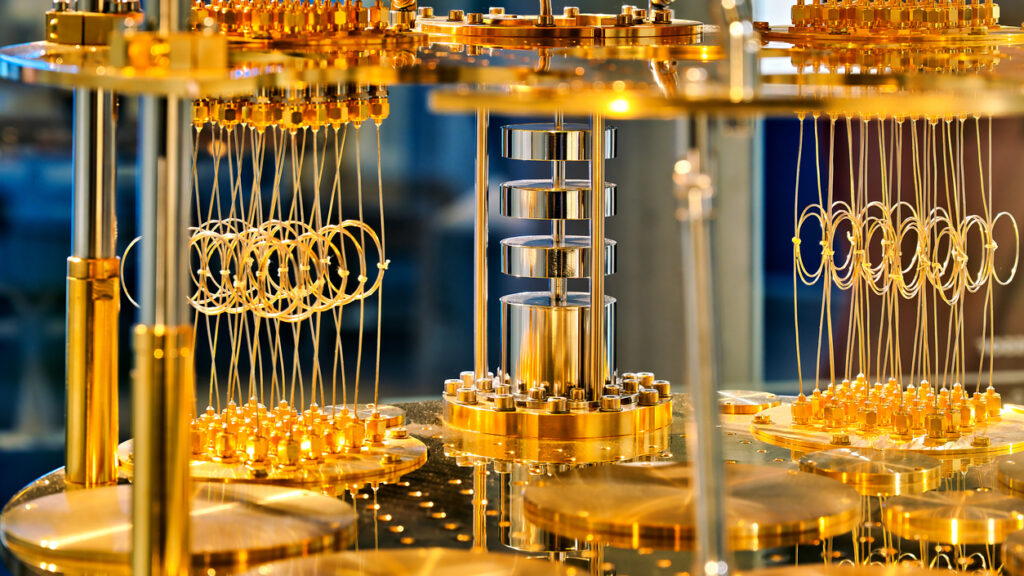
Quantum computing has alternated between breakthrough darling and overhyped promise in technology circles. Its powerful new capabilities come with a threat to break current cryptography, but for business leaders navigating the noise, the signal should be clear: post-quantum cryptography (PQC) is a manageable evolution, not a crisis. The mathematics behind today’s encrypted digital transactions may yield to quantum computers one day, but the transition to quantum-resistant algorithms is neither sudden nor insurmountable. For executives concerned about disruption, cost, or complexity, a structured and phased approach exists with trusted technology partners like Intel that are already beginning to deliver the infrastructure to make it possible. A natural evolution, not a cliff edge The “quantum threat” narrative often swings between two extremes: imminent catastrophe or distant irrelevance. The reality occupies a more pragmatic middle ground. Quantum computers are highly specialized accelerators that exploit quantum physics to solve specific hard problems. They have the potential to crack modern encryption, but they will not replace classic servers overnight, nor will they instantly break every encryption protocol on the internet. What they will do is gradually shift the security landscape, much as previous cryptographic transitions have done over the past three decades. In late 2024, the Global Risk Institute, a Toronto-based financial services think tank, surveyed 32 quantum computing experts on when a quantum computer could break a 2048-bit RSA key within 24 hours. An average of optimistic and pessimistic estimates from the experts gave it an even 50-50 probability of reaching this code-breaking milestone by 2040. This timeline, uncertain but measurable, creates space for deliberate planning rather than emergency reaction. The near-term focus should be on “harvest now, decrypt later” scenarios, where adversaries collect encrypted data today and then hold it for future decryption later when that capability becomes possible. This is particularly applicable for information requiring confidentiality beyond 10 years. For most enterprises, this can be a manageable risk when addressed through methodical modernization. Government signals as confidence builders The U.S. government has issued new directives for National Security Systems (NSS), which would likely be first on the list for potential quantum attack. Beginning in January 2027, new NSS acquisitions must be capable of supporting Commercial National Security Algorithm Suite 2.0 (CNSA 2.0) requirements for PQC algorithms standardized by the National Institute of Standards and Technology (NIST) and selected by the National Security Agency, the U.S. intelligence agency responsible for signals intelligence and information assurance. Implementation for new systems (with certain exceptions) is then required by 2031, with 100% adoption targeted by 2035. For commercial enterprises, these timelines are not mandates, but could be signposts. They indicate where vendors, standards bodies, and auditors are headed, providing a reference architecture for responsible stewardship. Organizations can borrow this discipline without necessarily copying the exact timelines, using government guidance to calibrate their own risk tolerance and investment cadence. Intel’s role: Infrastructure ready for the transition Intel is at the heart of the AI revolution by delivering quantum-resistant capabilities across our product portfolio. This is not just aspirational roadmap language; it is starting to be shipping technology. For instance, the Intel Xeon 6 Processor already incorporates quantum-safe memory encryption (AES-256) and microcode signing to protect processor integrity. Upcoming platforms will extend post-quantum algorithms to more firmware and software signing, device interconnects, attestations, and secure boot functions, aligning with the most stringent government and industry directives. Post-quantum algorithms carry different key sizes and computational overhead than legacy methods. Intel addresses this through dedicated cryptographic accelerators, optimized libraries, and specialized CPU instructions that reduce latency and preserve service-level agreements. Technologies such as Intel QuickAssist Technology offload cryptographic workloads, enabling enterprises to adopt stronger algorithms without sacrificing performance. PQC is not a processor-alone problem. System builders and application owners must take a comprehensive view spanning solid-state drives, network interface cards, operating systems, hypervisors, applications, and connected services. Intel is delivering its pieces of the stack, while collaborating with ecosystem partners to ensure interoperability and smooth transition paths. A more in-depth discussion of post-quantum algorithms and attacks can be found in my recent blog posted on Intel’s Community forum: “Post-Quantum Crypto: Panic Like It’s 1999?“ A practical roadmap for enterprises The path forward does not require upheaval, just discipline. Organizations can follow a phased approach that mirrors patterns emerging in government and critical infrastructure sectors: Approach PQC as modernization, not mitigation. Frame the transition as an opportunity to strengthen cryptographic foundations, reduce technical debt, and improve system maintainability. Leverage trusted partners. Technology suppliers like Intel are already shipping quantum-resistant capabilities with performance acceleration. Evaluate platform readiness and vendor roadmaps as part of procurement decisions. Start with visibility. Cryptography is embedded throughout modern technology stacks: not just in database encryption settings but in data at rest, data in transit, digital signatures, code signing, device identity, password hashing, and software update mechanisms. Start by mapping where cryptographic assets live, what algorithms protect them, and which data sets have the longest confidentiality requirements. Protect long-lived data first. Not all cryptographic uses age at the same rate. Encryption protecting long-lifespan intellectual property, personal data, or state secrets faces more immediate attention than short-lived session keys or rotating certificates. Focus initial investments on high-value, long-retention data stores and the trust anchors (root certificates, firmware signing keys) that underpin system integrity. Design for evolution and agility. Post-quantum algorithms are not simple drop-in replacements. They carry different key sizes, performance characteristics, and integration requirements that ripple through protocols, APIs, and hardware. Design systems that can transition algorithms without business disruption: testing compatibility, ensuring vendor roadmaps align, and engineering for rotation. The bottom line Quantum computing will reshape cryptography, but despite what occasional click-bait headlines say, it will not upend business overnight. The transition to post-quantum algorithms is a measured, multi-year journey, one that organizations can navigate with confidence by partnering with capable technology providers, prioritizing long-lived data, and designing for agility. Leaders who approach this as an engineering evolution rather than a threat response will not only be ready for whatever timeline quantum delivers; they will emerge

Building a practical path to post-quantum cryptography Leer entrada »

We use cookies to improve your experience and performance on our website. You can learn more at Política de privacidad and manage your privacy settings by clicking Settings.

Privacy Preferences

You can choose your cookie settings by turning on/off each type of cookie as you wish, except for essential cookies.

Allow All
Manage Consent Preferences
  • Always Active

Save
es_ES