YouZum

Uncategorized

AI, Committee, News, Uncategorized

Context-Dependent Affordance Computation in Vision-Language Models

arXiv:2603.04419v2 Announce Type: replace Abstract: We characterize the phenomenon of context-dependent affordance computation in vision-language models (VLMs). Our primary study uses Qwen3-VL-30B-A3B ($n = 3{,}213$ scene-context pairs from COCO-2017: 479 images under 7 agentic personas), with a cross-model replication on LLaVA-1.5-13B. We demonstrate substantial affordance drift: mean Jaccard similarity between context conditions is $0.095$ (95% CI $[0.092, 0.097]$ across $N = 479$ images; $9{,}244$ prime pairs; $p

Context-Dependent Affordance Computation in Vision-Language Models Read Post »

AI, Committee, News, Uncategorized

PsiQuantum has a plan to make a massive quantum computer out of light

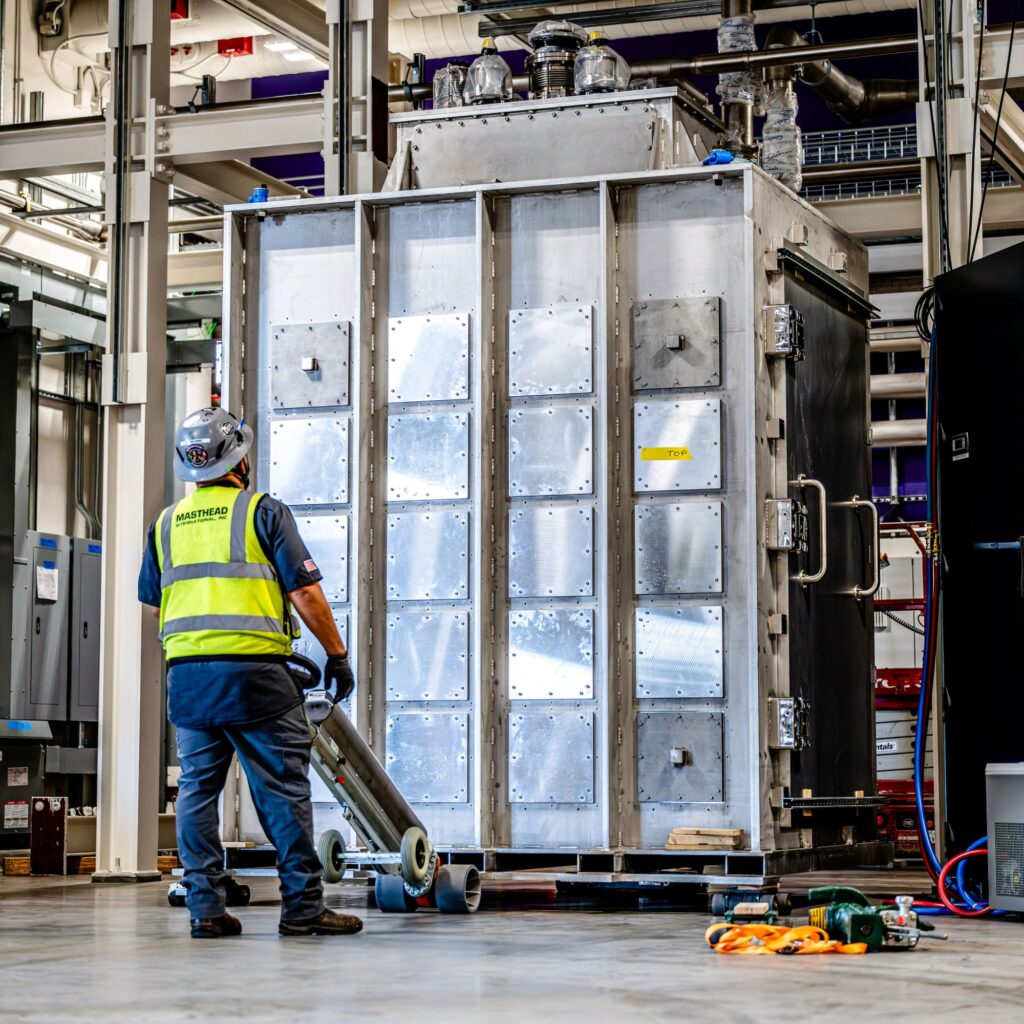
The machine that could change the world will be housed in a room that looks like a data center crossed with an ice cream factory. Inside will be some 100 stainless-steel cabinets, each about six feet tall and connected to a supply of liquid helium that keeps them only a few degrees above absolute zero. Inside those cabinets will be hundreds of chips, and on those, thousands of particles of light flying through a maze of optical switches and beam splitters. Each photon must be accounted for, because precisely measuring where it ends up will help answer questions that current computers might take millions of years to solve. This computer, as described, does not exist. It’s the brainchild of a company called PsiQuantum, founded in 2016 by four physicists from UK universities. In a crowded field of deep-pocketed competitors with similarly fantastical visions, the company aims to be first to fulfill its promise. In the years since the physicist Richard Feynman first envisioned them in 1981, quantum computers have promised to speed up everything from medical research to AI by harnessing the qualities of quantum particles. Unlike normal computer bits, which can be either a 1 or 0, quantum bits can exist in multiple states at once. And combining enough of those quantum bits together could produce a computer capable of tasks well beyond the reach of today’s conventional machines. But even today’s best quantum prototypes are too small and error-prone to do anything useful. That makes PsiQuantum’s promises for what its computers will ultimately do all the more bold. Consider the company’s hopes for predicting the effects of cytochrome P450 enzymes, which often break down drugs in the body. If pharma companies knew more precisely how they would work on a particular molecule, they could design more effective medications faster. Estimating this for a specific drug can take over 10 years with today’s methods, says Philipp Ernst, vice president of quantum applications for PsiQuantum, but “we aim to get it down to four minutes.” The company’s chips will be contained in large cabinets. A quantum computer powerful enough to be commercially useful is expected to require roughly 100 of these cabinets connected together.COURTESY OF PSIQUANTUM In a field full of such claims, PsiQuantum has attracted unusual investment and scrutiny for two reasons: It is one of the few companies aiming directly at building a large and useful machine, and it is already working with a major chip manufacturer to build its systems using existing semiconductor fabs. Its vision has attracted momentum: Last year, PsiQuantum raised $1 billion in funding and broke ground in Chicago on a site it’s building in partnership with local governments. It also has a second site in the works in Australia, which it promises will be operational—meaning hardware-ready—in 2027. And it’s one of just two companies (along with Microsoft) to reach the third stage of an intensive government evaluation program to see which quantum companies might succeed. Evaluating whether PsiQuantum will do what it says is harder than, say, judging a drugmaker by its clinical trial results: Advances in quantum computing are incremental, opaque, and tough to verify from the outside. But the company is now approaching its prove-it moment, when years of closed-door work and hundreds of millions in investment will either culminate in a useful quantum computer or fall short. We could start to know which as soon as next year. A new kind of machine Terry Rudolph, one of PsiQuantum’s four founders, is soft-spoken and shaggy-haired. He was born in Malawi and learned only after earning his first physics degree that he is a grandson of the famed physicist Erwin Schrödinger. He later self-published a 150-page book to explain quantum computing to teenagers (my PR contact gave me a signed copy with a wink that said “We never expect anyone to actually read this,” but I can report that it is a funny and helpful book).  Around 2014, Rudolph and his cofounders became increasingly convinced that the quantum breakthroughs they were finding to be possible in theory might also be possible in a real machine. They eventually left their academic positions and divided the tasks before them: Rudolph worked on theory, Mark Thompson on engineering, Pete Shadbolt on scaling the technology up, and Jeremy O’Brien on articulating the vision and finding investors (O’Brien served as CEO until February; he’s been replaced by Victor Peng, a veteran of the semiconductor industry).  To understand why the quantum computer the company is building would be a big deal, consider how imprecise much of modern science remains. We cannot reliably predict, for example, which lithium-ion battery will catch fire or how quickly a critical aircraft component will corrode. This isn’t just because these systems are complex, though they are. It’s that, at their core, they are governed by quantum mechanics. Subatomic particles don’t have well-defined properties—this location and that velocity—but instead occupy quantum states spread across many possibilities. And that in turn influences a range of atomic and molecular behavior. Schrödinger (Rudolph’s grandfather, remember) showed how to describe this haziness mathematically a century ago this year, but precisely carrying out the calculations on real-world systems quickly becomes unfeasible even for the best computers. Scientists cope with this gap using approximations, imperfect simulations, or experiments on animals. WINNI WINTERMEYER WINNI WINTERMEYER PsiQuantum co-founder and chief scientific officer Pete Shadbolt (left), and machinery the company has built to manufacture its own barium titanate, a material with the perfect qualities for routing light particles (right). Feynman, David Deutsch, and other physicists in the 1980s wondered if we could do better. Maybe such complexity could instead be modeled using a new kind of machine. Rather than using transistors that are only ever on or off, this one would use particles held in quantum states, manipulate them to perform calculations, and then measure them at the end for an answer. Using quantum systems to simulate quantum systems would for the first time allow a simulation of physics and chemistry that

PsiQuantum has a plan to make a massive quantum computer out of light Read Post »

AI, Committee, News, Uncategorized

Meet Blume: An Open-Source, Zero-Config Documentation Framework That Ships AI-Ready Docs From a Markdown Folder

Hayden Bleasel, an expert developer from OpenAI, released Blume, an open-source documentation framework. Blume shipped to npm as version 1.0.3 the same day. It is as simple as Drop Markdown into a folder and ship a docs site. No app boilerplate is written or maintained afterward. The project is MIT-licensed and open sourced. What is Blume? Blume is a command-line tool paired with a component library for docs. It reads a folder of Markdown or MDX files. From that folder, it produces a production-grade documentation site. That output ships navigation, search, theming, and Open Graph images. Configuration stays optional and is added one file at a time. The code is a TypeScript monorepo; the published package sits at packages/blume. Blume’s own documentation, under apps/docs, is built with Blume itself. It requires Node.js 22.12 or newer. It runs with Bun, pnpm, npm, or yarn. How Blume Works? Under the surface, Blume generates and drives a hidden Astro project. First, the CLI loads blume.config.ts and scans your content into a graph. Next, it writes an Astro project into a .blume/ directory. Astro then renders every page through a single catch-all route. That route imports Blume’s shipped components, the generated data, and your overrides. On each run, .blume/ regenerates, and only changed files are rewritten. As a result, hot reload stays fast during editing. The core theme ships no client framework JavaScript. Consequently, pages score well on Core Web Vitals by default. When you need full control, blume eject promotes the runtime into a standalone Astro app. That ejected project still depends on the blume package. Run blume dev</button> <button id=”prevBtn” disabled>‹ Prev</button> <button id=”nextBtn”>Next ›</button> <button id=”resetBtn”>↺ Reset</button> <div class=”spacer”></div> <label class=”toggle on” id=”aiToggle”><span class=”dot”></span> Show AI outputs</label> </div> <div class=”foot”> <span>Blume v1.0.3 · MIT · Node.js 22.12+ · Astro + Vite</span> <span>Interactive explainer by <a class=”mtp” href=”https://www.marktechpost.com” target=”_blank” rel=”noopener”>Marktechpost</a></span> </div> </div> <script> (function () { var root = document.getElementById(“blume-explainer”); var token = root.querySelector(“#token”); var nodes = root.querySelectorAll(“.node[data-stage]”); var aiNodes = root.querySelectorAll(“.ai-node”); var aiBranches = root.querySelectorAll(“.ai-branch”); var stepLabel = root.querySelector(“#stepLabel”); var stepTitle = root.querySelector(“#stepTitle”); var stepText = root.querySelector(“#stepText”); var termText = root.querySelector(“#termText”); var runBtn = root.querySelector(“#runBtn”); var prevBtn = root.querySelector(“#prevBtn”); var nextBtn = root.querySelector(“#nextBtn”); var resetBtn = root.querySelector(“#resetBtn”); var aiToggle = root.querySelector(“#aiToggle”); // token positions per stage (cx, cy) var pos = [ [85, 90], [250, 90], [470, 90], [700, 70], [700, 163], [842, 90] ]; var steps = [ { label: “Stage 1 / 6”, title: “A folder of Markdown”, term: “docs/ index.mdx guide.mdx api.mdx”, text: “You start with .md or .mdx files in a folder. There is no starter to clone and no app boilerplate to maintain.” }, { label: “Stage 2 / 6”, title: “The CLI loads your config”, term: “blume dev ✓ loaded blume.config.ts”, text: “blume dev loads blume.config.ts. It reads your content sources, theme tokens, and options, all type-checked by a schema.” }, { label: “Stage 3 / 6”, title: “Content is scanned into a graph”, term: “scanning content … ✓ 3 pages, nav inferred”, text: “Blume scans every page into a content graph. Navigation is inferred from your files, so you rarely hand-write it.” }, { label: “Stage 4 / 6”, title: “A hidden Astro project is generated”, term: “writing .blume/ ✓ only changed files”, text: “Blume writes a hidden Astro project into .blume/. It regenerates each run, rewriting only changed files, so hot reload stays fast.” }, { label: “Stage 5 / 6”, title: “Astro + Vite render the pages”, term: “rendering via catch-all route ✓”, text: “Astro renders every page through one catch-all route. It imports Blume’s components, the generated data, and any overrides you add.” }, { label: “Stage 6 / 6”, title: “Static HTML ships to dist/”, term: “blume build ✓ dist/ + search index”, text: “The build outputs static HTML and a local search index into dist/. The core theme ships no client framework JS, helping Core Web Vitals.” } ]; var current = -1; var playing = false; var playTimer = null; function paintNodes(active) { nodes.forEach(function (n) { var s = parseInt(n.getAttribute(“data-stage”), 10); var rect = n.querySelector(“rect”); if (s === active) { rect.setAttribute(“stroke”, “#ff7000”); rect.setAttribute(“stroke-width”, “2.5”); rect.setAttribute(“fill”, “#241108”); } else if (s < active) { rect.setAttribute(“stroke”, “#7a4a1e”); rect.setAttribute(“stroke-width”, “1.5”); rect.setAttribute(“fill”, “#1a120b”); } else { rect.setAttribute(“stroke”, “#33281f”); rect.setAttribute(“stroke-width”, “1.5”); rect.setAttribute(“fill”, “#17120e”); } }); } function moveToken(i) { if (i < 0) { token.style.opacity = 0; return; } token.style.opacity = 1; token.style.transition = “cx .55s cubic-bezier(.4,0,.2,1), cy .55s cubic-bezier(.4,0,.2,1)”; token.setAttribute(“cx”, pos[i][0]); token.setAttribute(“cy”, pos[i][1]); } function render(i) { current = i; if (i < 0) { stepLabel.textContent = “Ready”; stepTitle.textContent = “Press Run to watch the build”; stepText.textContent = “Blume needs only a folder of Markdown. Everything below is generated for you and thrown away on each run, unless you eject.”; termText.textContent = “npx blume init”; paintNodes(-1); moveToken(-1); } else { var s = steps[i]; stepLabel.textContent = s.label; stepTitle.textContent = s.title; stepText.textContent = s.text; termText.textContent = s.term; paintNodes(i); moveToken(i); } prevBtn.disabled = (i <= 0); nextBtn.disabled = (i >= steps.length – 1); reportHeight(); } function next() { if (current < steps.length – 1) render(current + 1); } function prev() { if (current > 0) render(current – 1); } function play() { playing = true; runBtn.textContent = “ Pause”; if (current >= steps.length – 1) render(0); else next(); playTimer = setInterval(function () { if (current >= steps.length – 1) { stop(); return; } next(); }, 1700); } function stop() { playing = false; runBtn.textContent = current >= steps.length – 1 ? “↺ Replay” : “ Run blume dev”; if (playTimer) { clearInterval(playTimer); playTimer = null; } } runBtn.addEventListener(“click”, function () { if (playing) { stop(); } else { if (current >= steps.length – 1) render(-1); play(); } }); nextBtn.addEventListener(“click”, function () { stop(); next(); }); prevBtn.addEventListener(“click”, function () { stop(); prev(); }); resetBtn.addEventListener(“click”, function () { stop(); render(-1); }); aiToggle.addEventListener(“click”, function () { var on = aiToggle.classList.toggle(“on”); aiNodes.forEach(function (n) { n.style.opacity = on ? 1 : 0.18; var r = n.querySelector(“rect”); r.setAttribute(“stroke”, on ? “#7a4a1e” : “#33281f”); }); aiBranches.forEach(function (b) { b.style.opacity =

Meet Blume: An Open-Source, Zero-Config Documentation Framework That Ships AI-Ready Docs From a Markdown Folder Read Post »

AI, Committee, News, Uncategorized

The Download: Claude’s inner workings, and the future of world models

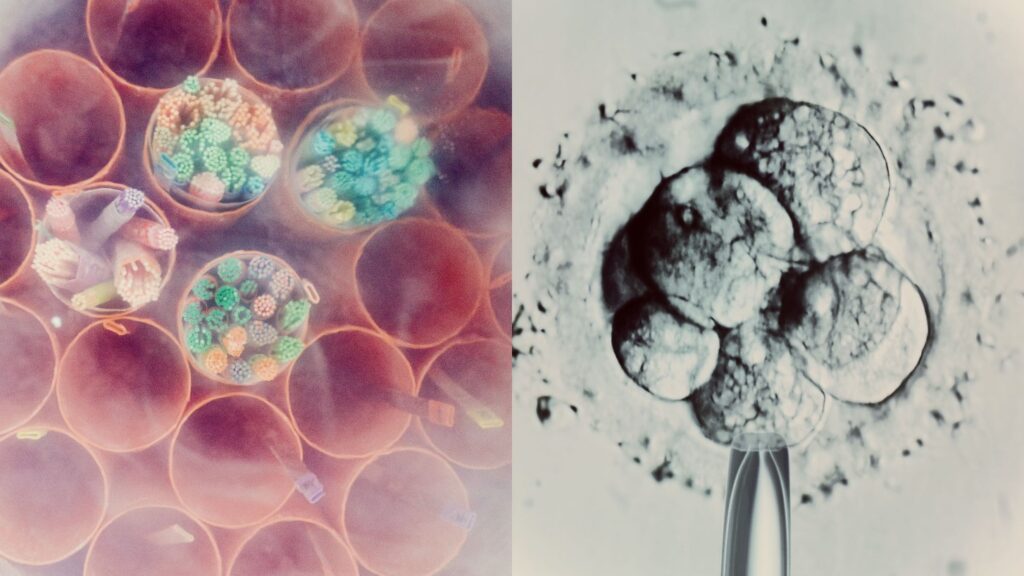
This is today’s edition of The Download, our weekday newsletter that provides a daily dose of what’s going on in the world of technology. What Anthropic’s latest AI discovery does—and doesn’t—show —James O’Donnell When Anthropic announced last week that it had found a new window into its models’ “internal thoughts” as they reason through answers, there was one colleague I had to talk to: senior editor Will Douglas Heaven. Aside from having a PhD in computer science, Will has spent a lot of time digging into what we can say about how AI models work. I spoke with him about what we should take from Anthropic’s new (and typically quirky) research. Here’s what he had to say. This article is from The Algorithm, our weekly AI newsletter. Sign up to receive it in your inbox every Monday. How will AI understand the real world? Today’s AI systems can generate text, images, and code with impressive skill, but they still struggle with the complexities of the physical world. To bridge this gap, many researchers believe you need something called a world model. At a LinkedIn Live event today, MIT Technology Review will investigate how this technology could transform robotics and help unlock a new generation of intelligent machines. Join Will Douglas Heaven, our senior editor for AI, and Sam Sinha, founding AI researcher and head of world models at 1X Technologies, for the discussion.  Register here to attend the free session at 9:30 PDT, 12:30 PM EDT, and 5:30 PM BST.  The must-reads I’ve combed the internet to find you today’s most fun/important/scary/fascinating stories about technology. 1 New York has become the first state to enact a data center moratoriumIts governor banned large data-center construction for up to a year. (WSJ $)+ A bill passed by state lawmakers could go even further. (Verge)+ Everyone hates data centers. (MIT Technology Review) 2 Smartphone shipments have hit a 13-year low due to the memory crunchThey fell 11% in the second quarter of 2026. (Reuters $)+ The memory chip ‌shortage has increased prices. (Gizmodo)+ And threatens the promise of Moore’s Law. (MIT Technology Review) 3 Sugar molecules have been found in interstellar space for the first timeIt hints that life on Earth may have been seeded from space. (Nature) + And boosts the odds of living organisms existing elsewhere. (New Scientist $)+ Researchers used radio telescopes and data to spot the molecules. (NYT $) 4 Nvidia has halved its Asia buyer list to stop AI chips reaching ChinaIt introduced a “white list” of companies that passed tougher checks. (FT $)+ It moved amid tighter chip controls from the ‌Trump ⁠administration. (Reuters $) 5 Russian state hackers are targeting routers to spy and steal, the US warnsThe government has warned users to secure their devices. (Ars Technica)+ Now is a good time for doing crime. (MIT Technology Review) 6 Trump moved his crypto gains into stocks while urging people to buy moreHis crypto projects earned him a fortune—but steep losses for retail buyers. (Reuters $)+ He’s called for Congress to pass a new crypto bill to honor Lindsey Graham. (CNBC) 7 A new cell therapy has saved four children with terminal brain cancerThey were treated with an experimental immunotherapy. (New Scientist $)+ Access for older children will also be limited. (Bloomberg $) 8 The LAPD has halted use of Flock surveillance cameras due to privacy issuesFlock’s automated license plate readers have caused concerns. (LA Times $)+ It’s also been criticized for sharing data with state and federal officials. (Engadget)  9 The US has approved launching a space mirror that reflects sunlight onto EarthAs part of a controversial plan to power solar panels round the clock. (Wired $)+ But geoengineering faces many practical challenges. (MIT Technology Review) 10 Anthropic says Claude’s values vary depending on your languageIt’s most cautious in English and most deferential in Arabic. (Gizmodo)  Quote of the day “The age when humans are the highest life form on earth will end. For better ​or for worse, it will happen and it can’t be stopped.”  —SoftBank CEO Masayoshi Son predicts that AI will overtake human intelligence by 2040 in a speech at his company’s annual corporate conference in Tokyo, Reuters reports. One More Thing Inside the strange limbo facing millions of IVF embryos Millions of embryos created through IVF sit frozen in time, stored in cryopreservation tanks around the world. Many are left in a peculiar limbo, with no clear path forward. UK residents can discard them, make them available to other prospective parents, or donate them for research. People in the US can also opt for “adoption,” “placing” their embryos with families they get to choose. In Germany, people aren’t typically allowed to freeze embryos at all. And in Italy, unused embryos must remain frozen, ostensibly forever.  While these embryos remain in suspended animation, patients, clinicians, embryologists, and legislators must grapple with the essential question of what to do with them. What do these embryos mean to us? Who should be responsible for them?  Dive into the ethical and legal challenges surrounding frozen IVF embryos. —Jessica Hamzelou We can still have nice things A place for comfort, fun, and distraction to brighten up your day. (Got any ideas? Drop me a line.) + This website turns live LA Metro data into music.+ British grammar is enlivening the American World Cup.+ Comedy icon Mel Brooks recently turned 100. Here’s a look back at his legendary career.+ Take a trip through modern music with this cinematic set from Thomas Bangalter, one-half of French house music duo Daft Punk.

The Download: Claude’s inner workings, and the future of world models Read Post »

AI, Committee, News, Uncategorized

Prime Intellect Releases Verifiers v1: Composable Tasksets, Harnesses, and Runtimes for Agentic RL Training and Evaluations

Prime Intellect launched verifiers 0.2.0. It previews a rewritten core, shipped under the new verifiers.v1 namespace. Modern evaluations now run coding agents with tools, compaction, and subagents. Accordingly, v1 rebuilds environments to run these agentic workloads at scale. What is verifiers v1? First, consider what verifiers is: Prime Intellect’s environment stack for agentic reinforcement learning and evaluations. Previously, an environment bundled its data, agent logic, and infrastructure together. In contrast, v1 breaks that bundle into three composable pieces. A taskset defines the work: the data, tools, and scoring. A harness solves the task and produces a rollout. That harness can be a ReAct loop, a CLI agent, or your own. The rollout then runs inside a runtime, either local or in a sandbox. Because the pieces decouple, any taskset runs under any compatible harness. How the Architecture Works? With those pieces defined, the next question is how they communicate. The central piece is the verifiers-managed interception server. It sits between the agent’s runtime and the inference server. Specifically, it proxies requests to, and responses from, inference. Meanwhile, it records the trace, sets sampling parameters, and can rewrite tool responses. That rewriting helps mitigate reward hacks during training. For scale, each server multiplexes a constant number of rollouts, defaulting to 32. A pool then scales elastically with observed concurrency. The server also owns a client that relays those requests. During evaluation, an EvalClient acts as a blind HTTP proxy. During training, a TrainClient wraps renderers for faithful token-in RL training. Because harnesses speak different dialects, verifiers supports three as of now. These are OpenAI Chat Completions, OpenAI Responses, and Anthropic Messages. A dialect adapter normalizes each wire format into canonical vf.types. Consequently, your scoring logic stays independent of the agent tested. Run rollout</button> <button id=”vf-reset” class=”vf-ghost”>Reset</button> <span class=”vf-lab”>Harness dialect:</span> <select id=”vf-dialect”> <option value=”Chat”>OpenAI Chat Completions</option> <option value=”Resp”>OpenAI Responses</option> <option value=”Msg”>Anthropic Messages</option> </select> </div> <div class=”vf-stage”> <div class=”vf-row” style=”margin-bottom:14px”> <div class=”vf-node vf-taskset” id=”n-taskset”> <div class=”vf-nt”>Taskset</div> <div class=”vf-nd”>what · data · tools · scoring</div> </div> </div> <div class=”vf-runtime-wrap”> <span class=”vf-runtime-tag”>RUNTIME · where (subprocess · Docker · sandbox)</span> <div class=”vf-row” id=”vf-flow”> <div class=”vf-node vf-harness” id=”n-harness”> <div class=”vf-nt”>Harness</div> <div class=”vf-nd”>how · Codex · Terminus 2 · ReAct</div> </div> <div class=”vf-arrow”>→</div> <div class=”vf-node vf-intercept” id=”n-intercept”> <div class=”vf-nt”>Interception Server</div> <div class=”vf-nd”>proxy · records trace</div> </div> <div class=”vf-arrow”>→</div> <div class=”vf-node vf-infer” id=”n-infer”> <div class=”vf-nt”>Inference Server</div> <div class=”vf-nd”>vLLM · model</div> </div> <div class=”vf-packet” id=”vf-packet”>req</div> </div> </div> <div class=”vf-status” id=”vf-status”>Press “Run rollout” to send a request through the interception server.</div> </div> <div class=”vf-grid”> <div class=”vf-panel”> <h3>Trace · message graph (v1)</h3> <div class=”vf-hint”>Each message is a unique node. Size grows linearly in turns.</div> <div class=”vf-graph” id=”vf-graph”> <div class=”vf-empty”>No messages recorded yet.</div> </div> </div> <div class=”vf-panel”> <h3>Trace size: v0 vs v1</h3> <div class=”vf-hint”>Drag to change turns. v0 repeats prompt-completion pairs; v1 stores unique nodes.</div> <div class=”vf-chart”> <svg viewBox=”0 0 260 150″ id=”vf-svg”> <line x1=”30″ y1=”130″ x2=”255″ y2=”130″ stroke=”#dfe6ef” stroke-width=”1.5″/> <line x1=”30″ y1=”10″ x2=”30″ y2=”130″ stroke=”#dfe6ef” stroke-width=”1.5″/> <path id=”vf-v0″ fill=”none” stroke=”#d1477a” stroke-width=”2.5″/> <path id=”vf-v1″ fill=”none” stroke=”#0b8f8f” stroke-width=”2.5″/> <text x=”140″ y=”147″ font-size=”9″ fill=”#94a3b8″ text-anchor=”middle”>turns →</text> </svg> </div> <div class=”vf-legend”> <span><i style=”background:#d1477a”></i> v0 · quadratic</span> <span><i style=”background:#0b8f8f”></i> v1 · linear</span> </div> <div class=”vf-slider-row”> <span>Turns</span> <input type=”range” id=”vf-turns” min=”4″ max=”60″ value=”24″> <span id=”vf-turns-val” style=”width:26px;text-align:right”>24</span> </div> </div> </div> <div class=”vf-foot”> Illustrative demo of the verifiers v1 architecture · Built by <b>Marktechpost</b> </div> </div> <script> (function(){ var root=document.getElementById(“vfv1-demo”); var packet=document.getElementById(“vf-packet”); var status=document.getElementById(“vf-status”); var graph=document.getElementById(“vf-graph”); var runBtn=document.getElementById(“vf-run”); var resetBtn=document.getElementById(“vf-reset”); var dialectSel=document.getElementById(“vf-dialect”); var nHarness=document.getElementById(“n-harness”); var nIntercept=document.getElementById(“n-intercept”); var nInfer=document.getElementById(“n-infer”); var flow=document.getElementById(“vf-flow”); var turn=0, running=false; var msgs=[]; // recorded nodes var dialectLabel={Chat:”Chat”,Resp:”Resp”,Msg:”Msg”}; function pos(el){ // center x relative to flow var f=flow.getBoundingClientRect(); var r=el.getBoundingClientRect(); return (r.left – f.left) + r.width/2 – 32; } function clearActive(){ [nHarness,nIntercept,nInfer].forEach(function(n){n.classList.remove(“vf-active”);}); } function movePacket(fromEl,toEl,ms,label,isResp){ return new Promise(function(res){ packet.textContent=label; packet.classList.toggle(“vf-resp”,!!isResp); packet.style.transition=”none”; packet.style.left=pos(fromEl)+”px”; packet.style.opacity=”1″; void packet.offsetWidth; packet.style.transition=”left “+ms+”ms cubic-bezier(.45,.05,.35,1)”; packet.style.left=pos(toEl)+”px”; setTimeout(res,ms); }); } function addNode(role,label,color){ if(msgs.length===0){ graph.innerHTML=””; } var d=document.createElement(“div”); d.className=”vf-msg”; d.innerHTML='<span class=”vf-dot” style=”background:’+color+’”></span><code>’+label+'</code><span class=”vf-role”>’+role+'</span>’; graph.appendChild(d); graph.scrollTop=graph.scrollHeight; msgs.push(label); } function sleep(ms){return new Promise(function(r){setTimeout(r,ms);});} async function runTurn(){ if(running) return; running=true; runBtn.disabled=true; turn++; var dl=dialectLabel[dialectSel.value]; // seed system + user on first turn if(turn===1){ addNode(“system”,”S1″,”#6366f1″); await sleep(160); addNode(“user”,”U1″,”#6366f1″); } clearActive(); nHarness.classList.add(“vf-active”); status.textContent=”Harness builds a “+dl+” request…”; await sleep(350); // harness -> interception nIntercept.classList.add(“vf-active”); status.textContent=”Interception server proxies the request → inference.”; await movePacket(nHarness,nInfer,850,dl+” req”); clearActive(); nInfer.classList.add(“vf-active”); status.textContent=”Inference server generates the reply (vLLM).”; await sleep(350); // inference -> interception (records) -> harness nIntercept.classList.add(“vf-active”); status.textContent=”Interception server records the trace, relays the response.”; await movePacket(nInfer,nHarness,850,”resp”,true); packet.style.opacity=”0″; clearActive(); // record assistant node (+ occasional tool) addNode(“assistant”,”A”+turn,”#0b8f8f”); await sleep(150); if(turn%2===0){ addNode(“tool”,”T”+turn,”#e0a800″); } status.textContent=”Turn “+turn+” recorded as a unique node in the message graph.”; running=false; runBtn.disabled=false; } function reset(){ turn=0; msgs=[]; running=false; runBtn.disabled=false; clearActive(); packet.style.opacity=”0″; graph.innerHTML='<div class=”vf-empty”>No messages recorded yet.</div>’; status.textContent=”Press “Run rollout” to send a request through the interception server.”; } runBtn.addEventListener(“click”,runTurn); resetBtn.addEventListener(“click”,reset); // —- v0 vs v1 growth chart —- var v0=document.getElementById(“vf-v0”); var v1=document.getElementById(“vf-v1”); var turnsR=document.getElementById(“vf-turns”); var turnsV=document.getElementById(“vf-turns-val”); function drawChart(N){ var x0=30,x1=255,y0=130,y1=12,W=x1-x0,H=y0-y1; var maxV0=N*N; // quadratic reference function ptV0(i){var x=x0+(i/N)*W;var y=y0-((i*i)/maxV0)*H;return x+”,”+y;} function ptV1(i){var x=x0+(i/N)*W;var y=y0-((i/N)*H);return x+”,”+y;} // linear var p0=”M”,p1=”M”; for(var i=0;i<=N;i++){ p0+=(i?” L”:””)+ptV0(i); p1+=(i?” L”:””)+ptV1(i); } v0.setAttribute(“d”,p0); v1.setAttribute(“d”,p1); } turnsR.addEventListener(“input”,function(){ turnsV.textContent=turnsR.value; drawChart(+turnsR.value); }); drawChart(+turnsR.value); // —- auto-resize for WordPress iframe embedding —- function sendHeight(){ var h=document.getElementById(“vfv1-demo”).offsetHeight+40; if(window.parent){ window.parent.postMessage({vfv1Height:h},”*”); } } window.addEventListener(“load”,sendHeight); window.addEventListener(“resize”,sendHeight); new MutationObserver(sendHeight).observe(document.getElementById(“vf-graph”),{childList:true}); setInterval(sendHeight,1200); })(); </script> </body> </html> “> v0 vs v1: A Quick Comparison These changes separate v1 from v0. Aspect verifiers v0 verifiers v1 Environment model Data, logic, and infra bundled together Split into taskset, harness, runtime Trace growth Quadratic in turns (repeated pairs) Linear in turns (unique nodes) Non-linear rollouts Assumed linear Native compaction and subagents via branches Runtime handling Builder manages lifecycle Framework-managed run / read / write Harness coupling Tightly coupled to the environment Any compatible harness (Codex, Terminus 2) Training data Recomputed for prime-rl Consumed directly from the trace Use Cases with Examples With the architecture clear, consider how teams use it. For example, you can run Nemotron 3 Ultra on Terminal-Bench 2 under Codex. Similarly, teams can reuse Harbor datasets without rewriting reward logic. Prime Intellect ported Terminal Bench 2 into v1 with only a small class. In its internal testing, verifiers matched Harbor’s performance

Prime Intellect Releases Verifiers v1: Composable Tasksets, Harnesses, and Runtimes for Agentic RL Training and Evaluations Read Post »

AI, Committee, News, Uncategorized

Stanford Researchers Introduce TRACE: A Capability-Targeted Agentic Training System That Turns Recurrent Agent Failures Into Synthetic RL Environment

Agentic LLMs often fail the same way, again and again. A Stanford research team traced this to missing, reusable capabilities. Their system, TRACE, diagnoses those gaps and trains for them directly. TRACE stands for Turning Recurrent Agent failures into Capability-targeted training Environments. It was released open-source under an MIT license. What problem does TRACE solve? To understand the design, first consider why agents fail. They lack specific skills that tasks demand, like retrieving the right record or verifying a precondition. Two mainstream fixes spend compute poorly. Direct RL or SFT gives sparse rewards that never say which skill was missing. Broad synthetic data is untargeted, so budget flows to skills the model already has. However, TRACE observes that failures are not random. A small set of deficits accounts for most failed trajectories. Therefore, each recurring deficit can become its own dense, verifiable training signal. How does TRACE work? Given that findings, TRACE runs an automated four-step pipeline. Each step is driven by an LLM agent following a markdown prompt. Step 1: Contrastive capability analysis The base agent generates rollouts in the target environment. An analysis agent splits them into successful and failed sets. It then labels every trajectory-capability pair as NA, PRESENT, or LACKING. A capability is retained only when it is contrastive and high-coverage. Specifically, its contrastive gap must clear δ = 0.20 and coverage must clear ρ = 0.10. Consequently, the pipeline keeps skills whose absence concentrates in failures. Step 2: Targeted environment synthesis Next, a generation agent builds one synthetic environment per retained capability. Each environment isolates a single capability while preserving the target’s tool schemas and format. Task instances are procedurally generated from random seeds. Because generation and verification are algorithmic, rewards need no human labels or LLM judge. Step 3: Capability adapter training Then each capability gets one LoRA (Low-Rank Adaptation) adapter, trained on its synthetic environment. The training algorithm is GRPO (Group Relative Policy Optimization). The base model stays frozen throughout. GRPO groups rollouts by shared seed, so scenarios are identical within a group. Rewards are then normalized within each group to isolate the policy’s contribution. Step 4: MoE composition with token-level routing Finally, TRACE composes the adapters into a Mixture-of-Experts (MoE) model. The backbone and adapters stay frozen, and only lightweight token-level gates are trained. At inference, each token is routed top-1 to a single capability adapter. This lets the model switch experts mid-trajectory. How TRACE Works — Interactive Explainer Interactive Explainer How TRACE Turns Agent Failures Into Targeted Training TRACE diagnoses the capabilities an agent lacks, builds one verifiable environment per gap, trains a LoRA expert for each, then routes tokens across experts. Step through the pipeline below. 1 · Contrastive Capability Analysis Split rollouts into pass / fail, then keep gaps that separate them. Passed  (D⁺) Failed  (D⁻) Retained if Δ ≥ 0.20 and Cov ≥ 0.10 2 · Targeted Environment Synthesis One seeded, auto-verifiable environment is generated per capability. 3 · Capability Adapter Training (GRPO) Rollouts share a seed; rewards are normalized within the group. 0%LoRA Δc  (~5.3%) Base model frozen · only Δc updates 4 · MoE Composition · Token-Level Routing A learned gate routes each token top-1 to a single capability expert. Pick a task above to route its tokens. Play step Next step → Result · τ²-Bench overall pass rate (Qwen3-30B-A3B) Targeted training and MoE composition beat prompt optimization and single-adapter baselines. Built from arXiv:2604.05336 · code. Numbers are from the paper.  •  Marktechpost

Stanford Researchers Introduce TRACE: A Capability-Targeted Agentic Training System That Turns Recurrent Agent Failures Into Synthetic RL Environment Read Post »

AI, Committee, News, Uncategorized

The Download: a donor conception cap and world models for AI

This is today’s edition of The Download, our weekday newsletter that provides a daily dose of what’s going on in the world of technology. Sperm donors need limits, says a European fertility group Ties van der Meer doesn’t know how many siblings he has. The 47-year-old was conceived at a private fertility clinic using sperm from an anonymous donor. He eventually tracked down one sibling, but he may have others he’ll never find.  Other donor-conceived people have found they have tens or even hundreds of them. “It does make you feel a bit mass-produced,” said one who discovered they had 25 half-siblings. In response, a European fertility organization says we need international limits on the number of children a single donor can contribute to.  Find out what their proposal could achieve—and where it may fall short.  —Jessica Hamzelou This story is from The Checkup, our weekly biotech newsletter. Sign up to receive it in your inbox every Thursday. How will AI understand the real world? LLMs have transformed what AI can do with language, but helping machines understand and operate within physical spaces presents a different challenge. In response, researchers are developing a new form of artificial intelligence: world models. At a LinkedIn Live event tomorrow, MIT Technology Review will explore how this technology could shape the future of robotics and open one of AI’s next major frontiers. Join Will Douglas Heaven, our senior editor for AI, and Sam Sinha, founding AI researcher and head of world models at 1X Technologies, for the conversation on Tuesday, July 14.  Register here to attend the free session at 9:30 PDT, 12:30 PM EDT, and 5:30 PM BST.  The must-reads I’ve combed the internet to find you today’s most fun/important/scary/fascinating stories about technology. 1 Apple has sued OpenAI for allegedly stealing trade secretsOpenAI purportedly stole IP to develop its own consumer hardware. (CNBC)+ The suit claims OpenAI poached Apple staff to access the information. (BBC)+ And requested trade secrets in job interviews with Apple workers. (Guardian)+ Apple also sued two former employees, Chang Liu and Tang Tan. (Reuters $) 2 A Nobel-winning chemist is leaving the US to lead an AI lab in ChinaOmar Yaghi will head an institute using AI to discover new materials. (LA Times $)+ He won a Nobel Prize in Chemistry for creating “molecular sponges.” (NYT $)+ His departure comes as China tries to woo US scientists. (Nature)+ The White House has slashed science spending. (MIT Technology Review) 3 The EU is moving closer to banning children from social mediaIt’s proposed barring under-13s unless supervised by an adult. (NYT $)+ And limiting access for older children. (Bloomberg $)+ The EU has also told Meta to disable autoplay and infinite scroll. (Politico $) 4 Meta scrapped an AI image feature on Instagram after a backlashIt allowed users to generate images based on public accounts. (TechCrunch)+ And automatically opted in any Instagram user with a public account. (NYT $)+ AI memories are privacy’s next frontier. (MIT Technology Review) 5 Phoebe Gates’ shopping app claimed credit for sales it didn’t drivePhia claimed unearned affiliate sales through fake clicks. (Bloomberg $)+ Cofounder Gates is the daughter of Microsoft cofounder Bill. (Engadget) 6 Leaked police drone footage exposes the new reality of surveillanceHours of San Francisco Police video were accidentally released. (Wired $)+ Surveillance from drones is on the rise in the US. (MIT Technology Review) 7 Over two-thirds of Americans back a Sanders-style AI ownership planA poll found strong support for public ownership of AI stock. (Gizmodo)+ Tech firms have their own takes on the idea. (MIT Technology Review) 8 AI may soon make campaign text messages more potent—and irritatingAI platforms are training bots to sound like political candidates. (NPR) 9 An orbiting disco ball gave Einstein’s theory its most precise test yet  It measured Earth’s twisting of space-time more precisely. (Rest of World) 10 Australia’s biggest radio hit may be the product of GenAIMusicians are questioning how the song was made. (Guardian) Quote of the day “LOL, I found out I can access the [network storage], so funny.”  —A text message sent by former Apple engineer Chang Liu to a colleague, which a new lawsuit alleges was part of a scheme to steal hardware IP for OpenAI. One More Thing Colombian military officials intercepted this 40-foot-long uncrewed fiberglass “narco sub” in the ocean just off Tayrona National Park.CARLOS PARRA RIOS How uncrewed narco subs could transform the Colombian drug trade On a bright April morning in 2025, a surveillance plane operated by the Colombian military spotted a 40-foot-long “narco sub” idling in the Caribbean Sea. The stealthy vessel, used by drug cartels to move cocaine north, could sail with its hull almost entirely underwater. After seizing the boat, the coast guard noticed something unusual: there was no one on board. This was Colombia’s first confirmed uncrewed narco sub, operable by remote control, but also capable of a degree of autonomous travel. Uncrewed subs could move more cocaine over longer distances, and they won’t put human smugglers at risk of capture. Find out how they may transform the drug trade. — Eduardo Echeverri López We can still have nice things A place for comfort, fun, and distraction to brighten up your day. (Got any ideas? Drop me a line.) + Metallica’s “Enter Sandman” has been reinvented as a yacht rock track.+ Two super-puff planets lighter than cotton candy have been spotted floating through space.+ An inventor has given Tic Tac fans (like Donald Trump) a solution to the box’s annoying rattling in their pockets.+ Imbibe a dose of adrenaline with this first-person footage of a rider on heart-pounding Red Bull Genova Cerro Abajo.

The Download: a donor conception cap and world models for AI Read Post »

We use cookies to improve your experience and performance on our website. You can learn more at Privacy Policy and manage your privacy settings by clicking Settings.

Privacy Preferences

You can choose your cookie settings by turning on/off each type of cookie as you wish, except for essential cookies.

Allow All
Manage Consent Preferences
  • Always Active

Save
en_US