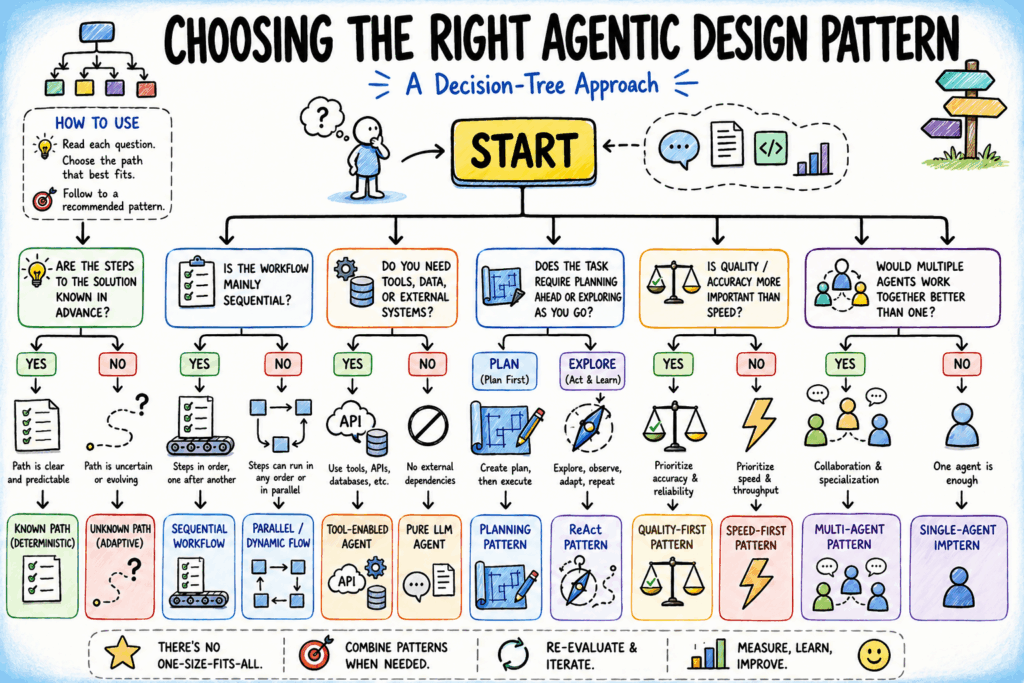
Choosing the Right Agentic Design Pattern: A Decision-Tree Approach
Most
Choosing the Right Agentic Design Pattern: A Decision-Tree Approach Read Post »



This is today’s edition of The Download, our weekday newsletter that provides a daily dose of what’s going on in the world of technology. A plan to make drugs in orbit is going commercial A startup called Varda Space Industries is betting that the future of pharmaceuticals lies in orbit. The company has signed a deal with United Therapeutics to test whether drugs crystallize differently in microgravity, potentially creating improved versions with new properties. The idea sounds futuristic, but falling launch costs and reusable rockets are making space-based manufacturing seem increasingly plausible. Varda says the partnership could mark an important step toward building products in orbit for use back on Earth. Discover how space could become the next frontier for drug development. —Antonio Regalado MIT Technology Review Narrated: NASA is building the first nuclear reactor-powered interplanetary spacecraft. How will it work? Just before Artemis II began its historic slingshot around the moon, NASA revealed an even grander space travel plan. By the end of 2028, the agency aims to fly a nuclear reactor-powered interplanetary spacecraft to Mars. A successful mission would herald a new era in spaceflight—and might just give the US the edge in the race against China. But the project remains shrouded in mystery. MIT Technology Review picked the brains of nuclear power and propulsion experts to find out how the nuclear-powered spacecraft might work. —Robin George Andrews This is our latest story to be turned into an MIT Technology Review Narrated podcast, which we publish each week on Spotify and Apple Podcasts. Just navigate to MIT Technology Review Narrated on either platform, and follow us to get all our new content as it’s released. The must-reads I’ve combed the internet to find you today’s most fun/important/scary/fascinating stories about technology. 1 Sam Altman claims Elon Musk tried to seize control of OpenAIAltman said Musk initially wanted 90% of the equity. (AFP)+ And that control should go to his children when he dies. (BBC)+ Altman also accused Musk of twice trying to end its non-profit status. (NPR)+ Musk’s motivations for the suit are under scrutiny. (MIT Technology Review) 2 Google and SpaceX are in talks to launch data centers into orbitSpaceX could join Suncatcher, Google’s orbital data center project. (WSJ $)+ The project’s first launch is slated for early 2027. (Guardian)+ Anthropic and SpaceX have also discussed orbital data centers. (Wired $)+ But there are a few hurdles to overcome. (MIT Technology Review) 3 Jensen Huang has joined Donald Trump’s high-stakes mission to ChinaNvidia is lobbying to sell its AI chips in the country. (Bloomberg $)+ Elon Musk and Tim Cook are also on the trip. (CNBC)+ But a tech rivalry and distrust have sapped hopes for big deals. (Reuters $) 4 ICE agents have a list of 20 million people on their iPhones, thanks to PalantirAn ICE official said Palantir is speeding up raids and arrests. (404 Media)+ ICE has also used facial recognition and Paragon spyware. (TechCrunch) 5 Defense tech firm Anduril just doubled its valuation to over $60 billionIn a $5 billion funding round led by Thrive Capital and a16z. (FT $)Anduril, which makes AI-backed weapons, may go public next year. (NYT $) 6 Meta employees are protesting computer-tracking at workFlyers posted at offices are urging staff to oppose the program. (Reuters $)+ Meta plans to track workers’ clicks and keystrokes to train AI. (CNBC) 7 OpenAI is facing another wrongful death lawsuit over ChatGPT medical adviceThe chatbot’s tips allegedly led to a teenager’s overdose. (Ars Technica) 8 The Canvas learning platform has paid hackers to delete stolen student dataIt caved to ransomware demands after the biggest-ever edtech breach. (BBC) 9 Scientific researchers are thinking twice about using AIDue to price hikes, usage limitations, and unreliable outputs. (Nature) 10 The latest AI compute solution? Putting data centers in your homeHardware hosts get subsidized electricity and internet. (Ars Technica) Quote of the day “Mr Musk did try to kill it.” —Sam Altman claims that Elon Musk tried to destroy rather than protect OpenAI’s non-profit operations, the Guardian reports. One More Thing YOSHI SODEOKA Why does AI hallucinate? Chatbot fails are now a familiar meme. Meta’s short-lived scientific chatbot generated wiki articles about the history of bears in space. Lawyers have submitted court documents filled with legal citations fabricated by ChatGPT. Air Canada was ordered to honor a refund policy invented by its customer service chatbot. This tendency to make things up—known as hallucination—is one of the biggest obstacles holding chatbots back from more widespread adoption. Here’s why they do it—and why we still can’t fix it. —Will Douglas Heaven This story is part of MIT Technology Review Explains, our series untangling the complex, messy world of technology to help you understand what’s coming next. You can read more from the series here. We can still have nice things A place for comfort, fun, and distraction to brighten up your day. (Got any ideas? Drop me a line.) + A historian has unearthed the etymology of every single dinosaur name.+ Humus on the moon is getting closer to reality after scientists grew chickpeas in lunar soil.+ Witness the patience of a master paper artist in this gallery of intricate, handmade sculptures.+ Want to tell the time alphabetically? Me neither, but this cursed clock is an intriguing reason to try.
The Download: making drugs in orbit and NASA’s nuclear-powered spacecraft Read Post »
Researchers at Tilde Research have released Aurora, a new optimizer for training neural networks that addresses a structural flaw in the widely-used Muon optimizer. The flaw quietly kills off a significant fraction of MLP neurons during training and keeps them permanently dead. Aurora comes with a 1.1B parameter pretraining experiment, a new state-of-the-art result on the modded-nanoGPT speedrun benchmark, and open codes. What is Muon? To understand Aurora, it helps to first understand Muon. The Muon optimizer attracted attention in the ML community after outperforming AdamW in wall-clock time to convergence on the nanoGPT speedrun competition — a community benchmark that measures how fast you can train a GPT-style model to a target validation loss. Since then, Muon has been adopted in frontier-scale model training by several research groups. Muon’s key algorithmic step is computing the polar factor of the gradient matrix. For a gradient matrix G with thin Singular Value Decomposition (SVD) G = UΣVᵀ, Muon computes polar(G) = UVᵀ, which is the closest semi-orthogonal matrix to G in the Frobenius norm. This orthogonalized gradient is then used to update the weights: W ← W − η UVᵀ for a learning rate η. The use of matmul-only iterative algorithms to compute the polar factor is what makes Muon practical at scale. The NorMuon Puzzle: Row Normalization Helps, But Why? Before Aurora, NorMuon led the modded-nanoGPT speedrun. It introduced a row-normalization step—similar to Adam’s per-parameter scaling—that adjusted the polar factor by its inverse RMS norm. While this often pulls the update away from a strictly orthogonal gradient, NorMuon still yields impressive results. The Tilde team set out to understand exactly what gap in Muon’s formulation NorMuon was addressing. The Core Problem: Row-Norm Anisotropy and Neuron Death in Tall Matrices The research team discovered that the Muon optimizer unintentionally “kills” a large portion of neurons in tall weight matrices, such as those found in SwiGLU-based MLP layers. Because it is mathematically impossible for these specific matrix shapes to stay perfectly orthogonal while keeping row updates even, the optimizer ends up giving massive updates to some neurons while virtually ignoring others. This results in a “death spiral” where under-performing neurons receive less signal over time, eventually becoming permanently inactive. The research study revealed that by the 500th training step, more than one in four neurons are effectively dead. This isn’t just a local issue; the lack of activity in these neurons starves subsequent layers of necessary data, spreading the inefficiency throughout the model. Aurora solves this by using a new mathematical approach that enforces uniform updates across all neurons without sacrificing the benefits of orthogonalization. The Intermediate Step: U-NorMuon Before arriving at Aurora, the research introduces an intermediate fix called U-NorMuon. The key observation is that NorMuon normalizes each row to unit norm (norm = 1), but this is actually the wrong target for a tall matrix. For a column-orthogonal tall matrix, the mathematically correct average row norm is √(n/m), not 1. U-NorMuon corrects this by normalizing tall matrix rows to have norm √(n/m) instead of 1. In experiments at 340M scale, U-NorMuon outperforms both Muon and standard NorMuon and completely eliminates the neuron death phenomenon — leverage scores become approximately isotropic throughout training. Crucially, U-NorMuon propagates this benefit to layers it doesn’t directly touch: keeping up/gate rows alive ensures isotropic gradient flow into the down-projection, stabilizing its column leverage without any direct intervention. However, U-NorMuon still has a problem: it forcefully overrides the polar factor with uniform row norms, sacrificing polar factor precision, which is both theoretically undesirable and empirically costly in the Muon framework (the paper shows that Muon achieves monotonically lower loss with more precise orthogonalization). This is the motivation for Aurora. Aurora: Steepest Descent Under Two Joint Constraints Aurora reformulates the update-selection problem from scratch. Rather than running orthogonalization and then patching it with row normalization, Aurora asks: what is the optimal update under the joint constraint of left semi-orthogonality and uniform row norms? Formally, for tall matrices, Aurora solves: U∗=argUmaxTr(G⊤U)s.t.U⊤U=In,∥Ui:∥2=mn∀iU ∗ =arg U max Tr(G ⊤ U)s.t.U ⊤ U=I n ,∥U i: ∥ 2 = m n ∀i The research shows that these two constraints together force all singular values of U to exactly equal 1. This means the joint constraint still produces a valid left semi-orthogonal update, not a compromised one. This is the key insight that separates Aurora from NorMuon and U-NorMuon: it achieves row-norm uniformity and orthogonality simultaneously rather than trading one off against the other. The research also provides two algorithmic implementations of Aurora’s solution. The Riemannian Aurora uses a gradient projection approach restricted to the joint Stiefel/equal-row-leverage manifold. The vanilla Aurora is a simpler, more practical implementation. Both are open-sourced. For non-tall (wide and square) matrices, row-norm uniformity is already implied by orthogonality, so Aurora leaves those parameters unchanged. Results Aurora was used to train a 1.1B model that achieves 100x data efficiency on open-source internet data and outperforms larger models on general evals like HellaSwag. At 1B scale, Aurora achieves large gains over both Muon and NorMuon. On the modded-nanoGPT optimization speedrun, Aurora’s submitted run outperforms the prior state-of-the-art (which was NorMuon). Untuned Aurora carries only a 6% compute overhead over traditional Muon and is designed as a drop-in replacement. The research team also found that Aurora’s performance gains scale with MLP width, suggesting it is particularly effective for networks with large MLP expansion factors — which is consistent with the neuron death hypothesis, since wider MLPs have more tall matrices and more opportunity for leverage anisotropy to compound. Key Takeaways Muon’s polar factor update inherits row-norm anisotropy on tall matrices, causing over 25% of MLP neurons to permanently die as early as step 500 of training. Aurora solves this by finding the optimal update under a joint constraint of left semi-orthogonality and uniform row norms — achieving both simultaneously rather than trading one off against the other. At 1.1B scale, Aurora achieves 100x data efficiency on open-source internet data, outperforms larger models on HellaSwag, and
arXiv:2505.24859v3 Announce Type: replace-cross Abstract: Steering vectors are a lightweight method for controlling text properties by adding a learned bias to language model activations at inference time. While predominantly studied for multiple-choice and toy tasks, their effectiveness in free-form generation remains largely unexplored. Moving “Beyond Multiple Choice,” we evaluate steering vectors for controlling topical focus, sentiment, toxicity, and readability in abstractive summaries across the SAMSum, NEWTS, and arXiv datasets. We find that steering effectively controls targeted properties, but high steering strengths consistently induce degenerate repetition and factual hallucinations. Prompting alone preserves summary quality but offers weaker control. Combining both methods yields the strongest control and the most favorable efficacy-quality trade-off at moderate steering strengths. Our work demonstrates that steering vectors face a critical control-quality trade-off in free-form generation, and that hybrid approaches offer the best balance in practice.
Beyond Multiple Choice: Evaluating Steering Vectors for Summarization Read Post »
arXiv:2603.14937v3 Announce Type: replace-cross Abstract: Text-rich graphs, which integrate complex structural dependencies with abundant textual information, are ubiquitous yet remain challenging for existing learning paradigms. Conventional methods and even LLM-hybrids compress rich text into static embeddings or summaries before structural reasoning, creating an information bottleneck and detaching updates from the raw content. We argue that in text-rich graphs, the text is not merely a node attribute but the primary medium through which structural relationships are manifested. We introduce RAMP, a Raw-text Anchored Message Passing approach that moves beyond using LLMs as mere feature extractors and instead recasts the LLM itself as a graph-native aggregation operator. RAMP exploits the text-rich nature of the graph via a novel dual-representation scheme: it anchors inference on each node’s raw text during each iteration while propagating dynamically optimized messages from neighbors. It further handles both discriminative and generative tasks under a single unified generative formulation. Extensive experiments show that RAMP effectively bridges the gap between graph propagation and deep text reasoning, achieving competitive performance and offering new insights into the role of LLMs as graph kernels for general-purpose graph learning.
LLM as Graph Kernel: Rethinking Message Passing on Text-Rich Graphs Read Post »
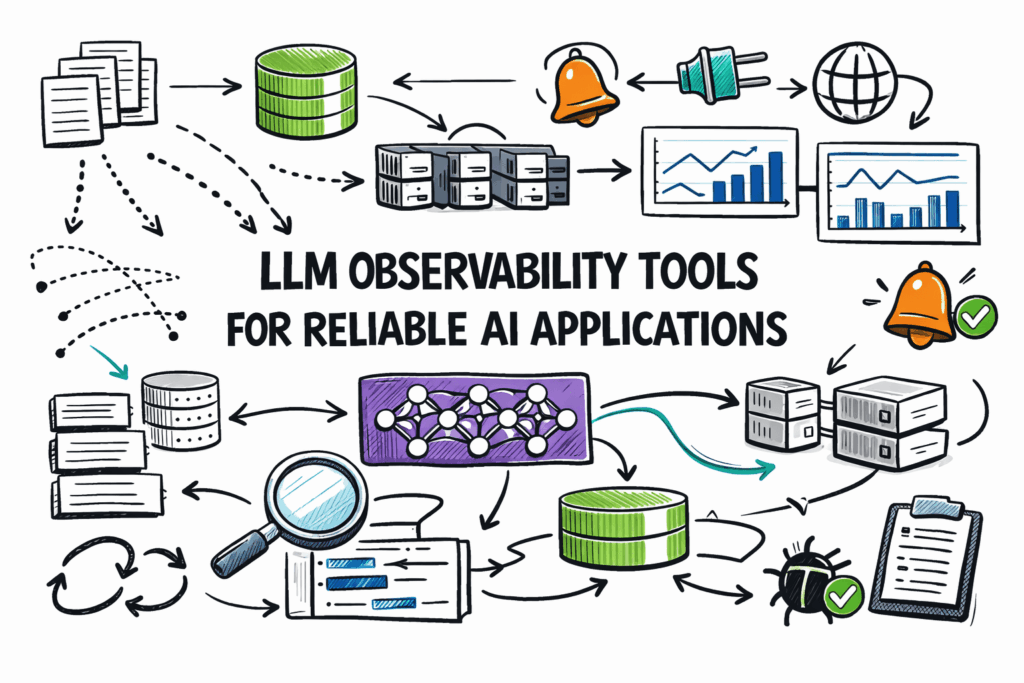
Large language models (LLMs) now power everything from customer service bots to autonomous coding agents.
LLM Observability Tools for Reliable AI Applications Read Post »
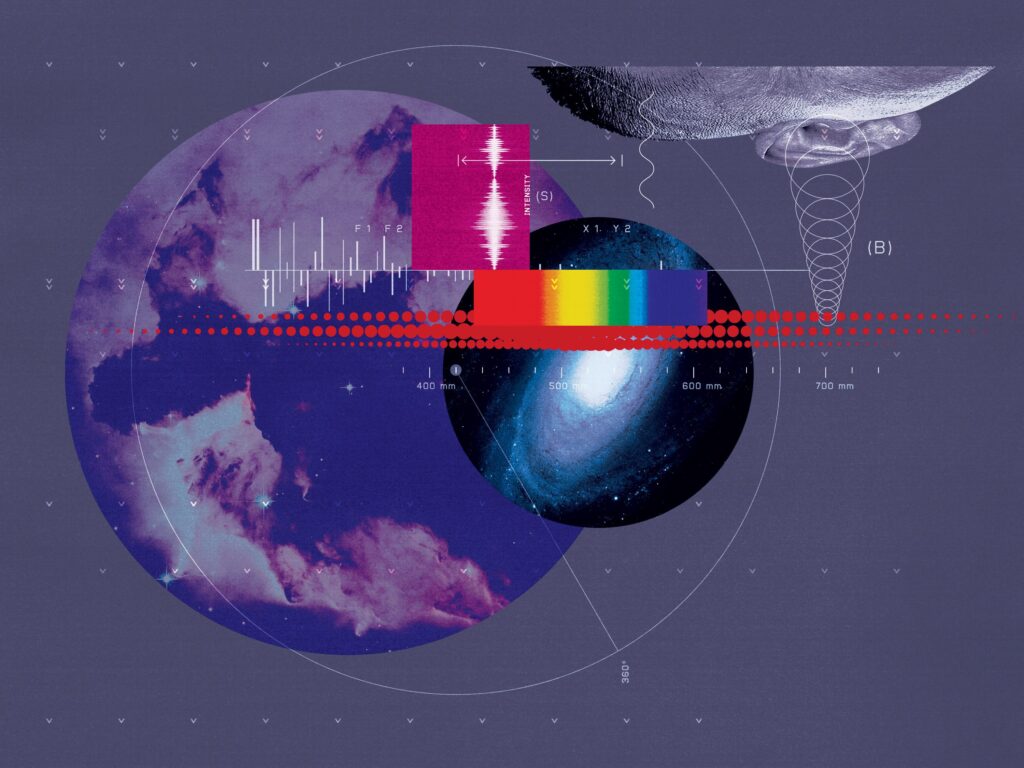
This is today’s edition of The Download, our weekday newsletter that provides a daily dose of what’s going on in the world of technology. Three things in AI to watch, according to a Nobel-winning economist A few months before he won the Nobel Prize in economics in 2024, Daron Acemoglu published a paper that earned him few fans in Silicon Valley. He argued that AI would give only a small boost to US productivity and would not eliminate the need for human work. Two years later, Acemoglu’s measured take has not caught on. The technology has advanced quite a bit since his cautious predictions, but the data is still largely on his side. MIT Technology Review spoke with him to understand if any of the latest developments have changed his thesis. Here are the three things Acemoglu is paying closest attention to in AI right now. —James O’Donnell This story is from The Algorithm, our weekly newsletter giving you the inside track on all things AI. Sign up to receive it in your inbox every Monday. The case for fixing everything Stewart Brand, the counterculture icon and tech industry legend, considers maintenance a “civilizational” act. His new book argues that taking responsibility for maintaining something, whether a motorcycle, a monument, or the planet, can be radical. Brand argues that maintainers haven’t gotten the laurels they deserve—and he’s right. Yet his vision of maintenance often feels solitary: profound, but more about personal fulfillment than tending to a shared world or making it better. Read the full review of his handsome new book, Maintenance: Of Everything, Part One. —Lee Vinsel Lee Vinsel is an associate professor of science, technology, and society at Virginia Tech, a cofounder of The Maintainers, and the host of Peoples & Things, a podcast about human life with technology. This story is from the latest edition of our print magazine, which is all about nature. Subscribe now to read the full issue and receive future print copies once they land. The must-reads I’ve combed the internet to find you today’s most fun/important/scary/fascinating stories about technology. 1 The first zero-day exploit built by AI has been discoveredGoogle spotted and stopped the attempted “mass exploitation event.” (CNBC)+ The hackers used AI to discover an unknown bug. (NYT $)+ AI-powered hacking has exploded into an industrial-scale threat. (Guardian)+ New tools are simplifying online crime. (MIT Technology Review) 2 OpenAI just launched its answer to Claude MythosDaybreak patches vulnerabilities before attackers find them. (The Verge)+ Sam Altman said it will “continuously secure software.” (Gizmodo)+ It will rival Anthropic’s Claude Mythos, which arrived a month ago. (BBC)+ OpenAI is allowing wider access to its cyber models than Anthropic. (CNBC) 3 Trump is heading to China to spread the gospel of American techWhile taking cues from Beijing’s more stringent approach. (Guardian)+ But investors want Trump and Xi to stay out of AI’s way. (Reuters $)+ Elon Musk and Tim Cook are joining him on the trip this week. (BBC) 4 Ilya Sutskever has testified on Sam Altman’s “pattern of lying”OpenAI co-founder Sutskever took the stand in the Altman v. Musk trial. (BI)+ He said he spent a year gathering proof of Altman’s dishonesty. (Reuters $)+ But he also added to OpenAI’s defense. (Wired $)+ While Satya Nadella called attempts to remove Altman “amateur city.” (FT $)+ Here’s what happened last week in the trial. (MIT Technology Review) 5 A new hantavirus vaccine is in the worksModerna and Korea University are developing an mRNA vaccine. (Wired $)+ Here’s what you need to know about the cruise ship outbreak. (MIT Technology Review) 6 Texas has sued Netflix over alleged data harvesting and “addictive” designAG Ken Paxton accuses Netflix of secretly collecting and selling user data. (Quartz)+ And spying on children while deliberately fostering addiction. (Guardian) 7 A data center guzzled 30 million gallons of water—and no one noticedThe curious case serves as a warning for other data center projects. (Ars Technica) 8 Europe is reportedly selling spyware to human rights abusersEU states allegedly sold the tech to countries violating rights. (Bloomberg $) 9 The US government’s AI vetting announcement has mysteriously vanishedIt had detailed a security test agreement with Google, xAI, and Microsoft. (Gizmodo) 10 Amazon staff are using AI for pointless tasks just to inflate usage scoresIn a bid to impress managers. (FT $) + An AI expert says we should stop using AI so much. (MIT Technology Review) Quote of the day “This is like the cheating husband complaining about the cheating wife.” —Anupam Chander, a professor of law and technology at Georgetown Law School, tells the New York Times that Elon Musk’s hypocrisy over OpenAI becoming a for-profit company will undermine his courtroom battle with Sam Altman. One More Thing STUART BRADFORD How sounds can turn us on to the wonders of the universe For decades, astronomy has relied on visual information to make sense of the cosmos: images, charts, and graphs. Now, some researchers are trying something different: listening to the universe. Using sonification, the process of turning information into sound, they’re helping blind and visually impaired researchers explore the cosmos—and even uncover patterns that might otherwise go unnoticed. The approach is spreading beyond astronomy into fields like climate science, navigation, and education. Discover how sound could make science more accessible—and even more revealing. —Corey S. Powell We can still have nice things A place for comfort, fun, and distraction to brighten up your day. (Got any ideas? Drop me a line.) + This musical mashup beautifully blends LCD Soundsystem with Twin Peaks.+ Match your speculative ideas to sci-fi stories with the Extrapolated Futures Archive.+ A live-action animation Coyote vs. ACME is coming soon—and the first trailer just dropped.+ Want to surf elsewhere in the galaxy? Here’s what it would be like to catch waves on distant planets.
The Download: a Nobel winner on AI, and the case for fixing everything Read Post »

The changes may be less perceptible than in smartphones, tablets, or wearables, but chargers have also been quietly reinvented over the last decade. At one time a bulky mix of tangled cables and connectors, slow to perform and prone to overheating, they’re now smaller, safer, and faster, thanks to a slew of technological advances. These advances include a switch to gallium nitride (GaN), which has now usurped silicon as the preferred semiconductor, capable of handling higher voltages, faster switches, and more efficient conduction. Multi-port chargers, coupled with an industry-wide shift toward USB-C standardization, mean a single charger can handle multiple devices. And early smart chargers are also trickling onto the market, able to dynamically distribute power and carry out autonomous safety checks. Combined, these have repositioned chargers as differentiated standalone devices, rather than peripheral accessories. But, manufacturers say there is much further to go if chargers are to accommodate the demands of a connected ecosystem now made up of an estimated 20 billion devices, according to IoT Analytics. “Charging products are undergoing a fundamental identity shift—from accessory to primary component,” says Mario Wu, general manager for North America at Anker Innovations. “This is not simply a functional upgrade; It is a repositioning of charging’s role within the broader digital lifestyle ecosystem. As charging becomes normalized, the charger is no longer an appendage to your devices—it is the infrastructure underlying every digital experience.” Pillars of performance If this vision for the future of charging sounds ambitious, there are concrete advancements to back it up. Newly refined semiconductors are already bolstering power and performance, building on the gains delivered by GaN with some sweeping changes to systems architecture. To take advantage of the fast-moving technology, Anker launched GaNPrime 2.0, which combines GaN materials with higher-frequency controllers and other power devices, achieving higher power output and lower heat generation, explains Wu. For example, the addition of a multi-level buck converter converts voltage from a binary on/off pattern, to multiple, smaller steps that create smoother transitions and reduce stress on components. Combined with Anker’s proprietary control algorithm, this simultaneously achieves a more compact product design and reduced energy loss. Changes such as this mean secondary-stage power conversion now reaches over 99.5%, says Wu, and some products can maintain 140 watts on a single port without falling below optimal levels. “In traditional setups, you might use three separate chargers—adding up to roughly 210 watts combined,” says Wu. “But Anker’s Prime 160W Charger with PowerIQ 5.0 can charge those same three devices in roughly the same time because it dynamically reallocates unused capacity instead of locking it in place.” But if GaNPrime 2.0 represents where the architecture stands today, it’s by no means the end point. Says Wu, “The next phase of GaN development focuses on higher frequency switching: When paired with breakthroughs in materials and control technology, higher switching frequency enables lower energy loss, improved conversion efficiency, and even more compact designs.” Other third-generation semiconductors like silicon carbide (SiC) will also have a role to play. Already deployed at scale in EV inverters and industrial power systems, Wu explains that SiC can deliver “exceptional, high-temperature stability and reliable support for high-voltage, high-power applications.” Improving circuit design using SiC to make it compact and cost-effective for smaller devices has proven a stumbling block until now, but Wu is hopeful that as manufacturing scales up, the material will become “an increasingly credible direction.” Without constraints Consumers also demand portability in their device charger. They want chargers without the spatial constraints of wires or surface-to-surface connection—or what’s known as imperceptible charging. Wireless charging innovations today go part of the way, but they’re based on the principle of magnetic coupling—i.e., only when transmitter and receiver coils are aligned is energy transfer efficient and stable. That means devices must be in contact with the charging pad surface. But research into technologies that use magnetic resonance and infrared are moving the dial. Best known for creating non-invasive imaging in health care via MRIs, magnetic resonance uses magnetic fields to allow energy transfer over greater distances by tuning transmitter and receiver coils to the same resonant frequency. Transmitters emit an oscillating magnetic field from which the receiver can extract energy even if coils are not perfectly aligned. This “significantly relaxes placement requirements for users, [but currently] the trade-off is reduced transmission efficiency,” says Wu. Infrared wireless charging also represents a meaningful area ripe for exploration, Wu adds. This sees infrared beams deliver energy to photovoltaic receivers on devices, with transmitters installable at any location so long as there is clear line-of-sight to the device. This enables wireless power delivery across meters rather than centimetres. He explains, “The core challenge it currently faces is further increasing power levels, and related research is ongoing.” Wu says Anker is engaged in technical exchanges with both universities and industry associations to find workarounds for these trade-offs. “Our strategy is to remain at the forefront: continuously tracking, conducting in-depth evaluations, and delivering the next generation of wireless charging technology to users the moment it matures and becomes viable.” Levelling up intelligence If the power, performance, and portability of chargers have made incremental gains in the last decade, though, then imbuing devices with smart capabilities is arguably more of a step change in what users might expect. Wu defines smart charging as “the shift from passive power delivery to active, adaptive energy management.” In short, if conventional chargers supply fixed current, then smart chargers can read device signals, monitor conditions, and adjust their output accordingly to optimize speed, safety, and efficiency. Some products on the market already hint at these possibilities. Next-gen chargers already deliver dynamic power allocation, for example, recognizing individual device IDs to adapt the distribution of power to multiple devices simultaneously. But in 10 years’ time, the goal is to create chargers that go much further, says Wu, capable of autonomously managing energy across multiple connected devices, communicating with users, and adaptively optimizing performance. “Smart charging will feel less like a feature and more
Innovation abounds in device charging Read Post »

This is today’s edition of The Download, our weekday newsletter that provides a daily dose of what’s going on in the world of technology. Here’s what you need to know about the cruise ship hantavirus outbreak Last week, eight passengers aboard a Dutch-flagged cruise ship contracted a type of hantavirus transmitted by rats. Three have since died. But health experts stress that this situation is nothing like the coronavirus outbreak in 2020. The Andes virus is known to spread between people, and there are no specific antiviral treatments or vaccines. Yet transmission appears to require a specific form of contact that the cruise ship fostered. Here’s what you need to know about the outbreak—and why experts believe it can be contained. —Jessica Hamzelou This story is part of MIT Technology Review Explains, our series untangling the complex, messy world of technology to help you understand what’s coming next. You can read more from the series here. Musk v. Altman week 2: OpenAI fires back, and Shivon Zilis reveals that Musk tried to poach Sam Altman In the second week of the landmark trial between Elon Musk and OpenAI, Musk’s motivations for bringing the suit came under intense scrutiny. OpenAI president Greg Brockman testified that Musk had pushed for the company to create a for-profit entity, while Shivon Zilis, a former board member, revealed that the Tesla tycoon had sought to lure Sam Altman to a new AI venture. The courtroom also heard about Brockman’s private journals, Musk’s abandoned plans for a rival AI lab, and the moment he stormed out of a pivotal meeting carrying a painting of a Tesla. Here’s what happened in the second week of the trial—and what’s coming next. —Michelle Kim Michelle Kim, who’s also a lawyer, has been in court on each day of the Musk v. Altman trial. To keep up with her ongoing coverage of their legal showdown, follow @techreview or @michelletomkim on X. How LLMs could supercharge mass surveillance in the US: 10 Things That Matter in AI Right Now There are pieces of your life scattered all over the internet, and some of them are for sale. Data brokers collect web searches, financial records, and location data from millions of people and sell them to various clients, including the US government. While gathering that data has become easier in the smartphone era, making use of it at scale has remained difficult. But researchers are beginning to show that LLM agents can connect anonymized data to real people quickly, cheaply, and at a massive scale. Find out why privacy experts fear AI could remove the friction that has long protected the public from mass surveillance. —Grace Huckin “How LLMs could supercharge mass surveillance in the US” is a feature accompanying MIT Technology Review’s 10 Things That Matter in AI Right Now, our guide to what’s really worth your attention in the busy, buzzy world of AI. Check out the full list of the big ideas, trends, and advances in the field here. The must-reads I’ve combed the internet to find you today’s most fun/important/scary/fascinating stories about technology. 1 Meta’s embrace of AI is making employees miserableWorkers feel pressured to use the tech while fearing AI-driven layoffs. (NYT $)+ They’re also unhappy about Meta tracking them to train AI. (The Verge)+ AI’s rise has been described as “the most joyless tech revolution ever.” (WSJ $)+ Gen-Z is particularly fed up with it. (NYT $)+ We’ve entered the era of AI malaise. (MIT Technology Review) 2 South Korea’s military wants robots to fill gaps in troop numbersIt’s in talks with Hyundai to bring robotics to the front lines. (Bloomberg $)+ They could include Boston Dynamics’ Spot and a new exoskeleton. (SCMP)+ South Korea’s military has shrunk by 20% over six years. (BBC) 3 OpenAI is being sued over ChatGPT’s alleged role in guiding a mass shooterA lawsuit claims the bot said targeting children would bring more attention. (NBC)+ Florida’s AG has opened a criminal investigation into the case. (NPR)+ Does AI cause or amplify delusions? (MIT Technology Review) 4 The Canvas hack was the biggest-ever student data privacy disasterIt exposes the risks of centralizing the data of millions of students. (404 Media)+ While the platform is back online, the hack disrupted university exams. (NPR)+ The breach is part of a trend of edtech vulnerabilities. (WP $) 5 Alibaba has joined China’s “chat to buy” shopping crazeBy integrating AI assistant Qwen into its e-commerce platforms. (Reuters $)+ Companies are betting that chat is the future of online shopping. (SCMP)+ OpenClaw is a driving force behind the trend. (MIT Technology Review) 6 Cybercrime increasingly comes with threats of physical violenceIn the US, the physical threats rose more than twofold last year. (BBC) 7 AI’s next phase plays into TSMC’s handsTaiwan’s chip-making giant stands to gain from the supply squeeze. (WSJ $) 8 Europe is confronting life without American techDependence on Silicon Valley is a growing geopolitical concern. (FT $) 9 The US, UK, and China top new rankings for AI in life sciencesSwitzerland and Germany follow in the AI Competitiveness Index. (SCMP) 10 The Pentagon has released a massive trove of declassified UFO filesIncluding newly declassified documents, images and footage. (New Scientist)+ The files contain reports of “orbs,” “saucers,” and lunar “flashes.” (Wired $)+ Here’s how to spot an alien. (MIT Technology Review) Quote of the day “There’s a real sense where ‘safety’ isn’t a bad word anymore.” —Nathan Calvin, general counsel at Encode, a nonprofit AI advocacy group, tells the Washington Post that Anthropic’s Mythos has forced a White House reset on AI safety. One More Thing This computer-generated image of Mars was built with laser altimeter data from NASA’s Mars Global Surveyor, which operated for nine years in orbit around the planet.NASA/JPL-CALTECH Inside NASA’s bid to make spacecraft as small as possible As NASA’s InSight lander descended to Mars in November 2018, two tiny spacecraft tracked its progress. InSight had touched down, they reported, and survived its treacherous journey. The mission offered a pathway to cheaper space exploration, with small,
The Download: the hantavirus outbreak and Musk v. Altman week 2 Read Post »
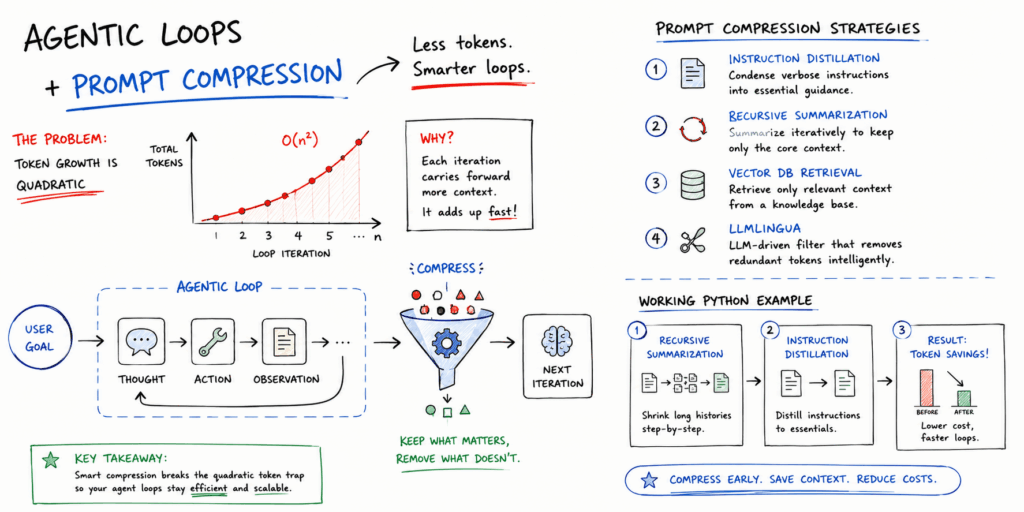
Agentic loops in production can be synonymous with high costs, especially when it comes to both LLM and external application usage via APIs, where billing is often closely related to token usage.
Implementing Prompt Compression to Reduce Agentic Loop Costs Read Post »
We use cookies to improve your experience and performance on our website. You can learn more at นโยบายความเป็นส่วนตัว and manage your privacy settings by clicking Settings.


