YouZum

Committee

AI, Committee, ニュース, Uncategorized

Google AI Introduces TabFM: A Hybrid-Attention Tabular Foundation Model for Zero-Shot Classification and Regression

Google Research introduced TabFM, a foundation model built for tabular data. TabFM performs classification and regression without dataset-specific training. Every prediction comes from a single forward pass. The model reframes tabular prediction as an in-context learning problem. It is available now on Hugging Face and GitHub. TL;DR TabFM predicts on unseen tables with no training, tuning, or feature engineering. It reads the full dataset as one prompt, then predicts via in-context learning. The architecture combines TabPFN-style row/column attention with TabICL-style in-context learning. Training used hundreds of millions of synthetic datasets from structural causal models. Google BigQuery will expose TabFM through an AI.PREDICT SQL command soon. What is TabFM? Tabular data forms the backbone of enterprise data infrastructure. Tasks like customer churn and financial fraud detection live in tables. For years, tree-based methods dominated this space. XGBoost, AdaBoost, and random forests offered robust results on structured data. Google frames TabFM as the tabular counterpart to TimesFM, its zero-shot time-series model. That reliability carried a cost. Fitting XGBoost to a new dataset is rarely one .fit() call. Data scientists spend hours on hyperparameter optimization and feature engineering. They do this just to extract a reliable signal from raw data. TabFM targets exactly that bottleneck. TabFM applies the zero-shot logic that large language models made familiar. LLMs learn new tasks from in-context examples, without updating any weights. This technique is called in-context learning (ICL). TabFM brings the same idea to tables. It generates predictions on previously unseen tables in one pass. How It Works Traditional models update parameters for each dataset’s distribution. TabFM skips that step entirely. It takes the whole dataset as a single unified prompt. That prompt holds both training examples and target testing rows. The model reads column and row relationships at inference time. Tables are not text. They are two-dimensional and inherently orderless. Swapping two rows or two columns does not change their meaning. Standard language models process one-dimensional, ordered sequences instead. To bridge that gap, TabFM synthesizes TabPFN and TabICL into a hybrid design. It relies on three mechanisms: Alternating row and column attention: The raw table passes through a multilayer attention module. Following TabPFN, attention alternates across columns (features) and rows (examples). This deep contextualization captures feature interactions and dependencies. It performs work that would otherwise need manual feature crafting. Row compression: Each row’s cross-attended information compresses into a single dense vector. In-context learning: A dedicated Transformer runs over these compressed embeddings. Following TabICL, attending to compressed rows cuts computation cost sharply. Prediction stays efficient even on much larger datasets. Training On Synthetic Data at Scale Foundation models need vast, diverse data. High-quality tabular datasets are scarce in the open-source space. Industrial tables carry proprietary schemas and sensitive information. That makes them inaccessible for broad pre-training. Synthetic tables can be generated to be arbitrarily large. Google’s research team calls them effectively the only viable option at this scale. So TabFM trains entirely on hundreds of millions of synthetic datasets. These are generated dynamically using structural causal models (SCMs). Each incorporates a wide variety of random functions. The approach captures distributions and complex feature relationships found in real tables. The research team reports the model generalizes well to unseen real-world data. Performance and Benchmarking The research team evaluated TabFM on TabArena. TabArena is a living benchmark that computes Elo scores from head-to-head win rates. The evaluation spans 38 classification datasets and 13 regression datasets. Sample sizes range from 700 to 150,000. Two configurations were tested. Plain TabFM runs out-of-the-box in a single forward pass. It needs no tuning or cross-validation. TabFM-Ensemble adds cross features and SVD (Singular Value Decomposition) features. It computes optimal weights for a 32-way ensemble using a non-negative least squares solver. For classification, it also adds Platt scaling as a calibration step. The research team reports TabFM consistently outperforms heavily tuned, industry-standard supervised algorithms. Full per-fold metrics and head-to-head win rates sit on the GitHub page. Aspect Traditional GBDT (XGBoost) TabFM TabFM-Ensemble Per-dataset training Required None (in-context learning) None Hyperparameter tuning Extensive, manual None Ensemble weights via NNLS Feature engineering Manual, domain-specific Learned by attention Adds cross + SVD features Prediction After full training Single forward pass 32-way ensemble Calibration Manual (optional) — Platt scaling (classification) Getting Started: Installation and Code Installation clones the repository and installs it locally. The base install uses CPU-only JAX. A cuda extra pulls the CUDA 12 plugin and NVIDIA libraries for GPU runs. Core requirements are specific. You need Python 3.11 or later. It pins jax==0.10.1 and flax==0.12.7, using the modern flax.nnx API. Hugging Face Hub downloads the pre-trained weights automatically. Copy CodeCopiedUse a different Browser import numpy as np import pandas as pd from tabfm import tabfm_v1_0_0 from tabfm import TabFMClassifier # Load pre-trained TabFM v1.0.0 (downloads from Hugging Face) model = tabfm_v1_0_0.load() # scikit-learn compatible classifier clf = TabFMClassifier(model=model) X_train = pd.DataFrame({ “age”: [25.0, 45.0, 35.0, 50.0], “job”: [“engineer”, “manager”, “engineer”, “manager”], “income”: [80000, 120000, 90000, 130000] }) y_train = np.array([“low_risk”, “high_risk”, “low_risk”, “high_risk”]) X_test = pd.DataFrame({ “age”: [30.0, 48.0], “job”: [“engineer”, “manager”], “income”: [85000, 125000] }) clf.fit(X_train, y_train) predictions = clf.predict(X_test) probabilities = clf.predict_proba(X_test) print(“Predictions:”, predictions) print(“Class Probabilities:n”, probabilities) Here fit() prepares ordinal encoders and numerical scalers. It does not train model weights on your data. The regressor mirrors this pattern with TabFMRegressor and reg.predict(). Use Cases With Examples The API fits common predictive tasks directly. For customer churn, the context holds past customers labeled churned or retained. TabFM scores churn risk for new customers in one pass. For credit risk, rows carry age, job, and income features. Labels mark low_risk or high_risk, as in the sample code. New applicants get scored without a training cycle. For regression, house price prediction is a natural fit. Context rows carry square footage and neighborhood. TabFM returns a predicted price for unseen listings. Interactive Explainer Check out the Repo and Technical details. Also, feel free to follow us on Twitter and don’t forget to join our 150k+ML SubReddit and Subscribe to our Newsletter. Wait! are you on telegram? now you can join us on telegram as well.

Google AI Introduces TabFM: A Hybrid-Attention Tabular Foundation Model for Zero-Shot Classification and Regression 投稿を読む »

AI, Committee, ニュース, Uncategorized

The Download: Anthropic launches Claude Science, and California’s carbon manure math

This is today’s edition of The Download, our weekday newsletter that provides a daily dose of what’s going on in the world of technology. Claude Science is Anthropic’s newest flagship product At an event for pharmaceutical executives, biotech founders, and researchers yesterday, Anthropic announced Claude Science, a major new product intended to support scientific research like Claude Code supports software engineering. Like Claude Code, Claude Science can autonomously carry out meaningful work from concise, high-level instructions, with tools for computational biology and drug development. The launch signals that Anthropic is doubling down on AI for science, and the company will also use the product in its own research into drugs for rare, neglected diseases. Discover why Anthropic is betting big on AI for scientific research. —Grace Huckins Why California’s carbon manure math doesn’t add up Something stinks in California’s climate policies.  Years ago, the state set up a system that pays cattle farmers to turn the methane emitted from cattle manure into natural gas. It’s become wildly popular because the subsidies are extremely lucrative. But research suggests the program exposes the shortcomings of carbon offsetting and trading schemes. Instead of forcing industries to directly cut their pollution or pay for it as a cost of doing business, legislators have opted for incentives that swap climate responsibilities between parties and regions. The system could ultimately lock in more warming. Read the full story on California’s dubious carbon calculations. —James Temple This story is from The Spark, our weekly climate tech newsletter. Sign up to receive it in your inbox every Wednesday. Watch now: longevity’s next frontier—“reprogramming” your body Billions of dollars are pouring into efforts to reverse aging as scientists investigate ways to return cells to a younger state. But how close are these experimental treatments? And are they likely to work?  At a recent virtual Roundtables event, MIT Technology Review explored the answers with science editor Mary Beth Griggs and senior biotechnology reporter Jessica Hamzelou. Subscribers can now watch the full recording of the fascinating discussion. MIT Technology Review Narrated: the search for dark matter has been blown wide open For decades, physicists have hunted for weakly interacting massive particles (WIMPs), a leading candidate for dark matter. But their search has run into a new problem: neutrinos.  These tiny particles from the sun and other stars can create a “neutrino fog” that drowns out any signal of dark matter. Hitting the neutrino fog does not, however, mean an end to the search. Researchers just have to shift the focus of their hunt. They’re now casting a much wider net. New proposals include quantum sensors, liquid-helium detectors, and even searches in Jupiter’s atmosphere. —Dan Garisto This is our latest story to be turned into an MIT Technology Review Narrated podcast, which we publish each week on Spotify and Apple Podcasts. Just navigate to MIT Technology Review Narrated on either platform, and follow us to get all our new content as it’s released. The must-reads I’ve combed the internet to find you today’s most fun/important/scary/fascinating stories about technology. 1 The US has lifted restrictions on Anthropic’s Mythos and Fable modelsAnthropic said it would begin restoring access today. (NYT $)+ The US had imposed controls over security concerns. (Bloomberg $)+ It lifted the restrictions after lengthy talks with Anthropic. (BBC)+ But the crackdown has already opened doors for Chinese AI rivals. (CNBC) 2 The most detailed survey of the universe ever is now underwayIt’s using the largest digital camera on Earth. (New Scientist $) + The project is based at the Vera C. Rubin Observatory in Chile. (NYT $)+ It aims to transform our view of the cosmos. (MIT Technology Review) 3 Tech talent is fleeing the US due to H1-B visa chaosThey’re eyeing relocation to Canada, the UK, or the Gulf. (Rest of World)+ While China is poaching AI talent from the US. (CNBC)+ Visa rules are also affecting young scientists. (MIT Technology Review) 4 Trump raked in more than $1 billion from crypto businesses in 2025He reported $635 million in royalties from a Trump meme coin. (BBC)+ The rest largely came from his World Liberty Financial venture. (The Hill) 5 The UN warns that the rapid spread of AI may worsen global inequalityIt’s proposed a shared framework for responsible AI development. (Guardian) 6 Companies are making LLMs talk like a caveman to curb AI spendingA senior OpenAI employee contributed to the “caveman” project. (404 Media) 7 Babies are born with the neural foundations for mathBrain recordings have identified the mechanisms. (New Scientist $) 8 An independent studio has bought the OpenAI movie Amazon droppedNeon has purchased “Artificial,” which focuses on Sam Altman. (NYT $)+ Amazon had dumped it after investing in OpenAI. (Gizmodo)+ The depiction of Altman is reportedly unsympathetic. (Variety) 9 AI has re-created Gene Wilder’s voice for a new “Willy Wonka” seriesWilder’s wife said his estate is “delighted” with the new show. (NBC News)+ Netflix partnered with AI company ElevenLabs on the project. (The Verge) 10 NASA aims to send a spare Mars rover—and soccer ball—to the moonThe nuclear-powered “Promise” may help establish a lunar base. (NYT $) Quote of the day “Caveman save you token, save you money.”  —The GitHub repository for the “caveman” plugin explains how the project curbs AI spending by turning verbose LLM outputs into concise text. One More Thing SELMAN DESIGN AI is dreaming up drugs that no one has ever seen. Now we’ve got to see if they work. On average, it takes more than 10 years and billions of dollars to develop a new drug. A growing number of startups are betting that AI can make the process faster and cheaper.  By predicting how potential drugs might behave in the body and discarding dead-end compounds before they leave the computer, machine-learning models can cut down on the need for painstaking lab work.  Yet it is still early days for AI drug discovery. A lot of AI companies are making claims they can’t back up—and the technology is not a panacea. But the technology is beginning to move from promise to practice. Find

The Download: Anthropic launches Claude Science, and California’s carbon manure math 投稿を読む »

AI, Committee, ニュース, Uncategorized

LLMs are stuck in a groupthink groove. This startup is trying to get them out.

Let’s start with a game. Open up your chatbot of choice—Claude, ChatGPT, Gemini—and type “Give me a random number between 1 and 10.” You’re going to get 7. Almost always. Now type “Another” and you’ll get 3 or 4. Type “Another” again and you’ll get 8 or 9. That won’t work every time—but if it did for you, you may wonder if I have superpowers. I don’t. The truth is that most large language models are stuck in a rut. They are far more predictable and far less creative in their responses than you might expect. That’s fine for tasks like coding or research, but groupthink is a problem when you’re brainstorming or planning your next vacation. The Australian startup Springboards has a solution. It built an LLM called Flint, which has been trained to come up with a wider variety of responses than mainstream LLMs to open-ended questions such as “Where should I go in Europe?” “Most language models are fighting hallucinations,” says Springboards cofounder and CEO Pip Bingemann. “We welcome them.” Bingemann introduced me to the random number game when he first showed me his company’s new model. It felt like watching an illusionist with a deck of cards. “This is our sales trick, and it works every single time,” he says. After ChatGPT and Claude both gave their 7s, Bingemann turned to Flint. It too came back with 7: “Aha, of course that was going to happen, but it’s okay—7 is a legitimate answer.” He restarted the session and prompted again: ChatGPT gave 7, Claude gave 7, Flint gave 3.7916. Run your way It’s not just numbers. When Bingemann asked ChatGPT and Claude to name a type of car, he predicted that it would be a Toyota or a Honda—and he was right. Flint came up with a Ford F-150. “There’s all this lost information that doesn’t get served up in these models,” he says. “They’re just as capable of saying a Buick or a Tesla. They just don’t—they’re biased.” Bingemann sent one last prompt to each of the three models: “Give me a tagline for a campaign for New Balance running shoes. Just the tagline.” Claude: “Run your way.” ChatGPT: “Run your way.” Flint: “Built to last, run to win.” It won’t win any awards, but at least it’s different. This weird limitation of LLMs is starting to get more attention. In November a team of researchers put out a paper, titled “Artificial Hivemind: The Open-Ended Homogeneity of Language Models (and Beyond),” that exposed a remarkable degree of repetition not only in the answers from individual LLMs but between them as well. They found that different LLMs converged on very similar answers when prompted with open-ended questions. It’s not clear exactly why this happens, but the researchers speculate it’s because most LLMs today are trained in similar ways on similar data to do similar tasks. The team won the best paper award at NeurIPS, a major AI conference. When the researchers asked 25 different LLMs (including models from the top US firms as well as open-source models from China and elsewhere) 50 times each to write a metaphor about time, most of the 1,250 responses were a version of “Time is a river” or “Time is a weaver.” (I asked some of my colleagues the same question and six people gave me six different answers. My highlight: “Time is a favorite sweatshirt, shaped by a lifetime of wear.”) When you look for it, you see repetition everywhere, says Kieran Browne, cofounder and CTO at Springboards. “The way that most chat interfaces are designed, it makes it feel like you’re having a personal conversation,” he says. “I think most people don’t really realize the extent to which they are getting the same stuff as everybody else.” Take another example: “What should I name my band?” Most models will say something involving “glass,” “neon,” “velvet,” or “static,” says Browne.   When I tried it, ChatGPT spat out a list of 56 band names. At the top was “Glass Harbor.” Skimming through, I found “Static Empire,” “Neon Hearts,” and “Velvet Echo.” I asked Gemini; it gave me 15 suggestions, including “Static Horizon.” Some of the suggestions looked pretty cool, though. ChatGPT’s “Sofa Astronauts” caught my eye, so I googled it—and found that a band called Sofa Astronauts already exists.  (OpenAI says that training models to give reliable and coherent answers can lead them to converge around familiar, high-probability responses and that pushing harder for novelty can lead to weaker or less reliable responses. It also notes that the “Artificial Hivemind” paper studied models from 2024 that have since been updated.) Creative catapult Springboards has developed a tool backed by a selection of LLMs, including ChatGPT and Claude, that creative professionals in advertising or marketing can use to brainstorm ideas. The tool lets you drag around text produced by different models, picking the bits that you like and combining them into something new—in theory. Springboards is pitching Flint as an alternative model that users of its tool can select when looking for more variety. Zoe Scaman, founder of the business strategy startup Bodacious and chief strategy officer at 77X, a direct-to-fan marketing platform set up by Luka Dončić of the LA Lakers, has been trying it out. “I find it really useful for throwing me in completely different directions,” she says. “I use it if I want to catapult myself all over the place.” In one test, Scaman pitted Flint against Claude, Gemini, and ChatGPT by giving each of the models a classic MBA case study: How would you reinvent a finance company for today’s youth? The three mainstream models all went down the same path, she says: “You know, we need to teach financial literacy in a fun and funky way—well, that’s nothing new.” But Flint came up with something different, suggesting that the whole concept of wealth accumulation should get a rebrand. “That was really interesting,” says Scaman. She notes that Flint is still a prototype and doesn’t

LLMs are stuck in a groupthink groove. This startup is trying to get them out. 投稿を読む »

AI, Committee, ニュース, Uncategorized

Building tech in the world’s secret R&D hub

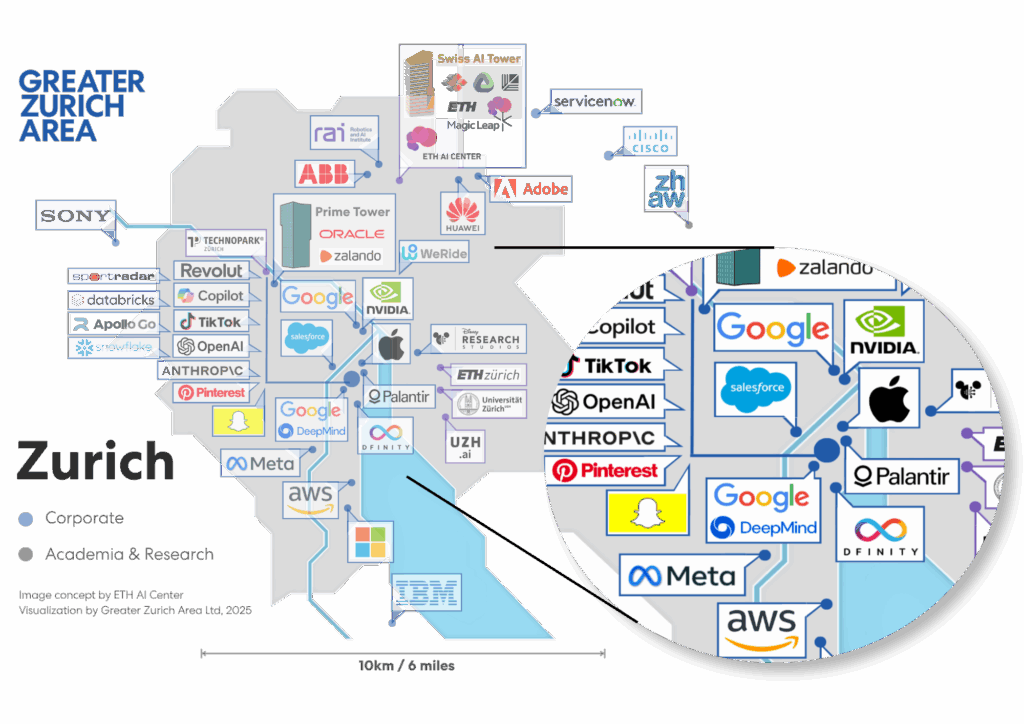
Apple. Anthropic. Disney Research. Google. Meta. Microsoft. NVIDIA. OpenAI. Few places outside Silicon Valley can claim R&D hubs from all of these companies. Fewer still are concentrated in a city of just over 400,000 people—roughly half the size of San Francisco. Over the past two decades, however, many of the world’s most influential technology companies have established R&D operations in and around Zurich, Switzerland. What began with Google’s decision to build its largest R&D hub outside the United States has evolved into one of the world’s most concentrated centers for AI research, talent, and commercialization, in certain areas at a higher density than Silicon Valley.  The question is why so many technology leaders keep choosing the same place to build and scale. Located at the center of Europe, Greater Zurich Area, a region spanning the cantons of Glarus, Graubünden, Schaffhausen, Schwyz, Solothurn, Tessin, Uri, Zug, and Zürich, the region of Winterthur, and the city of Zurich, combines access to major markets with political stability, regulatory predictability, and strong intellectual property protection. And Zurich Airport connects the region directly with key business hubs across Europe, North America, and Asia, making it an efficient base for international operations. The country’s innovation performance reinforces this position. Switzerland has ranked first in the Global Innovation Index for more than a decade, leads the world in patents per capita, and invests over 3.3% of GDP in research and development. Earlier this year, google.org pledged a $1 million grant to the Swiss National AI Institute, a joint effort to advance AI research for the public good. Switzerland’s venture ecosystem reflects a similar focus. Over 60% of Swiss venture capital is invested in deep tech—the highest share globally by a large margin and nearly twice the share of major economies like Germany, France, and the UK. And, according to the Swiss Deep Tech Report 2026, at $1,470 invested per capita, Switzerland commits more to deep tech per capita than any other country in Europe. The economics of specialization While Switzerland is one of Europe’s most expensive locations for talent and operations, salaries remain at a fraction of those in Silicon Valley. The talent pool is small by global standards. Scaling a team quickly is harder in Zurich than in London, Paris, or Amsterdam. For early-stage companies that need to hire fast and burn lean, that trade-off is real. For companies building specialized AI capabilities, however, the equation works: The objective is to assemble the right team, not the largest one. Switzerland’s economy is built around high-value, knowledge-intensive work. Productivity is among the highest in the world, and companies concentrate on functions that depend on specialized expertise rather than large workforces. For companies developing advanced AI capabilities, cost is often weighed against factors that are harder to replicate elsewhere: direct access to leading universities and research institutions, regulatory stability, and a quality of life that helps attract and retain skilled international talent. A high-density AI ecosystem Within Switzerland, the Greater Zurich Area concentrates many of the ingredients required to build and deploy AI systems. The defining characteristic of this region is density. Many of the world’s leading AI companies, research institutions, investors, and startups operate in close proximity, creating connections between talent, capital, and ideas. For example, Google engineers teach at ETH Zurich. ETH graduates join companies such as Anthropic. Researchers launch startups, while former employees of global technology firms go on to found new ventures of their own. Investors, founders, academics, and corporate teams encounter each other repeatedly through shared networks, industry events, and professional circles. In a region of this size, collaboration often happens less through formal introductions than through proximity. While talent flows freely, it rarely leaves the ecosystem. One indicator of the region’s maturity is its ability to convene. Events such as the Zurich AI Festival will bring together more than 6,500 guests this September 28 to October 3. With more than 35 confirmed events across AI and the arts, AI literacy, health, technology, and policy, it is designed as a platform for cross-sector exchange. Its flagship events, the AI + X Summit, AI + Environment, and the AI + Policy Summit, will bring together internationally recognized leaders alongside researchers, policymakers, venture capitalists, and entrepreneurs, convening international voices and fostering dialogue across sectors. Research, talent, and company creation At the center of the country’s AI capabilities are institutions such as ETH Zurich, the University of Zurich, École Polytechnique Fédérale de Lausanne (EPFL), Scuola Universitaria Professionale della Svizzera Italiana (SUPSI), and Zürcher Hochschule für Angewandte Wissenschaften (ZHAW). ETH Zurich ranks among Europe’s leading universities for deep tech commercialization, generating more than 40 spin-offs and startups in 2025 alone, helping create some of the continent’s most valuable technology companies. The Stanford AI Index 2026 reinforces that picture: Switzerland ranks first globally for AI researchers and inventors per capita, with 110.5 per 100,000 inhabitants—ahead of Singapore (109.5), Sweden (80.6), and the United States (64.8). And the IMD World Talent Ranking ranked Switzerland as number 1 for the 10th consecutive year, leading globally in investment, development, and talent appeal. Engineers, researchers, and founders move frequently between universities, startups, and established technology firms, creating strong knowledge flows across organizations. That density is increasingly attracting companies from outside the region too. Even before formally announcing their Zurich office, Exa.ai received a strong pipeline of candidate applications. ‘To assemble the greatest search team in the world, you’ve got to meet people where they are,’ says Will Bryk, the company’s CEO and co-founder. ‘And many are in Greater Zurich.’ Former Google Switzerland employees alone have founded approximately 210 companies and created around 2,600 jobs over the past two decades. For a country of around nine million inhabitants, the multiplier effect is significant. Large technology firms contribute not only through direct employment, but also through the creation of new companies and the transfer of expertise. Why the Greater Zurich Area complements Silicon Valley For many technology companies, Switzerland is not a substitute for Silicon Valley. The two serve different functions within the

Building tech in the world’s secret R&D hub 投稿を読む »

AI, Committee, ニュース, Uncategorized

Agriculture is ready for AI, but its data isn’t

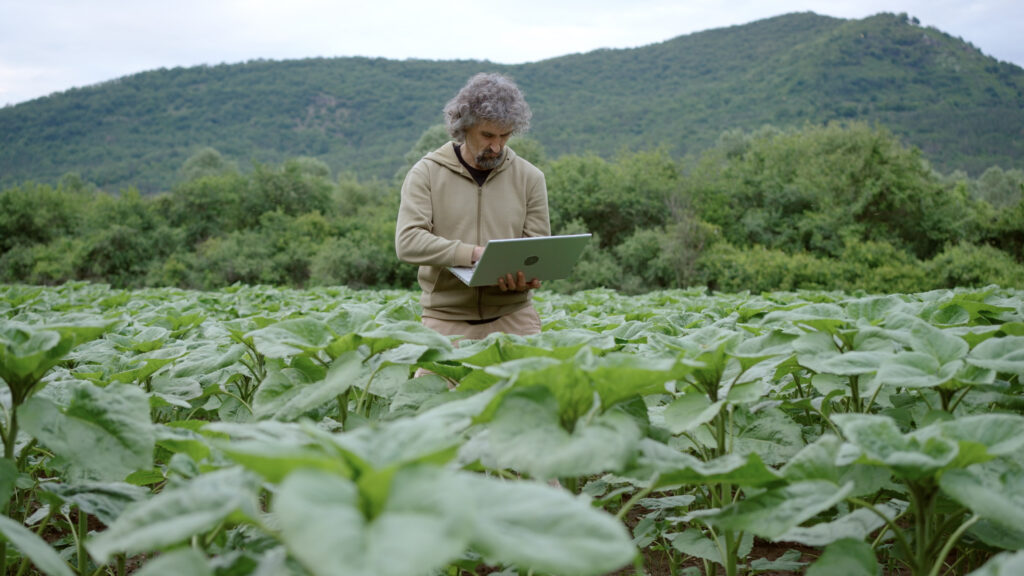
Artificial intelligence is transforming what is possible in agriculture, but industry leaders should be wary of investing in AI without first laying the groundwork.  The use cases are promising, especially for an industry navigating volatile fertilizer costs, unpredictable weather, and margins that leave little room for error. Research shows AI-enabled predictive models can improve crop yield by 26%, reduce water use by 41%, and cut chemical usage by 33%.  However, what AI vendors usually won’t tell you is that these solutions are only effective if you have a clean, solid data foundation. However, at Reltio, we have experience in this area, including leading technology strategy at a major agricultural distributor and building a data platform used by enterprises worldwide–we’ve seen it first hand. What AI vendors won’t tell you  Vendor conversations in agriculture tend to follow a familiar pattern. The pitch leads with grand promises around using AI to monitor crop health in real time, optimize irrigation, and squeeze more yield from every acre.  The promise is compelling, but what rarely comes up is the question of whether the data foundation underneath those promises is accurate and complete. If not, there is a real and significant risk that AI will generate misleading outputs that seem authoritative but inspire action that is, at best, counterproductive.  For instance, a yield prediction model fed inconsistent historical data will generate imprecise forecasts. Similarly, a precision irrigation system drawing on fragmented sensor data will make watering decisions that waste resources instead of saving them.  In each case, the AI is failing because the data it was trained on was not sufficient to produce trustworthy outputs. In agriculture, every AI hallucination is a liability, and the likelihood of error is high. Why agriculture is a uniquely challenging test case The data landscape across a modern agricultural operation or a large distributor serving thousands of growers is extraordinarily complex. Modern farming environments make extensive use of IoT devices and machinery. Irrigation systems are automated, tractors navigate fields autonomously, and drones capture field imagery at scale.  However, machine data is disparate by nature. Add in external sources, including weather feeds, U.S. Department of Agriculture data, and third-party market information, and the question of how you bring all of it together into something coherent becomes a significant undertaking.  Agricultural AI also needs to understand more than just customer attributes; it needs to understand the land: GPS coordinates, farm boundaries, field blocks, and soil variation across a single property. Where do you apply fertilizer, and at what rate, and in which specific area of the farm? Not all parts of a field are the same, and an AI system that treats them as if they are will produce recommendations that are at best imprecise and at worst damaging. There is also a compliance dimension due to the chemicals and the responsibility involved. Operational AI in agriculture needs significantly more checks and governance than it might in a lower-stakes environment. When a flawed recommendation gets acted upon in the field, the consequences can be severe.  What data readiness means in practice  Data readiness is the difference between AI delivering on its promise vs. a “garbage in, garbage out” scenario. Fundamentally, being ready for AI means having a data model that accurately reflects how the business operates.  For a company like Wilbur-Ellis, a 104-year-old, family-owned agricultural distributor, that means understanding who your customers are, which fields they farm, which inputs they need, which suppliers those inputs come from, what they paid last season, and how all of that connects to margin. That information needs to be current, consistent, and accessible across the organization, rather than locked in separate systems that were never designed to talk to each other. Similarly, for farming operations themselves, data readiness means having a reliable, connected picture of what is happening across every field: soil health records, input application histories, yield data from previous seasons, equipment performance, and real-time sensor readings from irrigation systems. Governance matters just as much as structure. Prices change, relationships evolve, and suppliers come and go. An AI system drawing on data that was accurate six months ago but has not been maintained will make recommendations based on a version of the business that no longer exists.  Building the foundation that makes AI trustworthy The good news is that the path to data readiness is feasible. It starts with a strong data model: a single, governed source of truth that connects customers, suppliers, products, pricing, orders, and margins in a way that reflects how the organization operates.  From there, it requires data pipelines fast enough to deliver insights when decisions need to be made, governance frameworks that keep that data trustworthy over time, and security controls that ensure sensitive commercial information is accessible to the right people under the right conditions. This is precisely the challenge that Reltio, an SAP company, was built to solve. Reltio enables companies to unify their fragmented data so AI agents and systems can operate from a complete picture of the business. Reltio builds a trusted system of context, known as the context intelligence layer, that brings all entities, relationships, rules together under one roof and makes business data easy to access and interpret. For Wilbur-Ellis, building that trustworthy data foundation has meant being able to ask more complex questions and trust the answers, which is the precondition for any AI system to be genuinely useful. How agriculture can drive real value from AI The question worth asking before the next AI conversation is not whether the use case is promising. It almost certainly is. The question is whether the underlying data foundation is strong enough to make the output trustworthy.  Agriculture has always required its leaders to make high-stakes decisions under uncertainty, and AI offers the genuine prospect of making those decisions faster and better informed. That prospect is only achievable for organizations that have done the foundational work first, and the businesses that will get the most from AI are the ones investing in that foundation

Agriculture is ready for AI, but its data isn’t 投稿を読む »

AI, Committee, ニュース, Uncategorized

The Download: AI “coworkers” and stratospheric internet

This is today’s edition of The Download, our weekday newsletter that provides a daily dose of what’s going on in the world of technology. AI agents are not your “coworkers” Imagine coming in to work to learn that a new underling will report to you. The worker is not a person but an AI tool—one that your company nonetheless calls Alex, an “employee” with a title and defined responsibilities. How well do you think you would work with Alex? If you’re anything like the managers studied by Boston University professor Emma Wiles, treating that AI as a “coworker” would lead you to do a worse job. They caught 18% fewer errors when the work was attributed to an agentic “AI employee” rather than a chatbot. This is an alarming glimpse of the future Silicon Valley is hurling us toward. Microsoft, OpenAI, Anthropic, and Google have all released tools for managing teams of AI agents, many of which are advertised as digital colleagues. Find out why that’s a losing proposition for workers. —James O’Donnell This story is from The Algorithm, our weekly AI newsletter. Sign up to receive it in your inbox every Monday. This flying solar-powered platform could deliver better internet from the air As soon as August, a giant silver bullet will cut its way through the dry air of the southwestern US and cross the Pacific to reach the coast of Japan. Once there, the roughly 200-foot-long craft, built by the New Mexico–based company Sceye, will park some 18 kilometers above the ocean’s surface in the stratosphere, then use a custom-built antenna to supplement a 5G network, in a test that includes beaming data straight to devices. Sceye (pronounced “sky”) is one of several firms building these high-altitude platform stations, or HAPS. Find out why they plan to connect us from the stratosphere. —Rachel Courtland This story is from the latest edition of our magazine, which is all about engineering. Subscribe now to get a copy, plus all our other issues and a range of subscriber-only content. Longevity’s next frontier: “reprogramming” your body Billions of dollars are flooding into efforts to reverse aging as scientists explore ways to return cells to a younger state. But how far off are these experimental treatments? Will they really work? At a virtual Roundtables event today, MIT Technology Review will examine the science behind the hype. Science editor Mary Beth Griggs and senior biotechnology reporter Jessica Hamzelou will explore longevity’s latest frontier in a subscriber-only discussion. Register here to join the session at 11:30 AM ET / 8:30 AM PT / 16:30 GMT. The must-reads I’ve combed the internet to find you today’s most fun/important/scary/fascinating stories about technology. 1 The US House has passed new youth online safety legislation+ It would set baseline federal standards for kids’ online safety. (Politico $)+ States would be allowed to adopt more aggressive protections. (Reuters $)+ But critics say it lets tech companies avoid accountability. (Axios)+ And tech groups warn it threatens privacy and free expression. (NBC)+ The Senate is expected to push for tougher rules. (The Hill) 2 Ford is rehiring human engineers after AI failed to match quality checksIt said the AI lacked the training and expertise of technicians. (Bloomberg $) + The new hires will train younger staff and reprogram AI tools. (BBC)+ Many firms that replaced workers with AI are now rehiring humans. (Forbes)+ The AI jobs hysteria needs a reality check. (MIT Technology Review) 3 Senator Mark Warren is set to introduce a bill to regulate AI agentsIt would set rules for agent permissions and verification. (The Information $)+ Voters of both parties want tighter AI regulation. (NBC News)+ But politicians are bitterly divided on the rules. (MIT Technology Review) 4 Rocket Lab is buying Iridium for $8 billion to take on SpaceXIt wants to integrate the satellite network with its launch services. (The Verge)+ Which could create a fleet that can compete with SpaceX. (WSJ $) 5 Hackers have exposed secrets about Apple’s upcoming iPhone 18The data was stolen from Tata Electronics, Apple’s Indian supplier. (Reuters $)+ The breach also exposed Tesla secrets. (TechCrunch) 6 Chatbots are replacing therapists despite lacking scientific evidenceExperts question their safety and therapeutic quality. (WSJ $)+ Chatbots may make us lose control of our brains. (MIT Technology Review) 7 Newborn DNA sequencing is edging closer to routine healthcareTrials are expanding despite privacy and ethical concerns. (Economist $)+ The push for perfect babies is an ethical mess. (MIT Technology Review) 8 Astronomers are using AI to find new galaxiesNew tools are reviving decades of space telescope data. (FT $) 9 Remote-controlled cockroach swarms can now breathe underwaterThe cyborg insects could one day explore Mars. (New Scientist $) 10 Drone shows are creating new forms of worship Churches are depicting biblical stories with thousands of UAVs. (Wired $)) Quote of the day “This is taking us back to the 1950s, and that is not progress.”  —Edwin Lyman, director of nuclear power safety at the Union of Concerned Scientists, tells NPR that slashing regulations undoes decades of safety lessons from the industry. One More Thing Design thinking was supposed to fix the world. Where did it go wrong? When Kyle Cornforth walked into IDEO’s San Francisco offices for a meeting about reimagining school lunches, she was impressed. “It was Post-its everywhere, prototypes everywhere,” she recalls. “What I really liked was that they offered a framework for collaboration and creation.” Cornforth was new to IDEO’s way of working: a six-step methodology for innovation called design thinking. But when she looked at the ideas themselves, she had questions: “I was like, ‘You didn’t talk to anyone who works in a school, did you?’ They were not contextualized in the problem at all.” Design thinking broadened the idea of “design,” elevating designers to take on big, knotty problems through a structured process. But critics argue it has produced unrealistic ideas and, by centering designers, reinforced existing inequities. Read the full story on the rise and fall of design thinking. —Rebecca Ackermann We can still have nice things

The Download: AI “coworkers” and stratospheric internet 投稿を読む »

AI, Committee, ニュース, Uncategorized

Roundtables: Longevity’s Next Frontier: “Reprogramming” Your Body

Listen to the session or watch below Billions of dollars are flooding into efforts to reverse aging as scientists explore ways to return cells to a younger state. But how far off are these experimental treatments? Will they really work? Watch a conversation exploring longevity’s new focus. Speakers: Mary Beth Griggs, science editor and Jessica Hamzelou, senior biotechnology reporter Recorded on June 30, 2026 Related Stories: Why “reprogramming” is the buzziest approach to reversing aging right now How scientists want to make you young again Sam Altman invested $180 million into a company trying to delay death

Roundtables: Longevity’s Next Frontier: “Reprogramming” Your Body 投稿を読む »

AI, Committee, ニュース, Uncategorized

DG^VoiC: Speaker Clustering for Fraud Investigation under Real Call-Centre Conditions

arXiv:2606.28048v1 Announce Type: cross Abstract: Insurance fraud remains costly and operationally difficult, particularly in call-centre workflows where many customer interactions begin at FNOL. While recent fraud detection methods mainly rely on structured data, text, or images, repeated speaker identity across calls remains underused as an investigative signal. This paper presents DG^VoiC, a voice clustering framework for customer verification and cross-profile speaker linking on anonymised real call-centre audio. The approach combines sensitive information-aligned anonymisation, speech-focused preprocessing, sliding-window speaker embedding extraction, and cosine similarity based clustering to identify repeated speakers under real telephony conditions. The method was evaluated on 121 recordings, with a curated reference subset of 56 samples in 22 human-agreed speaker clusters. used for validation. The best configuration achieved 96% AMI, 95% ARI, 98% completeness, 100% homogeneity, and 99% V-measure. These results show that speaker clustering can provide a strong additional signal for fraud investigation by helping analysts verify speaker consistency and surface repeated voices across customers.

DG^VoiC: Speaker Clustering for Fraud Investigation under Real Call-Centre Conditions 投稿を読む »

We use cookies to improve your experience and performance on our website. You can learn more at プライバシーポリシー and manage your privacy settings by clicking Settings.

Privacy Preferences

You can choose your cookie settings by turning on/off each type of cookie as you wish, except for essential cookies.

Allow All
Manage Consent Preferences
  • Always Active

Save
ja