YouZum

Uncategorized

AI, Committee, Notizie, Uncategorized

Future AI chips could be built on glass

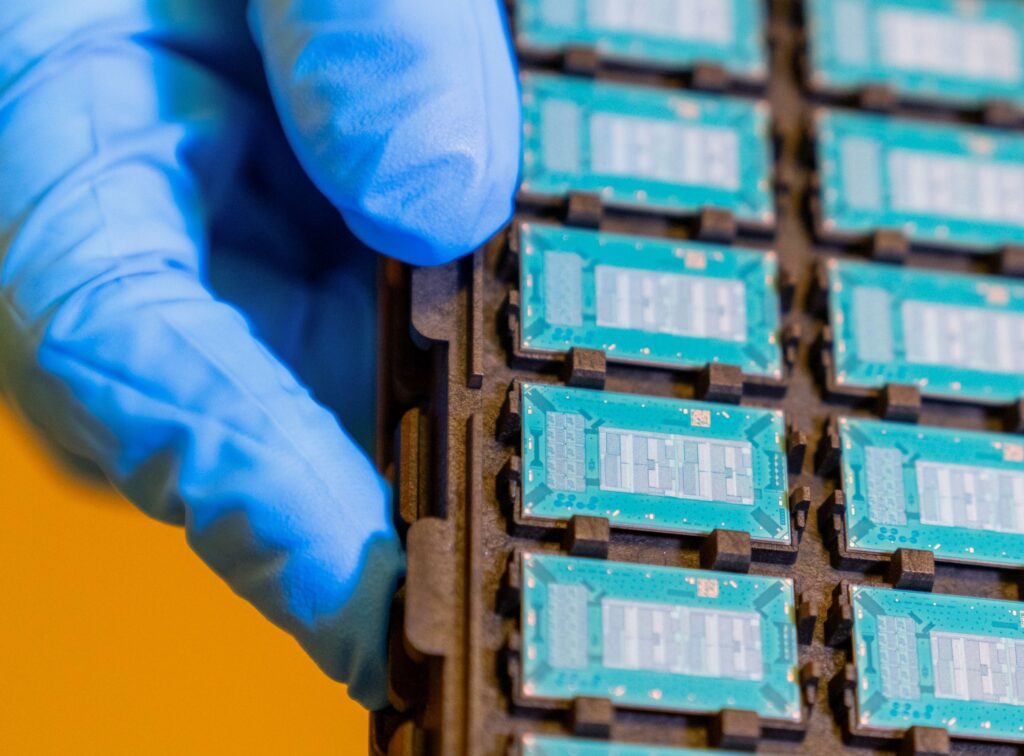
Human-made glass is thousands of years old. But it’s now poised to find its way into the AI chips used in the world’s newest and largest data centers. This year, a South Korean company called Absolics is planning to start commercial production of special glass panels designed to make next-generation computing hardware more powerful and energy efficient. Other companies, including Intel, are also pushing forward in this area. If all goes well, such glass technology could reduce the energy demands of the sorts of high-performance computing chips used in AI data centers—and it could eventually do the same for consumer laptops and mobile devices if production costs fall. The idea is to use glass as the substrate, or layer, on which multiple silicon chips are connected. This form of “packaging” is an increasingly popular way to build computing hardware, because it lets engineers combine specialized chips designed for specific functions into a single system. But it presents challenges, including the fact that hardworking chips can run so hot they physically warp the substrate they’re built on. This can lead to misaligned components and may reduce how efficiently the chips can be cooled, leading to damage or premature failure.  “As AI workloads surge and package sizes expand, the industry is confronting very real mechanical constraints that impact the trajectory of high-performance computing,” says Deepak Kulkarni, a senior fellow at the chip design company Advanced Micro Devices (AMD). “One of the most fundamental is warpage.” That’s where glass comes in. It can handle the added heat better than existing substrates, and it will let engineers keep shrinking chip packages—which will make them faster and more energy efficient. It “unlocks the ability to keep scaling package footprints without hitting a mechanical wall,” says Kulkarni.  Momentum is building behind the shift. Absolics has finished building a factory in the US that is dedicated to producing glass substrates for advanced chips and expects to begin commercial manufacturing this year. The US semiconductor manufacturer Intel is working toward incorporating glass in its next-generation chip packages, and its research has spurred other companies in the chip packaging supply chain to invest in it as well. South Korean and Chinese companies are among the early adopters. “Historically, this is not the first attempt to adopt glass in semiconductor packaging,” says Bilal Hachemi, senior technology and market analyst at the market research firm Yole Group. “But this time, the ecosystem is more solid and wider; the need for glass-based [technology] is sharper.”  Fragile but mighty Chip packaging has relied on organic substrates such as fiberglass-reinforced epoxy since the 1990s, says Rahul Manepalli, vice president of advanced packaging at Intel. But electrochemical complications limit how closely designers can place drilled holes to create copper-coated signal and power connections between the chips and the rest of the system. Chip designers must also account for the unpredictable shrinkage and distortion that organic substrates undergo as chips heat up and cool down. “We realized about a decade ago that we are going to have some limitations with organic substrates,” says Manepalli. These glass substrate test units were photographed at an Intel facility in Chandler, Arizona, in 2023.INTEL CORPORATION Glass may help overcome a lot of these limitations. Its thermal stability could allow engineers to create 10 times more connections per millimeter than organic substrates, says Manepalli. With denser connections, Intel’s designers can then stuff 50% more silicon chips into the same package area, improving computational capability. The denser connections also enable more efficient routing for the copper wires that deliver power to the chip. And the fact that glass dissipates heat more efficiently allows for chip designs that reduce overall power consumption.  “The benefits of glass core substrates are undeniable,” says Manepalli. “It’s clear that the benefits will drive the industry to make this happen sooner rather than later, and we want to be one of the first ones who do it.”  However, working with glass creates its own challenges. For one thing, it’s fragile. Glass substrates for data center chip packages are made from panels that are only about 700 micrometers to 1.4 millimeters thick, which leaves them susceptible to cracking or even shattering, says Manepalli. Researchers at Intel and other organizations have spent years figuring out how to use other materials and special tools to integrate the glass panels safely into semiconductor manufacturing processes.  Now, Manepalli says, Intel’s research and development teams are reliably fabricating glass panels and churning out test chip packages that incorporate glass—and in early 2025 they demonstrated that a functional device with a glass core substrate could boot up the Windows operating system. It’s a significant improvement from the early testing days, when hundreds of glass panels got cracked every couple of days, he says. Semiconductor manufacturers already use glass for more limited purposes, such as temporary support structures for silicon wafers. But the independent market research firm IDTechEx estimates there’s a big market for glass substrates, one that could boost the semiconductor market for glass from $1 billion in 2025 to as much as $4.4 billion by 2036.  The material could have additional benefits if it takes off. Glass can be made astoundingly smooth—5,000 times smoother than organic substrates. This would eliminate defects that can arise as metal gets layered onto semiconductors, says Xiaoxi He, a research analyst at IDTechEx. Defects in these layers can worsen chips’ performance or even render them unusable.   Glass could also help speed the movement of data. The material can guide light, which means chip designers could use it to build high-speed signal pathways directly into the substrate. Glass “holds enormous potential for the future of energy-efficient AI compute,” says Kulkarni at AMD, because a light-based system could move signals around with far less energy than the “power-hungry” copper pathways that are currently used to carry signals between chips in a package. A panel pivot Early research on glass packaging started at the 3D Systems Packaging Research Center at the Georgia Institute of Technology in 2009. The university eventually partnered with

Future AI chips could be built on glass Leggi l'articolo »

AI, Committee, Notizie, Uncategorized

The Download: how AI is used for military targeting, and the Pentagon’s war on Claude

This is today’s edition of The Download, our weekday newsletter that provides a daily dose of what’s going on in the world of technology. Defense official reveals how AI chatbots could be used for targeting decisions  The US military might use generative AI systems to rank targets and recommend which to strike first, according to a Defense Department official.  A list of possible targets could first be fed into a generative AI system that the Pentagon is fielding for classified settings. Humans might then ask the system to analyze the information and prioritize the targets. They would then be responsible for checking and evaluating the results and recommendations.  OpenAI’s ChatGPT and xAI’s Grok could soon be at the center of exactly these sorts of high-stakes military decisions. Read the full story.  —James O’Donnell  The must-reads  I’ve combed the internet to find you today’s most fun/important/scary/fascinating stories about technology.  1 The Pentagon’s CTO claims Claude would “pollute” the defense supply chain He blamed a “policy preference” that’s baked into the model. (CNBC) + Anthropic is reeling from OpenAI’s “compromise” with the DoD. (MIT Technology Review)  2 An ex-DOGE staffer has been accused of stealing social security data Then taking the information to his new job in the IT division of a government contractor. (Wired) + He allegedly used a thumb drive to steal the data. (Washington Post)  3 Ukraine is offering its battlefield data for AI training Allies can access the data to train drones and other UAVs. (Reuters)  + Europe has a drone-filled vision for the future of war. (MIT Technology Review)   4 Meta has postponed its latest AI launch over performance issues It fell short of rival models from Google, OpenAI, and Anthropic. (NYT $) + The company’s former AI chief is betting against LLMs. (MIT Technology Review).  5 X could be breaching sanctions on Iran An account for Iran’s new supreme leader may break US rules. (Engadget) + Hacker group Handala has become the face of Iranian cyberwarfare. (Wired) + AI is turning the conflict into theater. (MIT Technology Review)   6 A landmark social media addiction trial is wrapping up It’ll decide whether the platforms are liable for harms caused to children. (The Guardian)  + AI companions are the next stage of digital addiction. (MIT Technology Review)  7 Western AI models have “failed spectacularly” on agriculture in the Global South The biggest problem? They’re not trained on local data. (Rest of World)  8 Internet outages in Moscow are sparking surging sales of pagers The disruptions have been blamed on new tests of web controls. (Bloomberg $)  9 Why is China obsessed with OpenClaw? Lobster-mania is spreading to the general public. (SCMP) + Tech-savvy “tinkerers” are cashing in on the craze. (MIT Technology Review)  10 Hollywood has soured on Silicon Valley Movies and TV shows have swapped eccentric founders for megalomaniac moguls. (NYT $)  Quote of the day  “We see a future where intelligence is a utility, like electricity or water, and people buy it from us on a meter.”  —OpenAI CEO Sam Altman makes a new pitch to investors at a BlackRock event, Gizmodo reports.  One More Thing  How the Ukraine-Russia war is reshaping the tech sector in Eastern Europe  Latvia’s annual national defense exercises took place in September and October, as the Ukraine-Russia war nears its third anniversary.GATIS INDRēVICS/ LATVIAN MINISTRY OF DEFENSE When Latvian startup Global Wolf Motors first pitched the idea of a military scooter, it was met with skepticism—and a wall of bureaucracy. Then Russia launched its full-scale invasion of Ukraine in February 2022, and everything changed.   Suddenly, Ukrainian combat units wanted any equipment they could get their hands on, and they were willing to try out ideas that might not have made the cut in peacetime.  Within weeks, the scooters were on the front line—and even behind it, being used on daring reconnaissance missions. It signaled that a new product category for companies along Ukraine’s borders had opened: civilian technologies repurposed for military needs. Read the full story.  —Peter Guest  We can still have nice things  A place for comfort, fun and distraction to brighten up your day. (Got any ideas? Drop me a line.)  + A new mini magnet could slash the costs of MRIs and nuclear fusion.  + This interactive map of Earth offers new routes to facts about our planet. + Escape the news cycle with this deep dive into the power of fantasy and nature. (Big thanks to reader and MIT alum Vicki for the find!) + Reports of reading’s death are greatly exaggerated. 

The Download: how AI is used for military targeting, and the Pentagon’s war on Claude Leggi l'articolo »

AI, Committee, Notizie, Uncategorized

EvoSchema: Towards Text-to-SQL Robustness Against Schema Evolution

arXiv:2603.10697v1 Announce Type: cross Abstract: Neural text-to-SQL models, which translate natural language questions (NLQs) into SQL queries given a database schema, have achieved remarkable performance. However, database schemas frequently evolve to meet new requirements. Such schema evolution often leads to performance degradation for models trained on static schemas. Existing work either mainly focuses on simply paraphrasing some syntactic or semantic mappings among NLQ, DB and SQL, or lacks a comprehensive and controllable way to investigate the model robustness issue under the schema evolution, which is insufficient when facing the increasingly complex and rich database schema changes in reality, especially in the LLM era. To address the challenges posed by schema evolution, we present EvoSchema, a comprehensive benchmark designed to assess and enhance the robustness of text-to-SQL systems under real-world schema changes. EvoSchema introduces a novel schema evolution taxonomy, encompassing ten perturbation types across columnlevel and table-level modifications, systematically simulating the dynamic nature of database schemas. Through EvoSchema, we conduct an in-depth evaluation spanning different open source and closed-source LLMs, revealing that table-level perturbations have a significantly greater impact on model performance compared to column-level changes. Furthermore, EvoSchema inspires the development of more resilient text-to-SQL systems, in terms of both model training and database design. The models trained on EvoSchema’s diverse schema designs can force the model to distinguish the schema difference for the same questions to avoid learning spurious patterns, which demonstrate remarkable robustness compared to those trained on unperturbed data on average. This benchmark offers valuable insights into model behavior and a path forward for designing systems capable of thriving in dynamic, real-world environments.

EvoSchema: Towards Text-to-SQL Robustness Against Schema Evolution Leggi l'articolo »

AI, Committee, Notizie, Uncategorized

Fusing Semantic, Lexical, and Domain Perspectives for Recipe Similarity Estimation

arXiv:2603.09688v2 Announce Type: replace Abstract: This research focuses on developing advanced methods for assessing similarity between recipes by combining different sources of information and analytical approaches. We explore the semantic, lexical, and domain similarity of food recipes, evaluated through the analysis of ingredients, preparation methods, and nutritional attributes. A web-based interface was developed to allow domain experts to validate the combined similarity results. After evaluating 318 recipe pairs, experts agreed on 255 (80%). The evaluation of expert assessments enables the estimation of which similarity aspects–lexical, semantic, or nutritional–are most influential in expert decision-making. The application of these methods has broad implications in the food industry and supports the development of personalized diets, nutrition recommendations, and automated recipe generation systems.

Fusing Semantic, Lexical, and Domain Perspectives for Recipe Similarity Estimation Leggi l'articolo »

AI, Committee, Notizie, Uncategorized

A Systematic Study of Pseudo-Relevance Feedback with LLMs

arXiv:2603.11008v1 Announce Type: cross Abstract: Pseudo-relevance feedback (PRF) methods built on large language models (LLMs) can be organized along two key design dimensions: the feedback source, which is where the feedback text is derived from and the feedback model, which is how the given feedback text is used to refine the query representation. However, the independent role that each dimension plays is unclear, as both are often entangled in empirical evaluations. In this paper, we address this gap by systematically studying how the choice of feedback source and feedback model impact PRF effectiveness through controlled experimentation. Across 13 low-resource BEIR tasks with five LLM PRF methods, our results show: (1) the choice of feedback model can play a critical role in PRF effectiveness; (2) feedback derived solely from LLM-generated text provides the most cost-effective solution; and (3) feedback derived from the corpus is most beneficial when utilizing candidate documents from a strong first-stage retriever. Together, our findings provide a better understanding of which elements in the PRF design space are most important.

A Systematic Study of Pseudo-Relevance Feedback with LLMs Leggi l'articolo »

AI, Committee, Notizie, Uncategorized

Brutal times for the US battery industry

Just a few years ago, the battery industry was hot, hot, hot. There was a seemingly infinite number of companies popping up, with shiny new chemistries and massive fundraising rounds. My biggest problem was sifting through the pile to pick the most exciting news to cover. That tide has turned, and in 2026, what seems to be in unlimited supply isn’t battery success stories but stumbles or straight-up implosions. Companies are failing, investors are pulling back, and batteries, especially for EVs, aren’t looking so hot anymore. On Monday, Steve Levine at The Information (paywalled link) reported that 24M Technologies, a battery company founded in 2010, was shutting down and would auction off its property. The company itself has been silent, but this is the latest in a string of bad signs, and it’s a big one—at one point 24M was worth over $1 billion, and the company’s innovations could have worked with existing technology. So where does that leave the battery industry? Many buzzy battery startups in recent years have been trying to sell some new, innovative chemistry to compete with lithium-ion batteries, the status quo that powers phones, laptops, electric vehicles, and even grid storage arrays today. Think sodium-ion batteries and solid-state cells. 24M wasn’t trying to sell a departure from lithium-ion but improvements that could work with the tech. One of the company’s major innovations was its manufacturing process, which involved essentially smearing materials onto sheets of metal to form the electrodes, a simpler and potentially cheaper technique than the standard one.  The layers in the company’s batteries were thicker, which cut down on some of the inactive materials in cells and improved the energy density. That allows more energy to be stored in a smaller package, boosting the range of EVs—the company famously had a goal of a 1,000-mile battery (about 1,600 kilometers). We’re still thin on details of what exactly went down at 24M and what comes next for its tech. The company didn’t get back to my questions sent to the official press email, and nobody picked up the phone when I called. 24M cofounder and MIT professor Yet-Ming Chiang declined to speak on the record. For those who have been closely following the battery industry, more bad news isn’t too surprising. It feels as if everyone is short on money these days, and as purse strings tighten, there’s less interest in novel ideas. “It just feels like there’s not a lot of appetite for innovation,” says Kara Rodby, a technical principal at Volta Energy Technologies, a venture capital firm that focuses on the energy storage industry. Natron Energy, one of the leading sodium-ion startups in the US, shut down operations in September last year. Ample, an EV battery-swapping company, filed for bankruptcy in December 2025.   There were always going to be failures from the recent battery boom. Money was flowing to all sorts of companies, some pitching truly wild ideas. But what recent months have made clear is that the battery market is turning brutal, even for the relatively safe bets. Because 24M’s technology was designed to work into existing lithium-ion chemistry, it could have been an attractive candidate for existing battery companies to license or even acquire. “It’s a great example of something that should have been easier,” Rodby says.   The gutting of major components of the Inflation Reduction Act, key legislation in the US that provided funding and incentives for batteries and EVs, certainly hasn’t helped. The EV market in the US is cooling off, with automakers canceling EV models and slashing factory plans. There are bright spots. China’s battery industry is thriving, and its battery and EV giants are looking ever more dominant. The market for stationary energy storage is also still seeing positive signs of growth, even in the US.  But overall, it’s not looking great.  This article is from The Spark, MIT Technology Review’s weekly climate newsletter. To receive it in your inbox every Wednesday, sign up here. 

Brutal times for the US battery industry Leggi l'articolo »

AI, Committee, Notizie, Uncategorized

Investigating Gender Stereotypes in Large Language Models via Social Determinants of Health

arXiv:2603.09416v1 Announce Type: new Abstract: Large Language Models (LLMs) excel in Natural Language Processing (NLP) tasks, but they often propagate biases embedded in their training data, which is potentially impactful in sensitive domains like healthcare. While existing benchmarks evaluate biases related to individual social determinants of health (SDoH) such as gender or ethnicity, they often overlook interactions between these factors and lack context-specific assessments. This study investigates bias in LLMs by probing the relationships between gender and other SDoH in French patient records. Through a series of experiments, we found that embedded stereotypes can be probed using SDoH input and that LLMs rely on embedded stereotypes to make gendered decisions, suggesting that evaluating interactions among SDoH factors could usefully complement existing approaches to assessing LLM performance and bias.

Investigating Gender Stereotypes in Large Language Models via Social Determinants of Health Leggi l'articolo »

AI, Committee, Notizie, Uncategorized

LLM as a Meta-Judge: Synthetic Data for NLP Evaluation Metric Validation

arXiv:2603.09403v1 Announce Type: new Abstract: Validating evaluation metrics for NLG typically relies on expensive and time-consuming human annotations, which predominantly exist only for English datasets. We propose textit{LLM as a Meta-Judge}, a scalable framework that utilizes LLMs to generate synthetic evaluation datasets via controlled semantic degradation of real data, replacing human judgment. We validate our approach using textit{meta-correlation}, measuring the alignment between metric rankings derived from synthetic data and those from standard human benchmarks. Experiments across Machine Translation, Question Answering, and Summarization demonstrate that synthetic validation serves as a reliable proxy for human judgment, achieving meta-correlations exceeding 0.9 in multilingual QA and proves to be a viable alternative where human judgments are unavailable or too expensive to obtain. Our code and data will become publicly available upon paper acceptance.

LLM as a Meta-Judge: Synthetic Data for NLP Evaluation Metric Validation Leggi l'articolo »

AI, Committee, Notizie, Uncategorized

Robust Training of Neural Networks at Arbitrary Precision and Sparsity

arXiv:2409.09245v3 Announce Type: replace-cross Abstract: The discontinuous operations inherent in quantization and sparsification introduce a long-standing obstacle to backpropagation, particularly in ultra-low precision and sparse regimes. While the community has long viewed quantization as unfriendly to gradient descent due to its lack of smoothness, we pinpoint-for the first time-that the key issue is the absence of a proper gradient path that allows training to learn robustness to quantization noise. The standard Straight-Through Estimator (STE) exacerbates this with its well-understood mismatch: a quantization-aware forward pass but oblivious backward pass, leading to unmanaged error and instability. We solve this by explicitly modeling quantization as additive noise, making the full forward-backward path well-defined without heuristic gradient estimation. As one natural solution, we introduce a denoising dequantization transform derived from a principled ridge regression objective, creating an explicit, corrective gradient path that makes learning robust to the noise STE bypasses. We extend this to sparsification by treating it as a special form of quantization that zeros out small values. Our unified framework trains models at arbitrary precisions and sparsity levels with off-the-shelf recipes, enabling stable A1W1 and sub-1-bit networks where others falter. It yields state-of-the-art results, mapping efficiency frontiers for modern LLMs and providing a theoretically grounded path to hyper-efficient neural networks.

Robust Training of Neural Networks at Arbitrary Precision and Sparsity Leggi l'articolo »

We use cookies to improve your experience and performance on our website. You can learn more at Politica sulla privacy and manage your privacy settings by clicking Settings.

Privacy Preferences

You can choose your cookie settings by turning on/off each type of cookie as you wish, except for essential cookies.

Allow All
Manage Consent Preferences
  • Always Active

Save
it_IT