YouZum

Uncategorized

AI, Committee, Actualités, Uncategorized

The Download: gig workers training humanoids, and better AI benchmarks

This is today’s edition of The Download, our weekday newsletter that provides a daily dose of what’s going on in the world of technology. The gig workers who are training humanoid robots at home  When Zeus, a medical student in Nigeria, returns to his apartment from a long day at the hospital, he straps his iPhone to his forehead and records himself doing chores.  Zeus is a data recorder for Micro1, which sells the data he collects to robotics firms. As these companies race to build humanoids, videos from workers like Zeus have become the hottest new way to train them.   Micro1 has hired thousands of them in more than 50 countries, including India, Nigeria, and Argentina. The jobs pay well locally, but raise thorny questions around privacy and informed consent. The work can be challenging—and weird. Read the full story.  —Michelle Kim  Our readers recently voted humanoid robots the “11th breakthrough” to add to our 2026 list of 10 Breakthrough Technologies. Check out what else officially made the cut.  AI benchmarks are broken. Here’s what we need instead.  For decades, AI has been evaluated based on whether it can outperform humans on isolated problems. But it’s seldom used this way in the real world.  While AI is assessed in a vacuum, it operates in messy, complex, multi-person environments over time. This misalignment leads us to misunderstand its capabilities, risks, and impacts.  We need new benchmarks that assess AI’s performance over longer horizons within human teams, workflows, and organizations. Here’s a proposal for one such approach: Human–AI, Context-Specific Evaluation.   —Angela Aristidou, professor at University College London and faculty fellow at the Stanford Digital Economy Lab and the Stanford Human-Centered AI Institute.  MIT Technology Review Narrated: can quantum computers now solve health care problems? We’ll soon find out.  In a laboratory on the outskirts of Oxford, a quantum computer built from atoms and light awaits its moment. The device is small but powerful—and also very valuable. Infleqtion, the company that owns it, is hoping its abilities will win $5 million at a competition.   The prize will go to the quantum computer that can solve real health care problems that “classical” computers cannot. But there can be only one big winner—if there is a winner at all.  —Michael Brooks  This is our latest story to be turned into an MIT Technology Review Narrated podcast, which we’re publishing each week on Spotify and Apple Podcasts. Just navigate to MIT Technology Review Narrated on either platform, and follow us to get all our new content as it’s released.  The must-reads  I’ve combed the internet to find you today’s most fun/important/scary/fascinating stories about technology.  1 OpenAI just closed the biggest funding round in Silicon Valley history It raised $122 billion ahead of its blockbuster IPO, which is expected later this year. (WSJ $) + It’s also prepping a push to “rethink the social contract.” (Vanity Fair $) + Campaigners are urging people to quit ChatGPT. (MIT Technology Review)    2 Iran has threatened to attack 18 US tech companies  It’s eyeing their operations in the Middle East. (Politico) + Targets include Nvidia, Apple, Microsoft, and Google. (Engadget) + Iran struck AWS data centers earlier this month. (Reuters $)  3 Artemis II is about to fly humans to the Moon. Here’s the science they’ll do Their experiments will set the stage for future explorers. (Nature) + You can watch the launch attempt today. (Engadget)   4 Putin is trying to take full control of Russia’s internet New outages and blockages are cutting the country off from the world. (NYT $) + Can we repair the internet? (MIT Technology Review)  5 A robotaxi outage in China left passengers stranded on highways  Baidu vehicles froze on the streets of Wuhan. (Bloomberg $) + Police are blaming a “system failure.” (Reuters $)  6 US government requests for social media user data are soaring They’ve skyrocketed by 770% in the past decade. (Bloomberg $) + Is the Pentagon allowed to surveil Americans with AI? (MIT Technology Review)  7 Tesla has admitted that humans sometimes drive its robotaxis Remote drivers occasionally control them completely. (Wired $)  8 A satellite-smashing chain reaction could spiral out of control This data visualization captures the dangers of space collisions. (Guardian) + Here’s all the stuff we’ve put into space. (MIT Technology Review)  9 Meta’s smartglasses can turn you into a creep According to one journalist who wore them for a month. (Guardian)  10 A Claude Code leak has exposed plans for a virtual pet  We could be getting a Tamagotchi for the GenAI era. (The Verge)  Quote of the day  “From now on, for every assassination, an American company will be destroyed.”  —Iran’s Islamic Revolutionary Guard Corps (IRGC) threatens US tech firms in an affiliated Telegram, per CNBC.  One More Thing  ACKERMAN + GRUBER How one mine could unlock billions in EV subsidies  In a pine farm north of the tiny town of Tamarack, Minnesota, Talon Metals has uncovered one of America’s densest nickel deposits. Now it wants to begin mining the ore.  Products made from the nickel could net more than $26 billion in subsidies through the Inflation Reduction Act (IRA), which is starting to transform the US economy. To understand how, we tallied up the potential tax credits available. Read the full story to find out what we discovered.  —James Temple  We can still have nice things  A place for comfort, fun and distraction to brighten up your day. (Got any ideas? Drop me a line.)  + A selfless group of gluttons tried to taste-test every potato chip in the world.  + Get romantic inspiration from these penguins’ engagement pebbles. + Good news: global terrorism has hit a 15-year low. + Enjoy endless new views through these windows around the world.  

The Download: gig workers training humanoids, and better AI benchmarks Lire l’article »
AI, Committee, Actualités, Uncategorized

Alibaba Qwen Team Releases Qwen3.5 Omni: A Native Multimodal Model for Text, Audio, Video, and Realtime Interaction

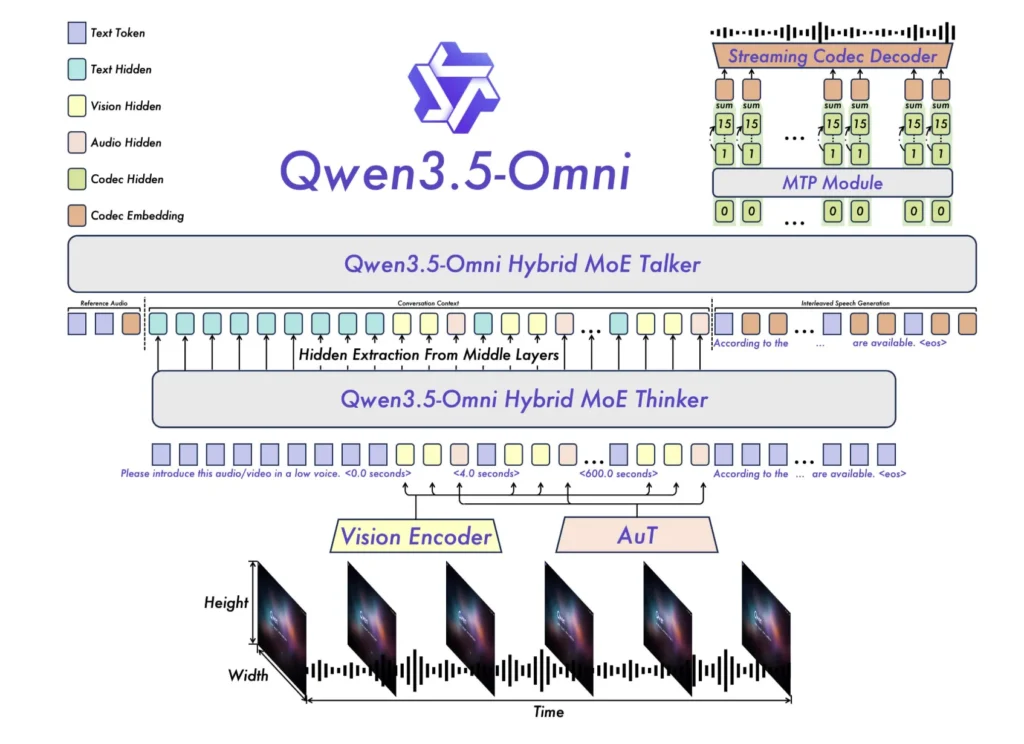
The landscape of multimodal large language models (MLLMs) has shifted from experimental ‘wrappers’—where separate vision or audio encoders are stitched onto a text-based backbone—to native, end-to-end ‘omnimodal’ architectures. Alibaba Qwen team latest release, Qwen3.5-Omni, represents a significant milestone in this evolution. Designed as a direct competitor to flagship models like Gemini 3.1 Pro, the Qwen3.5-Omni series introduces a unified framework capable of processing text, images, audio, and video simultaneously within a single computational pipeline. The technical significance of Qwen3.5-Omni lies in its Thinker-Talker architecture and its use of Hybrid-Attention Mixture of Experts (MoE) across all modalities. This approach enables the model to handle massive context windows and real-time interaction without the traditional latency penalties associated with cascaded systems. Model Tiers The series is offered in three sizes to balance performance and cost: Plus: High-complexity reasoning and maximum accuracy. Flash: Optimized for high-throughput and low-latency interaction. Light: A smaller variant for efficiency-focused tasks. https://qwen.ai/blog?id=qwen3.5-omni The Thinker-Talker Architecture: A Unified MoE Framework At the core of Qwen3.5-Omni is a bifurcated yet tightly integrated architecture consisting of two main components: the Thinker and the Talker. In previous iterations, multimodal models often relied on external pre-trained encoders (such as Whisper for audio). Qwen3.5-Omni moves beyond this by utilizing a native Audio Transformer (AuT) encoder. This encoder was pre-trained on more than 100 million hours of audio-visual data, providing the model with a grounded understanding of temporal and acoustic nuances that traditional text-first models lack. Hybrid-Attention Mixture of Experts (MoE) Both the Thinker and the Talker leverage Hybrid-Attention MoE. In a standard MoE setup, only a subset of parameters (the ‘experts’) are activated for any given token, which allows for a high total parameter count with lower active computational costs. By applying this to a hybrid-attention mechanism, Qwen3.5-Omni can effectively weigh the importance of different modalities (e.g., focusing more on visual tokens during a video analysis task) while maintaining the throughput required for streaming services. This architecture supports a 256k long-context input, enabling the model to ingest and reason over: Over 10 hours of continuous audio. Over 400 seconds of 720p audio-visual content (sampled at 1 FPS). Benchmarking Performance: The ‘215 SOTA’ Milestone One of the most highlighted technical claims regarding the flagship Qwen3.5-Omni-Plus model is its performance on the global leaderboard. The model achieved State-of-the-Art (SOTA) results on 215 audio and audio-visual understanding, reasoning, and interaction subtasks. These 215 SOTA wins are not merely a measure of broad evaluation but span specific technical benchmarks, including: 3 audio-visual benchmarks and 5 general audio benchmarks. 8 ASR (Automatic Speech Recognition) benchmarks. 156 language-specific Speech-to-Text Translation (S2TT) tasks. 43 language-specific ASR tasks. According to their official technical reports, Qwen3.5-Omni-Plus surpasses Gemini 3.1 Pro in general audio understanding, reasoning, recognition, and translation. In audio-visual understanding, it achieves parity with Google’s flagship, while maintaining the core text and visual performance of the standard Qwen3.5 series. https://qwen.ai/blog?id=qwen3.5-omni Technical Solutions for Real-Time Interaction Building a model that can ‘talk’ and ‘hear’ in real-time requires solving specific engineering challenges related to streaming stability and conversational flow. ARIA: Adaptive Rate Interleave Alignment A common failure mode in streaming voice interaction is ‘speech instability.’ Because text tokens and speech tokens have different encoding efficiencies, a model may misread numbers or stutter when attempting to synchronize its text reasoning with its audio output. To address this, Alibaba Qwen team developed ARIA (Adaptive Rate Interleave Alignment). This technique dynamically aligns text and speech units during generation. By adjusting the interleave rate based on the density of the information being processed, ARIA improves the naturalness and robustness of speech synthesis without increasing latency. Semantic Interruption and Turn-Taking For AI developers building voice assistants, handling interruptions is notoriously difficult. Qwen3.5-Omni introduces native turn-taking intent recognition. This allows the model to distinguish between ‘backchanneling’ (non-meaningful background noise or listener feedback like ‘uh-huh’) and an actual semantic interruption where the user intends to take the floor. This capability is baked directly into the model’s API, enabling more human-like, full-duplex conversations. Emergent Capability: Audio-Visual Vibe Coding Perhaps the most unique feature identified during the native multimodal scaling of Qwen3.5-Omni is Audio-Visual Vibe Coding. Unlike traditional code generation that relies on text prompts, Qwen3.5-Omni can perform coding tasks based directly on audio-visual instructions. For instance, a developer could record a video of a software UI, verbally describe a bug while pointing at specific elements, and the model can directly generate the fix. This emergence suggests that the model has developed a cross-modal mapping between visual UI hierarchies, verbal intent, and symbolic code logic. Key Takeaways Qwen3.5-Omni uses a native Thinker-Talker multimodal architecture for unified text, audio, and video processing. The model supports 256k context, 10+ hours of audio, and 400+ seconds of 720p video at 1 FPS. Alibaba reports speech recognition in 113 languages/dialects and speech generation in 36 languages/dialects. Key system features include semantic interruption, turn-taking intent recognition, TMRoPE, and ARIA for realtime interaction. Check out the Technical details, Qwenchat, Online demo on HF and Offline demo on HF. Also, feel free to follow us on Twitter and don’t forget to join our 120k+ ML SubReddit and Subscribe to our Newsletter. Wait! are you on telegram? now you can join us on telegram as well. The post Alibaba Qwen Team Releases Qwen3.5 Omni: A Native Multimodal Model for Text, Audio, Video, and Realtime Interaction appeared first on MarkTechPost.

Alibaba Qwen Team Releases Qwen3.5 Omni: A Native Multimodal Model for Text, Audio, Video, and Realtime Interaction Lire l’article »

AI, Committee, Actualités, Uncategorized

AI benchmarks are broken. Here’s what we need instead.

For decades, artificial intelligence has been evaluated through the question of whether machines outperform humans. From chess to advanced math, from coding to essay writing, the performance of AI models and applications is tested against that of individual humans completing tasks.  This framing is seductive: An AI vs. human comparison on isolated problems with clear right or wrong answers is easy to standardize, compare, and optimize. It generates rankings and headlines.  But there’s a problem: AI is almost never used in the way it is benchmarked. Although   researchers and industry have started to improve benchmarking by moving beyond static tests to more dynamic evaluation methods, these  innovations resolve only part of the issue. That’s because they still evaluate AI’s performance outside the human teams and organizational workflows where its real-world performance ultimately unfolds.  While AI is evaluated at the task level in a vacuum, it is used in messy, complex environments where it usually interacts with more than one person. Its performance (or lack thereof) emerges only over extended periods of use. This misalignment leaves us misunderstanding AI’s capabilities, overlooking systemic risks, and misjudging its economic and social consequences. To mitigate this, it’s time to shift from narrow methods to benchmarks that assess how AI systems perform over longer time horizons within human teams, workflows, and organizations. I have studied real-world AI deployment since 2022 in small businesses and health, humanitarian, nonprofit, and higher-education organizations in the UK, the United States, and Asia, as well as within leading AI design ecosystems in London and Silicon Valley. I propose a different approach, which I call HAIC benchmarks—Human–AI, Context-Specific Evaluation. What happens when AI fails  For governments and businesses, AI benchmark scores appear more objective than vendor claims. They’re a critical part of determining whether an AI model or application is “good enough” for real-world deployment. Imagine an AI model that achieves impressive technical scores on the most cutting-edge benchmarks—98% accuracy, groundbreaking speed, compelling outputs. On the strength of these results, organizations may decide to adopt the model, committing sizable financial and technical resources to purchasing and integrating it.  But then, once it’s adopted, the gap between benchmark and real-world performance quickly becomes visible. For example, take the swathe of FDA-approved AI models that can read medical scans faster and more accurately than an expert radiologist. In the radiology units of hospitals from the heart of California to the outskirts of London, I witnessed staff using highly ranked radiology AI applications. Repeatedly, it took them extra time to interpret AI’s outputs alongside hospital-specific reporting standards and nation-specific regulatory requirements. What appeared as a productivity-enhancing AI tool when tested in a vacuum introduced delays in practice.  It soon became clear that the benchmark tests on which medical AI models are assessed do not capture how medical decisions are actually made. Hospitals rely on multidisciplinary teams—radiologists, oncologists, physicists, nurses—who jointly review patients. Treatment planning rarely hinges on a static decision; it evolves as new information emerges over days or weeks. Decisions often arise through constructive debate and trade-offs between professional standards, patient preferences, and the shared goal of long-term patient well-being. No wonder even highly scored AI models struggle to deliver the promised performance once they encounter the complex, collaborative processes of real clinical care. The same pattern emerges in my research across other sectors: When embedded within real-world work environments, even AI models that perform brilliantly on standardized tests don’t perform as promised.  When high benchmark scores fail to translate into real-world performance, even the most highly scored AI is soon abandoned to what I call the “AI graveyard.” The costs are significant: Time, effort and money end up being wasted. And over time, repeated experiences like this erode organizational confidence in AI and—in critical settings such as health—may erode broader public trust in the technology as well.  When current benchmarks provide only a partial and potentially misleading signal of an AI model’s readiness for real-world use, this creates regulatory blind spots: Oversight is shaped by metrics that do not reflect reality. It also leaves organizations and governments to shoulder the risks of testing AI in sensitive real-world settings, often with limited resources and support.  How to build better tests  To close the gap between benchmark and real-world performance, we must pay attention to the actual conditions in which AI models will be used. The critical questions: Can AI function as a productive participant within human teams? And can it generate sustained, collective value?  Through my research on AI deployment across multiple sectors, I have seen a number of organizations already moving—deliberately and experimentally—toward the HAIC benchmarks I favor.  HAIC benchmarks reframe current benchmarking in four ways:  1.     From individual and single-task performance to team and workflow performance (shifting the unit of analysis) 2.     From one-off testing with right/wrong answers to long-term impacts (expanding the time horizon) 3.     From correctness and speed to organizational outcomes, coordination quality, and error detectability (expanding outcome measures) 4.     From isolated outputs to upstream and downstream consequences (system effects) Across the organizations where this approach has emerged and started to be applied, the first step is shifting the unit of analysis.  For example, in one UK hospital system in the period 2021–2024, the question expanded from whether a medical AI application improves diagnostic accuracy to how the presence of AI within the hospital’s multidisciplinary teams affects not only accuracy but also coordination and deliberation. The hospital specifically assessed coordination and deliberation in human teams using and not using AI. Multiple stakeholders (within and outside the hospital) decided on metrics like how AI influences collective reasoning, whether it surfaces overlooked considerations, whether it strengthens or weakens coordination, and whether it changes established risk and compliance practices.  This shift is fundamental. It matters a lot in high-stakes contexts where system-level effects matter more than task-level accuracy. It also matters for the economy. It may help recalibrate inflated expectations of sweeping productivity gains that are so far predicated largely on the

AI benchmarks are broken. Here’s what we need instead. Lire l’article »

AI, Committee, Actualités, Uncategorized

The Download: AI health tools and the Pentagon’s Anthropic culture war

This is today’s edition of The Download, our weekday newsletter that provides a daily dose of what’s going on in the world of technology. There are more AI health tools than ever—but how well do they work?  In the last few months alone, Microsoft, Amazon, and OpenAI have all launched medical chatbots.  There’s a clear demand for these tools, given how hard it is for many people to access advice through the existing medical system—and they could make safe and useful recommendations. But concerns have surfaced about how little external evaluation they undergo before being released to the public.   Read the full story to understand what’s at stake.  —Grace Huckins  The Pentagon’s culture war tactic against Anthropic has backfired  A judge has temporarily blocked the Pentagon from labeling Anthropic a supply chain risk and ordering government agencies to stop using its AI. Her intervention suggests that the feud never needed to reach such a frenzy.  It did so because the government disregarded the existing process for such disputes—and fueled the fire on social media. Find out how it happened and what comes next.  —James O’Donnell  This story is from The Algorithm, our weekly newsletter giving you the inside track on all things AI. Sign up to receive it in your inbox every Monday.  The must-reads  I’ve combed the internet to find you today’s most fun/important/scary/fascinating stories about technology.  1 California has defied Trump to impose new AI regulations Governor Newsom signed off on the new standards yesterday.  (Guardian) + Firms seeking state contracts will need extra safeguards. (Reuters $) + States are installing guardrails despite Trump’s order to stop. (NYT $)  + An AI regulation war is brewing in the US. (MIT Technology Review)   2 Experiments have verified quantum simulations for the first time It’s a breakthrough for quantum computing applications. (Nature) + Which could one day help solve healthcare problems. (MIT Technology Review)  3 The new White House app is a security and privacy nightmare It extensively tracks users and relies on external code. (Gizmodo) + The new app promises “unparalleled access” to Trump. (CNET) + It also invites users to report people to ICE. (The Verge)  4 Big Tech’s $635 billion AI spending faces an energy shock test The Middle East crisis is clouding prospects for growth. (Reuters $) + Here are three big unknowns about AI’s energy burden. (MIT Technology Review)  5 Meta and Google have been accused of breaking child safety rules Australia suspects they flouted a social media ban. (Bloomberg $) + Indonesia is also investigating non-compliance. (Reuters $)  6 Nebius is building a $10 billion AI data center in Finland The company is rapidly expanding Europe’s AI infrastructure. (CNBC)  7 South Korea’s chipmakers’ helium stocks will last until June Beyond that? Who knows. (Reuters $) + Shortages caused by the Iran war threaten the chip industry. (NYT $)   8 Another Starlink satellite has inexplicably exploded  SpaceX suffered a similar episode in December. (The Verge) + We went inside Ukraine’s largest Starlink repair shop. (MIT Technology Review)  9 Bluesky’s new AI tool is already its most blocked account—after JD Vance About 83 times as many users have blocked it as have followed it. (TechCrunch)  10 An AI agent banned from Wikipedia has lashed out in angry blogs The bot accused its human editors of “uncivil behavior.” (404 Media)   Quote of the day  “Is any of this illegal? Probably not. Is it what you’d expect from an official government app? Probably not either.”  —Security researcher Thereallo reviews the White House’s new app. One More Thing  CHANTAL JAHCHAN Inside Amsterdam’s high-stakes experiment to create fair welfare AI  When Hans de Zwart, a digital rights advocate, saw Amsterdam’s plan to have an algorithm evaluate every welfare applicant for potential fraud, he nearly fell out of his chair. He believed the system had “unfixable problems.”   Meanwhile, Paul de Koning, a consultant to the city, was excited. He saw immense potential to improve efficiencies and remove biases.  These opposing viewpoints epitomize a global debate about whether algorithms can ever make fair decisions that shape people’s lives. Read the full story.   —Eileen Guo, Gabriel Geiger, and Justin-Casimir Braun  We can still have nice things  A place for comfort, fun and distraction to brighten up your day. (Got any ideas? Drop me a line.)  + A newly authenticated Rembrandt had been hiding in plain sight for years. + This debunking of guitar legends is musical enlightenment for strummers. + Smoking into bubbles looks oddly satisfying. + The man who made the front page twice exposes the thin line between heroes and villains. 

The Download: AI health tools and the Pentagon’s Anthropic culture war Lire l’article »

AI, Committee, Actualités, Uncategorized

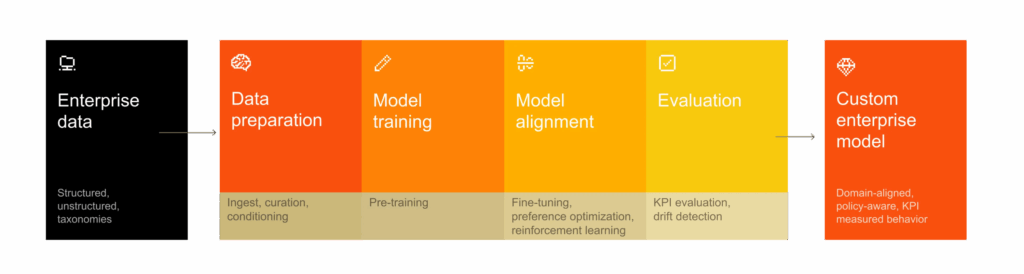
Shifting to AI model customization is an architectural imperative

In the early days of large language models (LLMs), we grew accustomed to massive 10x jumps in reasoning and coding capability with every new model iteration. Today, those jumps have flattened into incremental gains. The exception is domain-specialized intelligence, where true step-function improvements are still the norm. When a model is fused with an organization’s proprietary data and internal logic, it encodes the company’s history into its future workflows. This alignment creates a compounding advantage: a competitive moat built on a model that understands the business intimately. This is more than fine-tuning; it is the institutionalization of expertise into an AI system. This is the power of customization. Intelligence tuned to context Every sector operates within its own specific lexicon. In automotive engineering, the “language” of the firm revolves around tolerance stacks, validation cycles, and revision control. In capital markets, reasoning is dictated by risk-weighted assets and liquidity buffers. In security operations, patterns are extracted from the noise of telemetry signals and identity anomalies. Custom-adapted models internalize the nuances of the field. They recognize which variables dictate a “go/no-go” decision, and they think in the language of the industry. Domain expertise in action The transition from general-purpose to tailored AI centers on one goal: encoding an organization’s unique logic directly into a model’s weights. Mistral AI partners with organizations to incorporate domain expertise into their training ecosystems. A few use cases illustrate customized implementations in practice: Software engineering and assisting at scale: A network hardware company with proprietary languages and specialized codebases found that out-of-the-box models could not grasp their internal stack. By training a custom model on their own development patterns, they achieved a step function in fluency. Integrated into Mistral’s software development scaffolding, this customized model now supports the entire lifecycle—from maintaining legacy systems to autonomous code modernization via reinforcement learning. This turns once-opaque, niche code into a space where AI reliably assists at scale. Automotive and the engineering copilot: A leading automotive company uses customization to revolutionize crash test simulations. Previously, specialists spent entire days manually comparing digital simulations with physical results to find divergences. By training a model on proprietary simulation data and internal analyses, they automated this visual inspection, flagging deformations in real time. Moving beyond detection, the model now acts as a copilot, proposing design adjustments to bring simulations closer to real-world behavior and radically accelerating the R&D loop. Public sector and sovereign AI: In Southeast Asia, a government agency is building a sovereign AI layer to move beyond Western-centric models. By commissioning a foundation model tailored to regional languages, local idioms, and cultural contexts, they created a strategic infrastructure asset. This ensures sensitive data remains under local governance while powering inclusive citizen services and regulatory assistants. Here, customization is the key to deploying AI that is both technically effective and genuinely sovereign. The blueprint for strategic customization Moving from a general-purpose AI strategy to a domain-specific advantage requires a structural rethinking of the model’s role within the enterprise. Success is defined by three shifts in organizational logic. 1. Treat AI as infrastructure, not an experiment.  Historically, enterprises have treated model customization as an ad hoc experiment—a single fine-tuning run for a niche use case or a localized pilot. While these bespoke silos often yield promising results, they are rarely built to scale. They produce brittle pipelines, improvised governance, and limited portability. When the underlying base models evolve, the adaptation work must often be discarded and rebuilt from scratch. In contrast, a durable strategy treats customization as foundational infrastructure. In this model, adaptation workflows are reproducible, version-controlled, and engineered for production. Success is measured against deterministic business outcomes. By decoupling the customization logic from the underlying model, firms ensure that their “digital nervous system” remains resilient, even as the frontier of base models shifts. 2. Retain control of your own data and models. As AI migrates from the periphery to core operations, the question of control becomes existential. Reliance on a single cloud provider or vendor for model alignment creates a dangerous asymmetry of power regarding data residency, pricing, and architectural updates. Enterprises that retain control of their training pipelines and deployment environments preserve their strategic agency. By adapting models within controlled environments, organizations can enforce their own data residency requirements and dictate their own update cycles. This approach transforms AI from a service consumed into an asset governed, reducing structural dependency and allowing for cost and energy optimizations aligned with internal priorities rather than vendor roadmaps. 3. Design for continuous adaptation. The enterprise environment is never static: regulations shift, taxonomies evolve, and market conditions fluctuate. A common failure is treating a customized model as a finished artifact. In reality, a domain-aligned model is a living asset subject to model decay if left unmanaged. Designing for continuous adaptation requires a disciplined approach to ModelOps. This includes automated drift detection, event-driven retraining, and incremental updates. By building the capacity for constant recalibration, the organization ensures that its AI does not just reflect its history, but it evolves in lockstep with its future. This is the stage where the competitive moat begins to compound: the model’s utility grows as it internalizes the organization’s ongoing response to change. Control is the new leverage We have entered an era where generic intelligence is a commodity, but contextual intelligence is a scarcity. While raw model power is now a baseline requirement, the true differentiator is alignment—AI calibrated to an organization’s unique data, mandates, and decision logic. In the next decade, the most valuable AI won’t be the one that knows everything about the world; it will be the one that knows everything about you. The firms that own the model weights of that intelligence will own the market. This content was produced by Mistral AI. It was not written by MIT Technology Review’s editorial staff.

Shifting to AI model customization is an architectural imperative Lire l’article »

AI, Committee, Actualités, Uncategorized

GUI-AIMA: Aligning Intrinsic Multimodal Attention with a Context Anchor for GUI Grounding

arXiv:2511.00810v3 Announce Type: replace-cross Abstract: Graphical user interface (GUI) grounding is a key capability for computer-use agents, mapping natural-language instructions to actionable regions on the screen. Existing Multimodal Large Language Model (MLLM) approaches typically formulate GUI grounding as a text-based coordinate generation task. However, directly generating precise coordinates from visual inputs is challenging and often data-intensive. A more intuitive strategy is to first identify instruction-relevant visual patches and then determine the exact click location within them. Motivated by recent observations that general MLLMs exhibit native grounding ability embedded in their attention maps, we propose GUI-AIMA, an attention-based and coordinate-free supervised fine-tuning framework for efficient GUI grounding. GUI-AIMA aligns the intrinsic multimodal attention of MLLMs with patch-wise grounding signals. These signals are calculated adaptively for diverse user instructions by multi-head aggregation on simplified query-visual attention matrices. Besides, its coordinate-free manner can easily integrate a plug-and-play zoom-in stage. GUI-AIMA-3B was trained with only 509k samples (around 101k screenshots), demonstrating exceptional data efficiency and verifying that light training can trigger the native grounding capability of MLLMs. It achieves state-of-the-art performance among 3B models, attaining an average accuracy of 61.5% on ScreenSpot-Pro, 92.1% on ScreenSpot-v2, 68.1% on OSWorld-G, 79.1% on MMBench-GUI-L2, and 60.0% on UI-Vision. Project page: https://github.com/sjz5202/GUI-AIMA

GUI-AIMA: Aligning Intrinsic Multimodal Attention with a Context Anchor for GUI Grounding Lire l’article »

AI, Committee, Actualités, Uncategorized

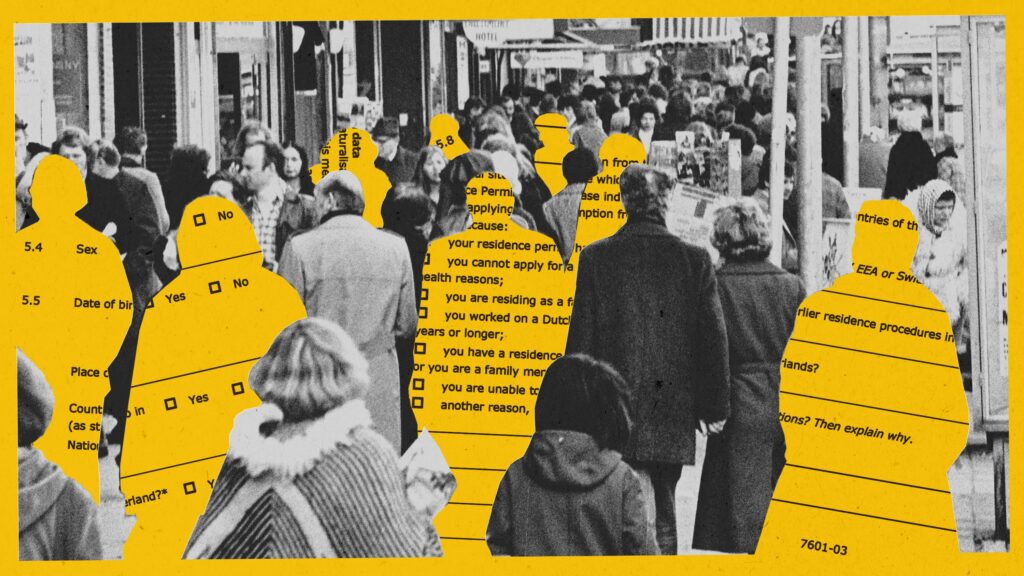
Inside the stealthy startup that pitched brainless human clones

After operating in secrecy for years, a startup company called R3 Bio, in Richmond, California, suddenly shared details about its work last week—saying it had raised money to create nonsentient monkey “organ sacks” as an alternative to animal testing. In an interview with Wired, R3 listed three investors: billionaire Tim Draper, the Singapore-based fund Immortal Dragons, and life-extension investors LongGame Ventures. But there is more to the story. And R3 doesn’t want that story told. MIT Technology Review discovered that the stealth startup’s founder John Schloendorn also pitched a startling, medically graphic, and ethically charged vision for what he’s called “brainless clones” to serve the role of backup human bodies. Imagine it like this: a baby version of yourself with only enough of a brain structure to be alive in case you ever need a new kidney or liver. Or, alternatively, he has speculated, you might one day get your brain placed into a younger clone. That could be a way to gain a second lifespan through a still hypothetical procedure known as a body transplant. The fuller context of R3’s proposals, as well as activities of another stealth startup with related goals, have not previously been reported. They’ve been kept secret by a circle of extreme life-extension proponents who fear that their plans for immortality could be derailed by clickbait headlines and public backlash. And that’s because the idea can sound like something straight from a creepy science fiction film. One person who heard R3’s clone presentation, and spoke on the condition of anonymity, was left reeling by its implications and shaken by Schloendorn’s enthusiastic delivery. The briefing, this person said, was like a “close encounter of the third kind” with “Dr. Strangelove.” A key inspiration for Schloendorn is a birth defect in which children are born missing most of their cortical hemispheres; he’s shown people medical scans of these kids’ nearly empty skulls as evidence that a body can live without much of a brain.  And he’s talked about how to grow a clone. Since artificial wombs don’t exist yet, brainless bodies can’t be grown in a lab. So he’s said the first batch of brainless clones would have to be carried by women paid to do the job. In the future, though, one brainless clone could give birth to another. Last Monday, the same day it announced itself to the world in Wired, R3 sent us a sweeping disavowal of our findings. It said Schloendorn “never made any statement regarding hypothetical ‘non-sentient human clones’ [that] would be carried by surrogates.” The most overarching of these challenges was its insistence that “any allegations of intent or conspiracy to create human clones or humans with brain damage are categorically false.” But even Schloendorn and his cofounder, Alice Gilman, can’t seem to keep away from the topic. Just last September, the pair presented at Abundance Longevity, a $70,000-per-ticket event in Boston organized by the anti-aging promoter Peter Diamandis. Although the presentation to about 40 people was not recorded and was meant to be confidential, a copy of the agenda for the event shows that Schloendorn was there to outline his “final bid to defeat aging” in a session called “Full Body Replacement.” According to a person who was there, both animal research and personal clones for spare organs were discussed. During the presentation, Gilman and Schloendorn even stood in front of an image of a cloning needle. Pressed on whether this was a talk about brainless clones, Gilman told us that while R3’s current business is replacing animal models, “the team reserves the right to hold hypothetical futuristic discussions.” MIT Technology Review found no evidence that R3 has cloned anyone, or even any animal bigger than a rodent. What we did find were documents, additional meeting agendas, and other sources outlining a technical road map for what R3 called “body replacement cloning” in a 2023 letter to supporters. That road map involved improvements to the cloning process and genetic wiring diagrams for how to create animals without complete brains.  A child with hydranencephaly, a rare condition in which most of the brain is missing. Could a human clone also be created without much of a brain as an ethical source of spare organs?DIMITRI AGAMANOLIS, M.D. VIA WIKIPEDIA A main purpose of the fundraising, investors say, was to support efforts to try these techniques in monkeys from a base in the Caribbean. That offered a path to a nearer-term business plan for more ethical medical experiments and toxicology testing—if the company could develop what it now calls monkey “organ sacks.” However, this work would clearly inform any possible human version.  Though he holds a PhD, Schloendorn is a biotech outsider who has published little and is best known for having once outfitted a DIY lab in his Bay Area garage. Still, his ties to the experimental fringe of longevity science have earned him a network in Silicon Valley and allies at a risk-taking US health innovation agency, ARPA-H. Together with his success at raising money from investors, this signals that the brainless-clone concept should be taken seriously by a wider community of scientists, doctors, and ethicists, some of whom expressed grave concerns.  “It sounds crazy, in my opinion,” said Jose Cibelli, a researcher at Michigan State University, after MIT Technology Review described R3’s brainless-clone idea to him. “How do you demonstrate safety? What is safety when you’re trying to create an abnormal human?” Twenty-five years ago, Cibelli was among the first scientists to try to clone human embryos, but he was trying to obtain matched stem cells, not make a baby. “There is no limit to human imagination and ways to make money, but there have to be boundaries,” he says. “And this is the boundary of making a human being who is not a human being.”  “Feasibility research” Since Dolly the sheep was born in 1996, researchers have cloned dogs, cats, camels, horses, cattle, ferrets, and other species of mammal. Injecting a cell from an existing animal into an

Inside the stealthy startup that pitched brainless human clones Lire l’article »

AI, Committee, Actualités, Uncategorized

Salesforce AI Research Releases VoiceAgentRAG: A Dual-Agent Memory Router that Cuts Voice RAG Retrieval Latency by 316x

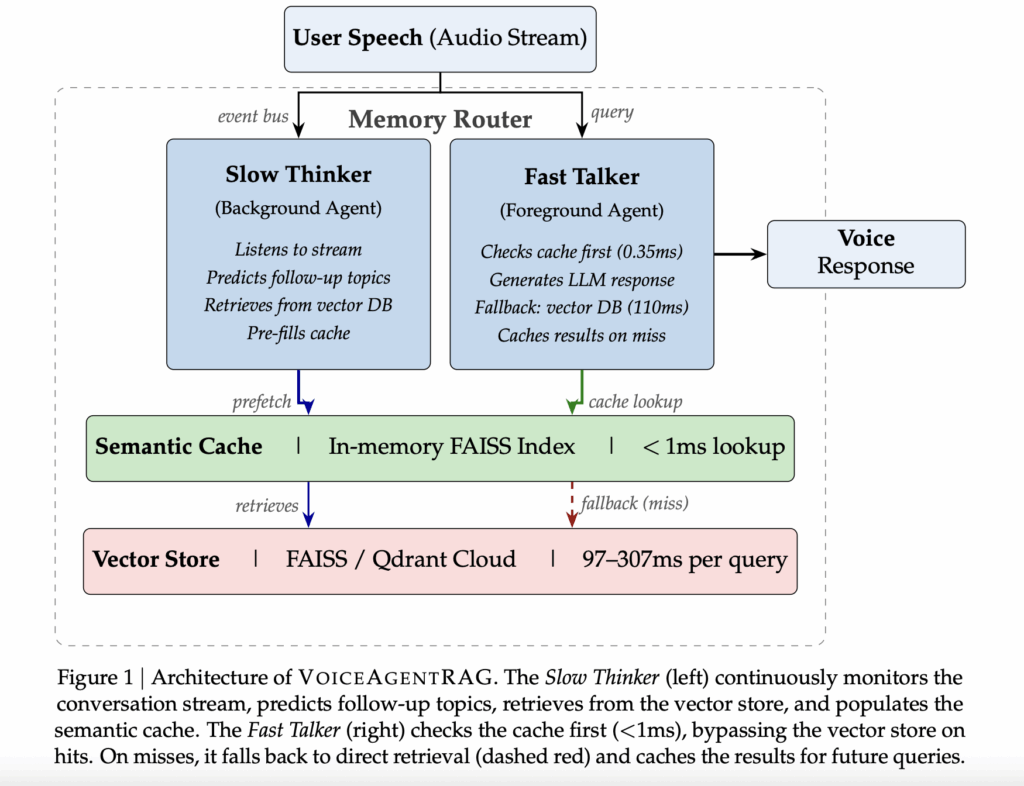
In the world of voice AI, the difference between a helpful assistant and an awkward interaction is measured in milliseconds. While text-based Retrieval-Augmented Generation (RAG) systems can afford a few seconds of ‘thinking’ time, voice agents must respond within a 200ms budget to maintain a natural conversational flow. Standard production vector database queries typically add 50-300ms of network latency, effectively consuming the entire budget before an LLM even begins generating a response. Salesforce AI research team has released VoiceAgentRAG, an open-source dual-agent architecture designed to bypass this retrieval bottleneck by decoupling document fetching from response generation. https://arxiv.org/pdf/2603.02206 The Dual-Agent Architecture: Fast Talker vs. Slow Thinker VoiceAgentRAG operates as a memory router that orchestrates two concurrent agents via an asynchronous event bus: The Fast Talker (Foreground Agent): This agent handles the critical latency path. For every user query, it first checks a local, in-memory Semantic Cache. If the required context is present, the lookup takes approximately 0.35ms. On a cache miss, it falls back to the remote vector database and immediately caches the results for future turns. The Slow Thinker (Background Agent): Running as a background task, this agent continuously monitors the conversation stream. It uses a sliding window of the last six conversation turns to predict 3–5 likely follow-up topics. It then pre-fetches relevant document chunks from the remote vector store into the local cache before the user even speaks their next question. To optimize search accuracy, the Slow Thinker is instructed to generate document-style descriptions rather than questions. This ensures the resulting embeddings align more closely with the actual prose found in the knowledge base. The Technical Backbone: Semantic Caching The system’s efficiency hinges on a specialized semantic cache implemented with an in-memory FAISS IndexFlat IP (inner product). Document-Embedding Indexing: Unlike passive caches that index by query meaning, VoiceAgentRAG indexes entries by their own document embeddings. This allows the cache to perform a proper semantic search over its contents, ensuring relevance even if the user’s phrasing differs from the system’s predictions. Threshold Management: Because query-to-document cosine similarity is systematically lower than query-to-query similarity, the system uses a default threshold of τ=0.40tau = 0.40 to balance precision and recall. Maintenance: The cache detects near-duplicates using a 0.95 cosine similarity threshold and employs a Least Recently Used (LRU) eviction policy with a 300-second Time-To-Live (TTL). Priority Retrieval: On a Fast Talker cache miss, a PriorityRetrieval event triggers the Slow Thinker to perform an immediate retrieval with an expanded top-k (2x the default) to rapidly populate the cache around the new topic area. Benchmarks and Performance The research team evaluated the system using Qdrant Cloud as a remote vector database across 200 queries and 10 conversation scenarios. Metric Performance Overall Cache Hit Rate 75% (79% on warm turns) Retrieval Speedup 316x (110ms→0.35ms)(110ms rightarrow 0.35ms) Total Retrieval Time Saved 16.5 seconds over 200 turns The architecture is most effective in topically coherent or sustained-topic scenarios. For example, ‘Feature comparison’ (S8) achieved a 95% hit rate. Conversely, performance dipped in more volatile scenarios; the lowest-performing scenario was ‘Existing customer upgrade’ (S9) at a 45% hit rate, while ‘Mixed rapid-fire’ (S10) maintained 55%. https://arxiv.org/pdf/2603.02206 Integration and Support The VoiceAgentRAG repository is designed for broad compatibility across the AI stack: LLM Providers: Supports OpenAI, Anthropic, Gemini/Vertex AI, and Ollama. The paper’s default evaluation model was GPT-4o-mini. Embeddings: The research utilized OpenAI text-embedding-3-small (1536 dimensions), but the repository provides support for both OpenAI and Ollama embeddings. STT/TTS: Supports Whisper (local or OpenAI) for speech-to-text and Edge TTS or OpenAI for text-to-speech. Vector Stores: Built-in support for FAISS and Qdrant. Key Takeaways Dual-Agent Architecture: The system solves the RAG latency bottleneck by using a foreground ‘Fast Talker’ for sub-millisecond cache lookups and a background ‘Slow Thinker’ for predictive pre-fetching. Significant Speedup: It achieves a 316x retrieval speedup (110ms→0.35ms)(110ms rightarrow 0.35ms) on cache hits, which is critical for staying within the natural 200ms voice response budget. High Cache Efficiency: Across diverse scenarios, the system maintains a 75% overall cache hit rate, peaking at 95% in topically coherent conversations like feature comparisons. Document-Indexed Caching: To ensure accuracy regardless of user phrasing, the semantic cache indexes entries by document embeddings rather than the predicted query’s embedding. Anticipatory Prefetching: The background agent uses a sliding window of the last 6 conversation turns to predict likely follow-up topics and populate the cache during natural inter-turn pauses. Check out the Paper and Repo here. Also, feel free to follow us on Twitter and don’t forget to join our 120k+ ML SubReddit and Subscribe to our Newsletter. Wait! are you on telegram? now you can join us on telegram as well. The post Salesforce AI Research Releases VoiceAgentRAG: A Dual-Agent Memory Router that Cuts Voice RAG Retrieval Latency by 316x appeared first on MarkTechPost.

Salesforce AI Research Releases VoiceAgentRAG: A Dual-Agent Memory Router that Cuts Voice RAG Retrieval Latency by 316x Lire l’article »

We use cookies to improve your experience and performance on our website. You can learn more at Politique de confidentialité and manage your privacy settings by clicking Settings.

Privacy Preferences

You can choose your cookie settings by turning on/off each type of cookie as you wish, except for essential cookies.

Allow All
Manage Consent Preferences
  • Always Active

Save
fr_FR